
02 Nov 2026
0 comments
AILET 2028 Exam: Eligibility, Syllabus, Exam Pattern, Important Dates & Admission Process The All India Law Entrance Test (AILET) is conducted by National Law University (NLU), Delhi, for admission to its B.A. LL.B. (Hons.) programme. The examination tests candidates on English, Current Affairs and General Knowledge, and Logical Reasoning.AILET is a two-hour, offline examination with 150 questions carrying 150 marks. Here is everything candidates need to know about its registration, eligibility, exam pattern, important dates, result, counselling and admission process. AILET 2028 Important Dates The following timeline provides a reference for the examination and admission process.EventTentative timelineAILET 2027 Reference DatesRegistration beginsFirst week of August7 AugustRegistration last dateSecond week of November10 NovemberAdmit card releaseLast week of November30 NovemberAILET examinationSecond week of December13 DecemberExam timing2:00 PM-4:00 PM2:00 PM-4:00 PMProvisional answer keyShortly after the examinationShortly after ExaminationResult declarationThird week of December18 DecemberThe examination is generally held in December, followed by counselling and provisional merit lists. AILET 2028 Registration Process Candidates can register online through the NLU Delhi admission portal.Steps to apply:1. Visit the NLU Delhi admission website and select AILET registration.2. Register using your name, email address and mobile number.3. Select the applicant category and B.A. LL.B. programme.4. Enter personal and academic details.5. Upload the required photograph, signature and certificates.6. Pay the application fee through debit card, credit card, UPI or net banking.7. Submit the form and download the acknowledgement receipt.Documents RequiredDocumentMaximum file sizePhotograph1 MBSignature1 MBBPL certificate2 MBPassport (Foreign Nationals)2 MBPwD certificate2 MBKeep two identical photographs for the examination or admission process. At admission, candidates may also need Class 10 and 12 mark sheets, a character certificate, transfer certificate and applicable reservation certificates.AILET Registration FeesCategoryApplication feeGeneral / OBC / EWS / Foreign Nationals₹3,000SC / ST / PwD₹1,000Eligible SC/ST and women BPL candidatesExemptedThe application fee is non-refundable. AILET 2028 Eligibility Criteria Candidates must have passed Class 12 or an equivalent examination from a recognised board.CategoryMinimum marksGeneral45%OBC42%SC40%ST40%PwD40%Foreign Nationals65%Other conditions:● Students appearing for Class 12 can also apply.● Candidates awaiting results must meet the required marks by the admission cut-off date.● Candidates placed in a compartment in the qualifying examination are ineligible.● There is no minimum or maximum age limit.● Foreign Nationals and OCI/PIO applicants must apply under their respective categories. Eligible Foreign Nationals are exempt from AILET. AILET 2028 Exam Pattern The B.A. LL.B. examination has 150 multiple-choice questions across three sections.SectionQuestionsMarksEnglish Language5050Current Affairs & General Knowledge3030Logical Reasoning7070Total150150Examination details:● Duration: 120 minutes● Mode: Offline, pen-and-paper● Answer method: OMR sheet● Correct answer: +1 mark● Incorrect answer: -0.25 mark● Unattempted question: 0 marksThere is no separate Legal Reasoning section, but legal principles may be included in Logical Reasoning. Prior legal knowledge is not required.Tie-breaking criteria: Higher Logical Reasoning marks are considered first. If the tie continues, the older candidate receives preference, followed by a computerised draw of lots. AILET 2028 Syllabus The examination covers three main areas:SectionImportant topicsEnglish LanguageReading comprehension, vocabulary, grammar, sentence structure and verbal abilityCurrent Affairs & GKNational and international events, awards, sports, appointments, government schemes, books and authorsLogical ReasoningArguments, assumptions, conclusions, inferences, analytical reasoning, relationships and legal principlesLogical Reasoning carries the highest individual weightage with 70 marks. English and Current Affairs together account for the remaining 80 marks. AILET 2028 Exam Centres Candidates can select up to three preferred cities. The available choices include Ahmedabad, Bengaluru, Bhopal, Bhubaneswar, Chandigarh, Chennai, Cochin, Dehradun, Delhi, Faridabad, Ghaziabad, Gorakhpur, Greater Noida, Gurugram, Guwahati, Gwalior, Hisar, Hyderabad, Jaipur, Jammu, Jodhpur, Kanpur, Kolkata, Lucknow, Mumbai, Nagpur, Patna, Pune, Raipur, Ranchi, Varanasi, Visakhapatnam.If fewer than 200 candidates select a city, a centre may not be established there. Candidates may then be allotted their second or third preference, or another city. An examination cycle also covered 32 cities. How to Prepare for AILET 2028? A consistent study routine can improve speed and accuracy.1. English: Read newspapers and editorials, practise comprehension and build vocabulary.2. Current Affairs: Follow national and international news and prepare short revision notes.3. Logical Reasoning: Practise arguments, assumptions, conclusions and analytical questions.4. Previous papers: Solve earlier AILET papers to understand question types.5. Mock tests: Attempt full-length tests within the two-hour limit.6. Performance analysis: Review mistakes and identify topics that need more practice.Since incorrect answers carry negative marks, focus on accuracy rather than attempting every question. AILET 2028 Admit Card The admit card is available through the candidate's online login. It includes the examination date, roll number, reporting time and allotted centre. Download and print it before the examination, and carry the prescribed identity proof along with it. AILET 2028 Answer Key NLU Delhi releases a provisional answer key and master question booklet after the examination. Candidates can check their responses and raise objections through the prescribed portal.The process includes:● Publication of the provisional answer key.● Submission of objections through the portal.● Payment of ₹500 per challenged question.● Final key issued once all raised objections have been examined The objection fee is refunded if the challenge is found valid. In one examination cycle, objections were accepted from 8 PM on 14 December until 12 noon on 16 December. AILET 2028 Result NLU Delhi declares the AILET result online through its admission portal. Your result will show up after you sign in with the details you registered with. The scorecard displays the candidate's marks and All India Rank (AIR), which are used to determine eligibility for the counselling process.Shortlisted students can register for online counselling as soon as the result has been announced. Their admission prospects depend on their rank, category, seat availability and subsequent merit lists. AILET 2028 Counselling Process Shortlisted candidates receive counselling invitations based on merit and category. The process involves:1. Receiving the counselling invitation.2. Completing online registration.3. Paying the applicable counselling fee.4. Checking the provisional merit lists.5. Paying the admission confirmation fee after selection.6. Submitting certificates and completing admission formalities.NLU Delhi invited approximately three candidates per available seat in each category. However, an invitation does not guarantee admission. Only candidates who register and pay the required fee are considered for provisional merit lists.Counselling FeesCategoryFeeGeneral₹30,000SC / ST / OBC / EWS / PwD₹20,000Provisional admission confirmation fee₹50,000The counselling registration fee is refunded to candidates who do not secure admission, subject to University conditions.Counselling and Merit List ScheduleEventTentative timelineAILET 2027 Reference DatesResult declarationThird week of December18 DecemberCounselling invitationThird week of December19 DecemberCounselling registration deadlineLast week of December27 DecemberFirst provisional merit listSecond week of January8 JanuarySecond provisional merit listThird week of January21 JanuaryThird provisional merit listFirst week of February4 FebruaryFourth provisional merit listFirst week of May5 MayAs per the AILET 2026 counselling schedule, candidates selected in the initial merit lists must pay the ₹50,000 admission confirmation fee and remaining fees within the prescribed deadlines. Candidates selected in later rounds must pay the fee as per the University's notified schedule. AILET 2028 Cut-Off and Expected Cut-Off The cut-off for AILET tells candidates what rank or score is needed to be admitted to NLU Delhi. It varies with category, seat availability, candidate performance and counselling movement.The official third provisional merit list for AILET 2026 included the following ranks:Category / reservationAll India Rank listedGeneral - Women71OBC - Women373SC - Women1,731General - PwD2,378These are ranks of candidates included in that particular provisional list, not final closing ranks for all categories. The merit lists must be considered round by round to determine category-wise admission movement.The AILET 2028 cut-off will depend on the number of applicants, examination difficulty, marks obtained and available seats. Candidates should aim for a strong score rather than rely on a predicted rank. NLU Delhi B.A. LL.B. Seat Matrix The B.A. LL.B. (Hons.) programme has 120 seats.CategorySeatsGeneral50OBC (Non-Creamy Layer)24SC17ST8EWS11AILET merit seats110Foreign Nationals5OCI/PIO5Total120Reservation includes 15% for SC, 7.5% for ST, 22% for OBC-NCL, 10% for EWS, 5% horizontal reservation for PwD and 30% horizontal reservation for eligible women candidates.Unfilled ST seats may be offered to SC candidates and vice versa before conversion to General, subject to University rules. Unfilled Foreign National seats may also be carried over to the General Category. NLU Delhi B.A. LL.B. Fee Structure The total cost of studying B.A. LL.B. at NLU Delhi includes tuition, academic facilities, student welfare and other institutional charges. The fee components are listed below:Fee componentAmountAdmission fee₹10,000Tuition fee (annual)₹1,63,000Academic services and facilities₹43,000Student welfare fund₹7,000Utility services₹20,000Refundable estate deposit₹25,000Hostel charges (annual)₹92,000Mess charges (annual)₹50,000The annual tuition fee increases by ₹7,000, while hostel charges increase by ₹3,000 each year. Hostel accommodation is limited and allocated according to University criteria, including aerial distance from the campus. Conclusion AILET requires strong reading skills, current affairs knowledge and logical thinking. Candidates aiming for NLU Delhi should understand the exam pattern, practise regularly and focus on accuracy because of negative marking. A structured preparation plan, mock tests and regular revision can help them work towards a good rank.To avoid missing a change, check the official website on a regular basis, as any update to the exam schedule, eligibility, fees or admission process is first announced there. Frequently Asked Questions 1. When is the AILET 2028 exam conducted?AILET is generally conducted in December, with the examination held from 2 PM to 4 PM.2. What is the AILET registration fee?The fee is ₹3,000 for General/OBC/EWS/Foreign Nationals and ₹1,000 for SC/ST/PwD candidates. Eligible SC/ST and women BPL candidates are exempted.3. How many questions are asked in AILET B.A. LL.B.?The examination has 150 multiple-choice questions carrying 150 marks.4. Is there negative marking in AILET?Yes. You lose 0.25 marks for each answer that is marked incorrect. 5. How many seats are available at NLU Delhi?There are 120 seats, including 110 AILET merit seats and 10 seats for Foreign Nationals and OCI/PIO candidates.6. What is the AILET counselling fee?The fee is ₹30,000 for General candidates and ₹20,000 for SC/ST/OBC/EWS/PwD candidates. Candidates must pay ₹50,000 as the confirmation fee for provisional admission. 7. Can I get admission to NLU Delhi through CLAT?No. Candidates seeking admission to NLU Delhi's B.A. LL.B. programme must appear for AILET.8. Where should a beginner begin when preparing for AILET 2028? Prepare English comprehension, Current Affairs and Logical Reasoning. Practise previous papers, take mock tests and analyse your performance regularly.
31 Oct 2026
0 comments
NPAT Eligibility Criteria 2027: Qualification, Marks & Age Limit Planning to pursue BBA, B.Com or another undergraduate course at NMIMS after Class 12? Before preparing for the entrance test, it is important to check whether you meet the admission requirements. The NPAT Eligibility Criteria 2027 cover your Class 12 marks, compulsory subjects, age and qualifying examination.The Narsee Monjee Institute of Management Studies (NMIMS) offers several undergraduate programmes through its admission process. While many courses require a minimum of 50% aggregate marks, some have additional subject requirements, and BBA (International Business) has a higher percentage requirement.Here is a breakdown of the eligibility conditions to help you identify which programmes may suit your academic background. NPAT Eligibility Criteria 2027: Overview The following table summarises the main eligibility requirements candidates should check before applying.Eligibility factorRequirementEducational qualificationCompletion of Class 12 or an equivalent qualification from a recognised education board.Appearing candidatesStudents appearing for their final qualifying examination can applyMinimum aggregate marksGenerally 50% for the listed programmesBBA (International Business)Minimum 60% aggregateMathematics or StatisticsRequired for specified programmesMaximum age25 years for programmes covered by the NPAT age ruleInternational qualificationsRequirements related to qualification equivalence and the necessary supporting documents.These are the main eligibility conditions, but candidates should also check the requirements of their preferred course. Meeting the minimum marks does not automatically guarantee admission. NPAT Educational Qualification 2027 Candidates must have passed Class 12 or an equivalent examination from a recognised board. Students appearing for their final 10+2 examination can also apply, provided they fulfil the prescribed conditions before admission is confirmed.Students from CBSE, ISC and recognised State Boards can consider the programmes for which they meet the eligibility requirements. Those with international qualifications should check the applicable equivalence rules.Keep these points in mind:● Your aggregate marks must meet the minimum percentage required for the chosen programme.● You must pass Mathematics or Statistics if it is compulsory for your course.● NMIMS considers all subjects taken and attempted when calculating aggregate marks, rather than only the best four or five subjects.● You must fulfil the applicable examination and document-verification conditions. NPAT Minimum Percentage Required Most of the listed undergraduate programmes require at least 50% aggregate marks in Class 12. BBA (International Business), a dual-degree programme offered in collaboration with Kingston University, London, requires a minimum of 60%.Programme-wise NPAT Eligibility MarksUndergraduate programmeMinimum Class 12 aggregateBBA50%B.Com50%Integrated BBA-MBA50%B.Sc. Finance50%BBA (FinTech)50%B.Sc. Economics50%BBA (Branding & Advertising)50%BA Liberal Arts50%BBA (Management & Marketing)50%BBA Finance50%BBA (International Business)60%Remember: The required percentage is only one part of eligibility. For example, a candidate with 55% in Class 12 may meet the minimum marks requirement for B.Sc. Finance but must also have passed Mathematics or Statistics. NPAT Subject Requirements: Is Mathematics Compulsory? Mathematics is not compulsory for every NPAT programme. The requirement depends on the course you choose, so students should check their Class 12 subject combination before applying.Programmes Requiring Mathematics or StatisticsCandidates must have studied and passed Mathematics or Statistics for the following programmes:● B.Sc. Finance● BBA (FinTech)● B.Sc. Economics● BBA FinanceIf you are interested in finance or economics, check this condition carefully. Meeting the aggregate percentage without passing the required subject may not be sufficient.NPAT Programmes Available Without MathematicsMathematics is not specified as a compulsory Class 12 subject for the following programmes under the stated eligibility rules:● BBA● B.Com● Integrated BBA-MBA● BBA (Branding & Advertising)● BA Liberal Arts● BBA (Management & Marketing)● BBA (International Business)This gives students from Arts and Commerce backgrounds several options to explore. For instance, a Commerce student who did not take Mathematics may consider BBA or B.Com, subject to the other eligibility conditions. NPAT Age Limit 2027 The maximum age limit for the relevant NPAT undergraduate programmes is 25 years. Students who completed Class 12 earlier or took a gap before applying should check this requirement before registering.The undergraduate law programmes, BA LL.B. (Hons.) and BBA LL.B. (Hons.), have separate provisions for candidates above 25 years. Such candidates can apply through the NLAT route rather than the regular NPAT route. NPAT Eligibility for Different Education Boards Students from CBSE, ISC, State Boards and international education systems must meet the applicable qualification and marks requirements. The rules for calculating aggregate marks and verifying qualifications may differ by board.CBSE, ISC and State Board CandidatesCandidates must pass their qualifying examination and meet the prescribed aggregate requirement. NMIMS considers all subjects taken and attempted, rather than allowing candidates to calculate their eligibility using only their best-performing subjects.The admission handout also specifies single-attempt conditions and rules concerning compartmentalised mark sheets. Candidates should check the applicable provisions before submitting their documents.International Baccalaureate (IB) CandidatesIB candidates must satisfy the university's equivalence conditions for their particular qualification. Under the specified IB Diploma route, candidates must meet the prescribed credit or grade requirements, including three Higher Level (HL) and three Standard Level (SL) subjects, along with the applicable Extended Essay and Theory of Knowledge requirements.The university also specifies requirements for IB Diploma Programme courses and IB Career-related Programme candidates. Students should check which provisions apply to their qualification.Cambridge Board CandidatesCandidates following Cambridge qualifications must meet the applicable examination requirements. For A-Level qualifications, a minimum of three Advanced Level subjects is considered when calculating aggregate marks. Ungraded subjects are excluded from the calculation. NPAT Eligibility for Open School and Distance Learning Students Students who completed Class 12 through recognised open-schooling, distance-learning or correspondence routes should check whether their qualification meets NMIMS's recognition requirements.Candidates with overseas qualifications must submit an Association of Indian Universities (AIU) equivalence certificate where required. This establishes whether their qualification is equivalent to the Indian Class 12 examination.Do not assume that every open-school or international qualification is automatically accepted. Confirm the applicable rules and documentation requirements before proceeding with admission. Documents Required to Confirm NPAT Eligibility Keeping your academic documents ready can make the admission process easier. Depending on your qualification, you may need:● Class 10 certificate or marksheet, as applicable.● Class 12 marksheet or final result.● Subject-wise marks and aggregate details.● Grade conversion or equivalence documents for applicable international qualifications.● AIU equivalence certificate for overseas qualifications, where required.● Any additional documents requested by NMIMS.Students admitted provisionally while awaiting their final results must submit the required documents within the prescribed timeline. Failure to meet the eligibility or documentation conditions may affect admission. Final Words Before applying for NPAT, compare your Class 12 marks and subjects with the requirements of your preferred programme. If you have not studied Mathematics, you can still explore several undergraduate options, while finance- and economics-related courses may require a specific subject combination.Checking these details early will help you shortlist suitable courses and avoid eligibility-related surprises during admission. Always review the applicable NMIMS admission requirements before submitting your application.To be sure you are reading correct and up-to-date information, visit the NMIMS website before applying and see what it says about NPAT eligibility, admission requirements and programme-wise updates. Frequently Asked Questions About NPAT Eligibility Criteria 2027 1. What is the minimum percentage required for NPAT 2027?Most of the listed programmes require 50% aggregate marks in Class 12. BBA (International Business) requires 60%. Subject-specific requirements may also apply.2. Is Mathematics compulsory for the NPAT exam?No. Mathematics or Statistics is required for B.Sc. Finance, BBA (FinTech), B.Sc. Economics and BBA Finance, but it is not specified as compulsory for several other listed programmes.3. Can Arts students apply for NPAT?Yes. Arts students can consider programmes such as BBA, BBA (Branding & Advertising) and BA Liberal Arts, provided they meet the relevant eligibility conditions.4. Can students appearing for Class 12 apply for NPAT?Yes. Students appearing for their final qualifying examination can apply, subject to fulfilling the academic requirements and submitting their results within the prescribed timeline.5. What is the maximum age limit for NPAT?The maximum age limit is 25 years for the relevant NPAT programmes. Undergraduate law programmes have separate eligibility provisions.6. Can open-school students apply for NPAT?They may be eligible if their qualification meets the applicable recognition and equivalence requirements. Candidates should confirm the rules for their particular board.7. Is NPAT eligibility the same for every NMIMS programme?No. Minimum marks, compulsory subjects and additional conditions vary by programme. Check the requirements of your preferred course before applying.8. Does meeting NPAT eligibility guarantee admission?No. Candidates must meet the eligibility conditions and complete the prescribed admission process. Meeting the minimum percentage alone does not guarantee a seat.
31 Oct 2026
0 comments
The Ultimate 2028 MCA Entrance Roadmap: Why Starting Today is Your Ticket to Top 5 Colleges Getting admission into a reputed Master of Computer Applications (MCA) college requires more than just a graduation degree. With increasing competition and limited seats in leading institutions, students need a well-planned entrance examination strategy to secure admission to their preferred colleges.If you are currently in the second-last year of your graduation or are a working professional planning to pursue an MCA, 2028 is an excellent opportunity to start preparing early.Examinations such as MAH MCA CET 2028, NIMCET 2028 and CUET PG 2028 provide pathways to several reputed institutions across India. However, preparing for these examinations alongside graduation can become challenging if you delay your studies.This guide explains how to approach your preparation, when to begin, which subjects to prioritise and how to build a strategy that improves your chances of securing admission to a leading MCA institution. 1. Understanding the MCA Entrance Examination Landscape for 2028 Before starting your preparation, it is important to understand the major entrance examinations and the opportunities they offer.Three important examinations that MCA aspirants should consider are:MAH MCA CET 2028: Conducted by the Maharashtra State CET Cell, this examination provides admission opportunities to participating MCA colleges in Maharashtra. Institutions such as VJTI Mumbai, SPIT Mumbai, Savitribai Phule Pune University and PCCE are among the options students can explore, subject to their admission rules and eligibility.NIMCET 2028: The NIT MCA Common Entrance Test is the admission gateway to participating National Institutes of Technology offering MCA programmes. It is particularly important for students targeting NITs and other participating institutions.CUET PG 2028: The Common University Entrance Test for Postgraduate programmes provides opportunities to apply to participating central and other universities offering MCA-related programmes, depending on their admission requirements. Delhi University and Banaras Hindu University are among the institutions students may explore.Each examination follows a different syllabus, marking scheme and admission process. Therefore, understanding their requirements early will help you prepare efficiently instead of studying randomly. 2. Why November and December Are the Best Months to Start One of the biggest advantages of beginning early is the availability of sufficient preparation time.For students currently in the second-last year of graduation, November and December offer a valuable preparation window. Academic pressure is often relatively manageable during this period compared with the final year, when university examinations, projects, practicals and other responsibilities start demanding more attention.Ideally, students should utilise the period from November to June to develop strong fundamentals.There are three major advantages of starting early:● More time for mathematics: Students from non-mathematics or non-technical backgrounds may need additional time to understand quantitative concepts and improve calculation speed.● Better time management: You can distribute your preparation across several months instead of trying to complete the entire syllabus in a few weeks.● Less academic pressure: Completing foundational preparation before your final year helps you balance graduation examinations and entrance tests more effectively.Remember, securing a good percentile or All India Rank requires consistent performance. Starting early gives you more opportunities to practise, identify mistakes and improve. .video-container { width: 100%; max-width: 100%; aspect-ratio: 16 / 9; position: relative; overflow: hidden; } .video-container iframe { position: absolute; top: 0; left: 0; width: 100%; height: 100%; border: 0; } 3. Your MCA Entrance Preparation Roadmap: Month-by-Month Strategy A structured study plan is essential for covering the syllabus without feeling overwhelmed.Here is a practical preparation timeline for aspirants targeting the 2028 admission cycle.Phase 1: November 2026 – February 2027 | Build Your FundamentalsThe first phase should focus entirely on understanding basic concepts.Start with mathematics, as this section can become challenging for students who have not practised calculations regularly.Prioritise:● Number systems and simplification● Percentages, fractions and ratios● Profit and loss● Time, speed and distance● Basic algebra● Squares, cubes and calculation techniques● Fundamental logical reasoning conceptsAlongside mathematics, begin working on English grammar, vocabulary and reading comprehension.Do not rush through chapters. Your objective should be to understand concepts and solve basic questions independently.Phase 2: March – June 2027 | Strengthen Concepts and PracticeOnce your fundamentals are clear, gradually increase the difficulty of your practice questions.Start solving topic-wise exercises and sectional tests to understand how different concepts are tested.During this period:● Practice moderate and advanced mathematics questions.● Develop approaches for solving logical reasoning problems.● Improve reading speed through regular reading.● Revise previously completed topics.● Maintain a notebook of important formulas and frequently made mistakes.By June, you should have a strong understanding of the major topics covered in your target examinations.Phase 3: July – October 2027 | Begin Intensive PracticeThis phase should focus on improving accuracy, speed and question selection.Start attempting full-length mock examinations under timed conditions. Analyse your performance after every test instead of simply checking your score.Identify whether your mistakes are caused by conceptual gaps, calculation errors, incorrect question selection or time management.Also, begin revising computer fundamentals, programming basics and other technical concepts relevant to your target examination.Phase 4: November 2027 – Exam Season 2028 | Revision and Mock TestsThe final preparation phase should be dedicated to revision and performance improvement.Your priorities should include:● Regular full-length mock examinations.● Revision of formulas and important concepts.● Practising frequently tested question types.● Improving time allocation across sections.● Revisiting weak topics.● Reviewing previous examination papers.Keep checking official examination notifications for application dates, eligibility conditions, examination schedules and any changes in the pattern. 4. Understand the Important Subjects Before You Begin Although the syllabus varies between examinations, certain subjects require consistent attention across MCA admission tests.Mathematics and Quantitative AptitudeThis is an important area for building a competitive score. Focus on arithmetic, algebra, coordinate geometry, probability and other topics according to the examination syllabus.Students who struggle with calculations should begin with basic arithmetic rather than immediately attempting difficult questions.Logical ReasoningThis section evaluates your ability to identify patterns, understand relationships and solve problems logically.Practise arrangements, series, coding-decoding, directions, blood relations and analytical reasoning questions.English LanguageDevelop your vocabulary, grammar and comprehension skills through daily practice.Books such as Word Power Made Easy can help improve vocabulary. Reading newspapers for 30–45 minutes daily can also improve reading speed and comprehension.Computer AwarenessDevelop a basic understanding of computer fundamentals, operating systems, programming concepts, databases and computer terminology.The depth of technical knowledge required varies between examinations, so prepare according to the official syllabus.Understanding the MAH MCA CET Examination PatternAs a reference, the MAH MCA CET pattern has included 100 questions to be attempted within 90 minutes in a computer-based format, with two marks for every correct answer and no negative marking.However, candidates appearing in 2028 should verify the latest official information before finalising their strategy, as examination authorities may revise the pattern or introduce changes.Understanding the marking scheme is important because it helps students develop an appropriate question-attempting strategy. 5. Top MCA Colleges You Should Target in 2028 Your preparation strategy should also depend on the institutions you wish to join.Here are some reputed options to explore:Through NIMCET:● National Institutes of Technology offering MCA programmes, including NIT Tiruchirappalli, NIT Warangal and NIT Karnataka, subject to the participating institute list.Through MAH MCA CET:● Veermata Jijabai Technological Institute (VJTI), Mumbai.● Sardar Patel Institute of Technology (SPIT), Mumbai.● Savitribai Phule Pune University (SPPU).● Padre Conceicao College of Engineering (PCCE), Goa, subject to applicable admission eligibility.Through CUET PG and other university admission routes:● University of Delhi.● Banaras Hindu University.● Other participating universities offering MCA programmes.Admission routes, participating institutions and eligibility conditions can change. Always refer to the respective examination and university admission notifications.Rather than focusing on a single institution, prepare with a broader target list. This gives you multiple admission opportunities based on your examination performance. 6. Daily Study Routine: How Much Should You Study? Consistency is more important than studying for extremely long hours occasionally.If you are beginning your preparation while attending graduation classes, start with approximately 2–3 focused hours daily and gradually increase your study time according to your academic schedule.A practical daily routine could look like this:Subject / ActivityDaily TimeMathematics60 minutesLogical Reasoning40 minutesEnglish30 minutesComputer Concepts30 minutesRevision and Practice20 minutesUse weekends for sectional tests, longer practice sessions and revision.Most importantly, follow a structured curriculum. Instead of switching between random YouTube videos, books and disconnected study materials, use dedicated preparation resources, topic-wise exercises, sectional tests and mock examinations.A consistent learning approach makes it easier to track your progress. 7. Five Common Mistakes MCA Aspirants Must Avoid Even hardworking students sometimes struggle because their preparation lacks direction.Avoid these common mistakes:1. Starting Too Late: Delaying preparation until the final year leaves limited time for mathematics, reasoning and revision.2. Ignoring Weak Subjects: Avoid spending all your time on subjects you already understand. Give additional attention to topics that need improvement.3. Collecting Too Many Study Materials: Using multiple books and random online resources can create confusion. Follow a limited set of reliable resources.4. Avoiding Mock Tests: Understanding concepts is only one part of preparation. You must also learn to solve questions accurately within the examination time limit.5. Neglecting Graduation Academics: Your entrance preparation should complement your degree rather than affect your university performance. Early planning helps maintain this balance. 8. Start Your MCA Preparation Journey with the Right Guidance Preparing for multiple entrance examinations can feel confusing, especially when you are trying to manage graduation studies simultaneously.A structured preparation programme can help you follow a defined syllabus, understand difficult concepts, practise regularly and evaluate your performance through sectional and full-length mock tests.At Manoeuvre Education, MCA aspirants can explore organised preparation resources, subject-wise learning materials, practice sessions and mock test programmes to support their entrance examination journey.The objective is simple: develop strong fundamentals first, improve through regular practice and enter the examination season with confidence. Conclusion Getting into a reputed MCA institution is a journey that requires planning, consistency and the right preparation strategy.Whether you are targeting NITs through NIMCET, leading Maharashtra colleges through MAH MCA CET or participating universities through CUET PG, beginning your preparation in November or December 2026 can give you a valuable head start for the 2028 admission cycle.Do not wait until your final-year examinations are approaching to start studying. Use your available time wisely, strengthen your fundamentals, practise regularly and track your progress.Your 2028 MCA admission journey starts with the decisions you make today. Start early, stay consistent and work towards your dream college with a clear roadmap. Frequently Asked Questions (FAQs) 1. When should I start preparing for MCA Entrance 2028?Ideally, you should begin your MCA Entrance 2028 preparation in November or December 2026. Starting early gives you sufficient time to strengthen mathematics, logical reasoning, English and computer fundamentals before the examination season.2. Which are the major MCA entrance exams to target in 2028?The major examinations to consider are MAH MCA CET 2028, NIMCET 2028 and CUET PG 2028. These examinations provide admission opportunities to reputed institutions, including NITs, VJTI, SPIT and participating central universities.3. How many months are required to prepare for MCA entrance exams?Ideally, dedicate 12–15 months to a structured preparation plan. This allows you to complete the syllabus, strengthen weak subjects, practise topic-wise questions and attempt mock tests before the examinations.4. Can students from non-technical backgrounds prepare for MCA entrance exams?Yes. Students from eligible non-technical backgrounds can prepare for MCA entrance examinations, provided they meet the respective eligibility criteria. Focus on mathematics, logical reasoning, English and computer fundamentals while building your concepts from the basics.5. How can I get admission into top MCA colleges in India in 2028?To secure admission to reputed MCA colleges, prepare strategically for examinations such as NIMCET, MAH MCA CET and CUET PG. Focus on conceptual clarity, regular mock tests, accuracy and time management. Also, check individual college eligibility and admission requirements.
30 Oct 2026
0 comments
MAT Eligibility Criteria 2027: Who Can Apply for the MAT Entrance Exam? The MAT Eligibility Criteria 2027 outlines the educational qualifications and other requirements candidates need to meet to appear for the Management Aptitude Test (MAT). Conducted by the All India Management Association (AIMA), the MAT exam is a national-level entrance examination accepted by participating B-schools for admission to MBA and PGDM programmes.Candidates from different academic backgrounds can apply for the MAT entrance exam after completing their graduation. Final-year undergraduate students can also appear provisionally. There is no age limit or compulsory work experience requirement for taking the exam. Understanding the MAT eligibility criteria, minimum percentage requirements and admission-related conditions helps candidates plan their MBA admission journey. MAT Eligibility Criteria 2027: Overview Key eligibility criteria for the MAT exam, for those seeking MBA admission, are summarised in the table that follows. Eligibility CriteriaDetailsExam NameManagement Aptitude Test (MAT)Conducting BodyAll India Management Association (AIMA)Educational QualificationGraduation in any discipline from a recognised university or an equivalent recognised degreeMinimum PercentageVaries by participating management institute or universityFinal-Year StudentsEligible to appear provisionallyAge LimitNo age barWork ExperienceNot mandatoryExam FrequencyFour times a year: February, May, September and DecemberAdmission CriteriaVaries across participating institutes MAT Educational Qualification 2027 Candidates must meet the educational qualification requirements to appear for the MAT entrance exam 2027. AIMA allows graduates from different academic backgrounds to take the examination.The educational qualification requirements are:● Candidates must have completed graduation in any discipline from a recognised university.● An equivalent recognised degree is also accepted.● Candidates from arts, commerce, science, engineering and other academic backgrounds can apply.● Students pursuing the final year of an undergraduate degree can appear for MAT provisionally.The basic qualification is the same for candidates from different streams. However, admission requirements for MBA and PGDM programmes may differ across participating institutes. MAT Minimum Percentage Required AIMA does not specify one common minimum graduation percentage for all candidates appearing for MAT. The minimum percentage requirement may differ across management institutes and universities that accept MAT scores.Candidates should understand the difference between appearing for the MAT exam and qualifying for admission to a particular management programme.● For appearing in MAT: Graduation in any discipline from a recognised university or an equivalent recognised degree is the basic qualification.● For minimum graduation marks: The percentage requirement depends on the participating institute or university.● For MBA admission: Individual B-schools may have their own academic eligibility criteria and selection requirements.Therefore, candidates should not assume that a single graduation percentage applies to every institute accepting MAT scores. MAT Eligibility for Final-Year Students Final-year undergraduate students can also apply for the MAT exam provisionally. This allows students who are completing their bachelor's degree to take the entrance examination while awaiting the completion of their graduation.Students pursuing courses such as BA, BSc, BCom, BTech and other undergraduate programmes can appear provisionally if they meet the applicable conditions.Final-year students should keep the following points in mind:● They can take MAT before completing their undergraduate degree.● Their application is provisional.● They must fulfil the graduation requirements applicable to admission to their chosen management programme. MAT Age Limit 2027 There is no age bar for the MAT exam. AIMA does not prescribe a minimum or maximum age limit for candidates appearing for the Management Aptitude Test.Candidates can apply for MAT regardless of their age, provided they meet the educational qualification requirements.This makes the MAT entrance exam an option for both recent graduates and candidates who completed their undergraduate studies several years ago. Is Work Experience Required for MAT 2027? No, prior work experience is not mandatory to appear for the MAT exam.Fresh graduates can take the Management Aptitude Test and apply for MBA or PGDM programmes that accept MAT scores. The examination is open to working professionals as well. However, participating management institutes may consider work experience as part of their individual admission and selection processes. MAT Reservation Criteria 2027 AIMA's general MAT eligibility criteria do not prescribe a universal category-wise reservation policy for appearing in the examination. Reservation provisions related to admission depend on the applicable rules of the participating institution or university.Candidates should understand these distinctions:● MAT examination eligibility: The basic qualification is graduation in any discipline from a recognised university or an equivalent recognised degree.● Category-based reservation: Applicable reservation provisions depend on the institution's admission policy and relevant rules.● MBA and PGDM admission: Participating institutes may have different admission criteria, selection procedures and reservation provisions.There is no single set of reservation percentages that can be applied universally to every B-school accepting MAT scores. How Many Times Is MAT Conducted in a Year? The Management Aptitude Test is conducted four times a year, generally in February, May, September and December.Multiple examination sessions give candidates more than one opportunity to take MAT during the year. Candidates can choose from the available test sessions and examination modes offered for the relevant session.MAT offers the following examination modes:● Paper-Based Test (PBT): Candidates attempt the examination using a question paper and an OMR answer sheet at the examination centre.● Computer-Based Test (CBT): Candidates answer questions on a computer at the designated test centre.● PBT and CBT: Candidates can opt for both modes under the applicable registration provisions.The examination date and timing depend on the selected session and test mode. Documents Required for MAT Registration Candidates should have the basic information and materials needed to complete the MAT application process.Common registration requirements include:● A valid email ID.● A scanned photograph.● A scanned signature.● Personal and academic details.● Payment details for the registration fee.Candidates should enter their details carefully while completing the application form. Conclusion The MAT Eligibility Criteria 2027 allows graduates from any discipline to appear for the Management Aptitude Test, provided they hold a degree from a recognised university or an equivalent recognised qualification. Final-year students can also apply provisionally. There is no age bar or mandatory work experience requirement for taking the exam.Candidates should understand that minimum graduation percentage requirements and reservation provisions can differ across participating institutes. Knowing these eligibility conditions helps MBA aspirants understand the requirements for taking MAT and planning their management education.Students should visit the official AIMA MAT website for the latest updates for the 2027 admission cycle. MAT Eligibility Criteria 2027: FAQs 1. What are the eligibility requirements for MAT 2027? Candidates must have completed graduation in any discipline from a recognised university or hold an equivalent recognised degree. Final-year undergraduate students can also appear provisionally.2. Is there any minimum percentage required for the MAT exam?AIMA does not prescribe one common minimum graduation percentage for all MAT candidates. The minimum percentage requirement may vary across participating management institutes and universities.3. Can final-year students apply for the MAT entrance exam 2027?Yes. Students in the final year of an undergraduate course can appear for MAT provisionally.4. Is there any age limit for the MAT MBA exam?No. There is no age bar for appearing for the Management Aptitude Test.5. Can graduates from any stream appear for MAT? Yes. Graduates from arts, commerce, science, engineering and other disciplines can apply if they hold a degree from a recognised university or an equivalent recognised qualification.6. Is work experience compulsory for MAT?No. Work experience is not required to appear for MAT. Fresh graduates and working professionals can take the examination.7. Is there any reservation in the MAT exam?AIMA's general MAT eligibility criteria do not specify a universal category-wise reservation policy for the examination. Reservation provisions for admission depend on the applicable rules of the participating institute or university.8. How many times is the MAT exam conducted in a year?MAT is conducted four times a year, in February, May, September and December.9. Is MAT accepted for MBA admission?Yes. MAT scores are accepted by participating management institutes for admission to MBA and PGDM programmes. Admission criteria vary by institute.
30 Oct 2026
0 comments
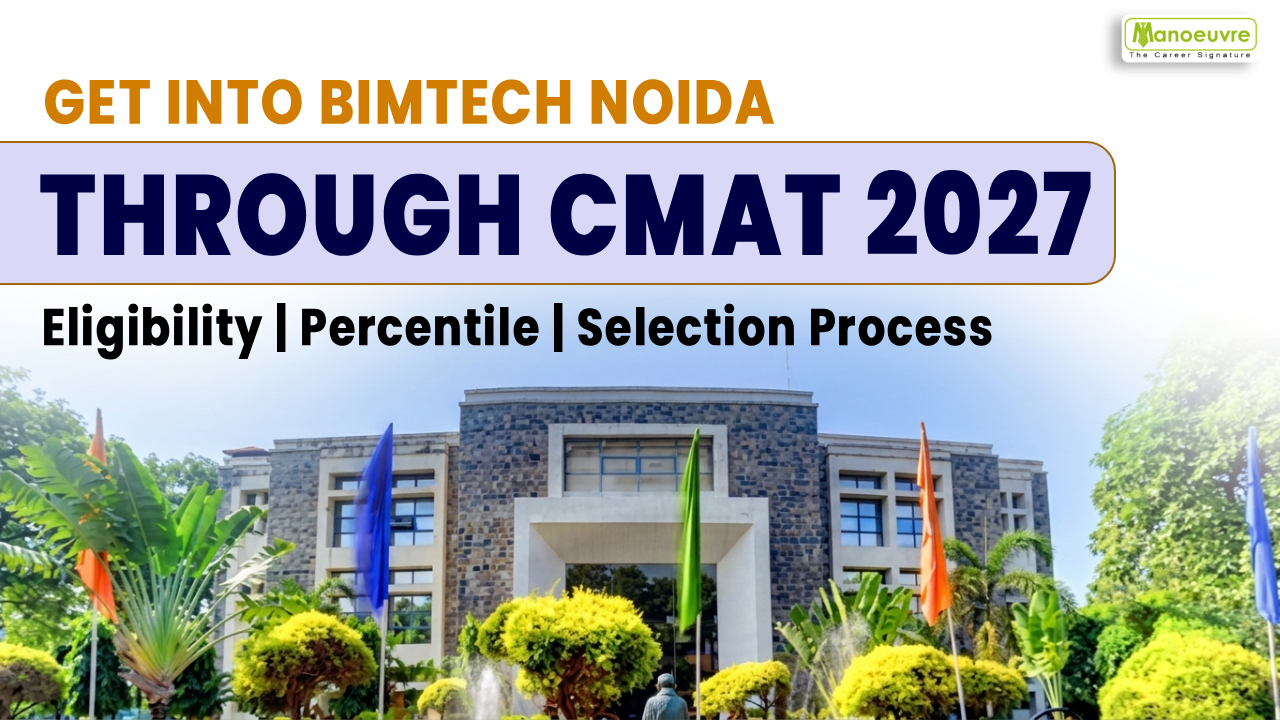
How to Get Into BIMTECH Noida through CMAT: Eligibility, Percentile Target & Stage 2 Strategy A good entrance exam score is only one part of getting into a top B-school. You also need to meet the basic academic rules, know how students are picked, and get ready for the interview rounds that follow.BIMTECH (Birla Institute of Management Technology) in Greater Noida is a popular choice for students who want to do an MBA-equivalent PGDM. It takes scores from CMAT, CAT, XAT, MAT and GMAT, and offers several specialisations to pick from.If you are applying with a CMAT score, this guide explains what percentile to aim for, who can apply, how the selection works, and how to handle Stage 2. What Is BIMTECH Noida? BIMTECH is a management college in Greater Noida, Uttar Pradesh. It runs two-year postgraduate diploma (PGDM) courses in different areas of business. The courses are meant to build your business knowledge, problem-solving ability and workplace skills.Here are its main PGDM courses:CourseWhat it coversPGDM (Core)A broad mix of marketing, finance, HR and other business subjectsPGDM International BusinessGlobal trade, exports and imports, and doing business across countriesPGDM Insurance Business ManagementInsurance, managing risk and related financial servicesPGDM Retail ManagementRunning retail stores, supply chains and online sellingBefore you choose, compare the subjects taught, the job options after each course, and the eligibility rules. Who Can Apply to BIMTECH Through CMAT? First, check that you fit the basic requirements.Educational QualificationYou usually need a bachelor's degree (10+2+3 pattern) in any subject, with at least 50% marks overall. So students from arts, science, commerce, engineering and other streams can apply.Students in the final year of their degree can also apply, as long as they finish the degree and submit the needed documents within the time the college sets.Which Entrance Exams Are Accepted?BIMTECH takes scores from these exams:● CMAT● CAT● XAT● MAT● GMATThe list can change from course to course and year to year. So read the latest admission notice before you apply.Remember, meeting the eligibility rules does not mean you will be selected. The college may also look at your exam score, past marks, work experience and overall profile. What CMAT Percentile Should You Aim For? No single percentile can promise you a seat at BIMTECH. Much depends on the course you pick, how many people apply, and how well you do in the later rounds.Still, here is a simple guide you can use while preparing:CMAT percentileWhat it means for you80 to 89Keep working on your score and look at other suitable courses too90 to 94A strong target that gives you a fair chance95 and aboveA high goal that can make your application strongerIf BIMTECH is high on your list, try to reach around the 95th percentile. But treat this as your own goal, not an official cutoff and not a promise of admission.Also, percentile is not the same as percentage. It only tells you how many test-takers you scored better than. A good percentile helps, but the rest of the process still matters.So don't just chase a number. Work on getting more answers right, using your time well, and scoring steadily in every section. BIMTECH Admission Process, Step by Step The process has a few stages. Knowing them early helps you plan and avoid missing deadlines.Step 1: Fill in the application. Apply online on the college's official admission website. Choose your course, enter your details correctly, upload the documents and pay the application fee.Step 2: Score and profile check. The college looks at your entrance score and your academic record to decide who moves ahead. A good CMAT score helps, but be ready to talk about your studies, goals and achievements too.Step 3: Stage 2. If you are shortlisted, you may be called for an extempore round and a personal interview. These check how well you speak, think, understand current issues and fit into management studies.Step 4: Final merit list. The college makes its final list using its own scoring method. Your entrance score, interview, past marks and profile may all count.Step 5: Confirm your seat. If you get an offer, follow the instructions for document checking and fee payment, and finish before the last date. How to Prepare for BIMTECH Stage 2 Getting shortlisted is great, but it is not the finish line. Give Stage 2 as much effort as you gave the entrance exam.1. Practise ExtemporeIn an extempore, you get a topic and very little time to think before speaking. The aim is to see how clearly you can put your thoughts across.Try these tips:● Speak on business, economy, society and general knowledge topics.● Use a simple plan: start, two or three main points, and an ending.● Focus on making sense rather than memorising long answers.● Record yourself and listen for pace, clarity and words like "umm" and "like".● When a topic has two sides, learn to explain both fairly.With regular practice, new topics will feel less scary.2. Get Ready for Interview QuestionsThe interview panel wants to know why you want this course, what kind of person you are, and what you plan to do next.Prepare honest answers to questions like:● Tell us about yourself.● Why do you want to do a PGDM?● Why BIMTECH?● What are your goals for the next few years and for the long run?● What are your strengths and what do you need to improve?● Which recent business or economic news caught your eye?Also revise the main topics from your own graduation subjects. If you have worked before, be ready to explain your role, what you achieved, and why you now want to study management.Don't memorise answers that don't match your real life. Honest, well-organised answers usually work better than fancy, generic ones.3. Follow Business News and Current AffairsPanels often ask about business trends, the economy and what's happening in the country and the world.Read the news daily. For each big story, ask yourself three things: what happened, why it matters, and how it may affect companies or ordinary people. You don't need to remember every headline. You just need to explain the issue in your own words.4. Know Your Own ProfileThe panel will go through your education, internships, projects and jobs. Be ready to talk about the important points.If you had a break in studies or work, give a simple, straight reason. For any project or job, think about what you learned and how it shaped your career plans.5. Do Mock InterviewsPractising with a mentor or a friend shows you weak spots you can't see yourself. It also builds confidence and improves how you structure answers and carry yourself.After each mock, note what went wrong and fix one or two things at a time, instead of trying to change everything together. BIMTECH PGDM Fees and Placements Before you say yes to an offer, think about what you will spend and what you can expect to earn. The figures below are rough ones, so please confirm them on the official BIMTECH website.ItemApproximate detailsCourse length2 yearsTotal PGDM feeAbout ₹14 lakhCompanies that visit for placements175+Highest packageAbout ₹22 LPAAverage packageCheck the latest placement report for your courseThe highest package is just one student's offer. It is not what most students get. So look at the average and median salary where available, which companies come, and what jobs they offer.Also add up other costs such as hostel, food, travel and loan interest, which may not be part of the course fee. Looking at all of this together will help you judge whether the course is worth the money. How to Build a Stronger Profile as a CMAT Student Your plan should cover both the exam and the rounds after it.● Start with a mock test. Take a CMAT mock to find your weak areas.● Make a weekly plan. Practise section-wise questions regularly.● Learn from mistakes. After every mock, go through each wrong answer and understand why you got it wrong.● Focus on accuracy and time. Getting questions right within the time limit matters more than attempting everything.● Don't skip Stage 2 prep. Set aside time for current affairs, extempore and interview practice.● Keep papers ready. Keep your mark sheets, résumé and application details in order so you can reply quickly when asked.If you need guidance, you can look at live online classes, self-study material, section-wise courses, full-length mocks, and special extempore or interview training. Pick what suits your current level, your free time and the way you learn. Conclusion To get into BIMTECH Noida with CMAT, you need three things: a good exam score, meeting the eligibility rules, and being ready for the later rounds. Aiming for the 90 to 95 percentile range is a handy goal, with around 95 as a high target, but not a guaranteed cutoff.Give equal time to interview practice, extempore and presenting your background well. Before applying, visit BIMTECH's official website to check the latest eligibility, last dates, fees, selection weightage and placement details, since these can change every year. FAQs: BIMTECH Noida Admission Through CMAT 1. What CMAT percentile do I need for BIMTECH Noida? Around the 90 to 95 percentile is a good target to prepare for. But the actual shortlisting can differ by course and year, and no percentile guarantees a seat.2. Who is eligible for BIMTECH PGDM? You generally need a recognised bachelor's degree in any stream with at least 50% marks overall. Check the current rules, especially if you are in your final year.3. Does BIMTECH accept CMAT scores? Yes. CMAT is one of the accepted exams, along with CAT, XAT, MAT and GMAT, depending on the course and the admission guidelines.4. How does BIMTECH select students through CMAT? It usually goes like this: online application, shortlisting on score and profile, Stage 2, final merit list, and then seat confirmation. Check the latest process for your chosen course.5. What is BIMTECH Stage 2 and how do I prepare? Stage 2 can include an extempore round and a personal interview. Practise speaking in a clear structure, revise your graduation subjects, follow the news, and think about your career goals and why you want to study management.6. What is the BIMTECH PGDM fee? The approximate fee for the two-year course is ₹14 lakh. Please confirm the latest course-wise fee and any extra charges on the official website.7. Can I get into BIMTECH with a low CMAT percentile? It depends on the college's shortlisting rules, your course choice, your marks and your profile. If your percentile is low, read the current guidelines instead of assuming you will or won't get a call.8. How can I improve my chances? Raise your CMAT score through regular mocks and mistake analysis, and also prepare for the extempore and interview. Good communication, awareness of current events, and a clear story about your studies and goals will help.
30 Oct 2026
0 comments
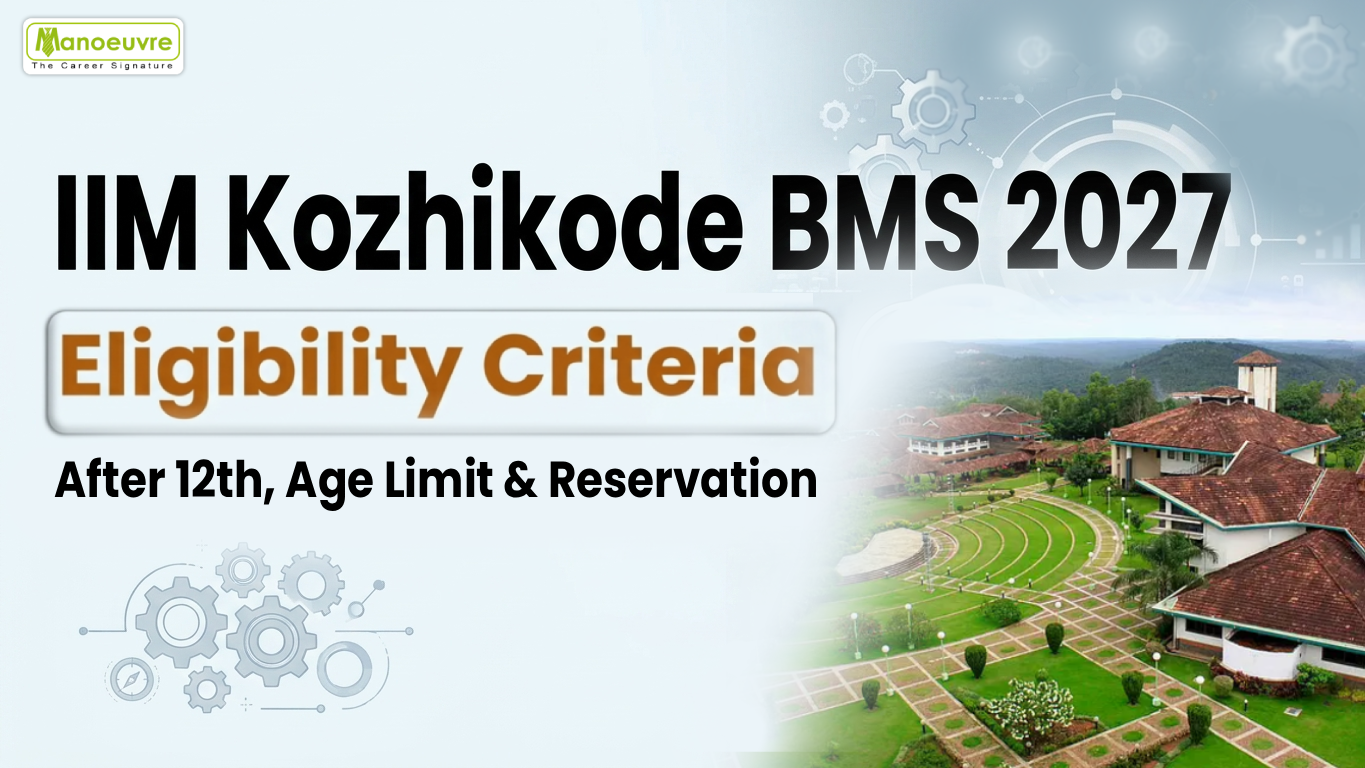
IIM Kozhikode BMS Eligibility Criteria 2027: After 12th, Age Limit & Reservation Planning to pursue an undergraduate management degree at IIM Kozhikode? Understanding the IIM Kozhikode BMS Eligibility Criteria 2027 is an important first step before applying for the entrance test. The Bachelor of Management Studies (Honours with Research) programme allows eligible students to explore management education after school.From educational qualifications and minimum marks to the age limit, reservation and selection process, this guide explains the key requirements candidates should know before applying for IIMK BMS. IIM Kozhikode BMS Eligibility Criteria 2027: Overview Before applying for the IIM Kozhikode BMS programme in 2027, candidates should check the eligibility requirements to understand whether they meet the basic criteria for admission.Eligibility ParameterRequirementEducational qualificationClass XII or an eligible diploma after Class 10Academic streamAny streamMinimum percentageNo minimum percentage specified for applicationAge limitNo age restriction for the aptitude testEntrance examinationIIMK BMS Aptitude TestInternational applicantsNRIs and International students are encouraged to applyReservationApplicable Government of India reservation categoriesPwD provisionsReservation and examination accommodations for eligible candidatesGoing through these requirements can help candidates understand the academic qualifications, entrance test and other conditions they need to consider before applying. Educational Qualification for IIM Kozhikode BMS 2027 2.1 Eligibility After Class 12Applicants with an HSC/Class XII pass, an International Baccalaureate (IB) result or a comparable qualification from a recognised board are eligible for IIMK BMS.Candidates from Arts, Commerce and Science backgrounds are eligible to apply, provided they meet the prescribed requirements.2.2 Can Diploma Holders Apply for IIM Kozhikode BMS?Yes. Candidates who have completed a diploma after Class 10 can also apply if their qualification is recognised by the relevant government authorities.This route allows eligible diploma holders to consider undergraduate management studies alongside students following the traditional Class XII pathway.2.3 Can Students Awaiting Class 12 Results Apply?Candidates awaiting their HSC/Class XII, IB, equivalent examination or diploma results may apply for the aptitude test. They are provided a period after the examination to submit their marks through the application portal.Candidates must submit their results within the specified timeframe to complete the required formalities. Is There Any Minimum Percentage Requirement? There is no minimum Class XII or diploma percentage specified for applying to the IIMK BMS Aptitude Test.However, academic marks still matter during the initial shortlisting stage. Class X and Class XII percentage scores contribute to the Aggregate Index Score (AIS), which is used to shortlist candidates for the Personal Interview.For percentage calculations, marks across all subjects listed on the marksheet or gradesheet are considered, irrespective of whether the board includes every subject in its own aggregate calculation. IIM Kozhikode BMS Age Limit 2027 There is no age restriction for appearing for the IIMK BMS Aptitude Test. Candidates do not need to fall within a specified age range to take the examination.They must still meet the educational requirements and follow the applicable examination instructions. IIM Kozhikode BMS Entrance Exam Eligibility Candidates seeking admission must take the IIMK BMS Aptitude Test. The examination covers two broad areas:SectionMain focusVerbal AbilityEnglish language skills, vocabulary and reading comprehensionQuantitative AbilityNumerical skills and mathematical problem-solvingThe aptitude test plays a key role in how candidates are selected. Its percentile score is used both in interview shortlisting and in the final selection calculation. Aggregate Index Score (AIS) for Personal Interview Shortlisting IIM Kozhikode uses an Aggregate Index Score to shortlist eligible candidates for the Personal Interview. The score combines entrance-test performance with Class X and Class XII academic results.ComponentWeightageIIMK BMS Aptitude Test percentile40%Class XII percentage score30%Class X percentage score30%Total100%The shortlist is prepared separately for different categories. Candidates should therefore pay attention to both their aptitude-test performance and academic record. IIM Kozhikode BMS Final Selection Weightage After the Personal Interview, the institute calculates a final score using three components.ComponentWeightageAptitude-test percentile score70%Personal Interview score25%Gender diversity score5%Total100%During the interview, candidates are assessed on their academic engagement, general awareness, social outlook, attitude, personality, communication and overall suitability for the programme.A common merit list and category-wise merit lists are prepared using the final scores. Admission offers are made according to merit and the applicable reservation framework. Can International Students and NRIs Apply? Yes. International students and Non-Resident Indians (NRIs) are encouraged to apply for IIMK BMS.Applicants must satisfy the applicable educational requirements and provide the necessary documents supporting their qualifications. IIM Kozhikode BMS Reservation Policy 2027 The reservation framework follows Government of India norms for Central Educational Institutions.CategoryReservation percentageOther Backward Classes - Non-Creamy Layer (OBC-NCL/NC-OBC)27%Scheduled Caste (SC)15%Scheduled Tribe (ST)7.5%Economically Weaker Sections (EWS)10%Persons with Benchmark Disabilities (PwBD/PwD)5%Candidates seeking consideration under a reserved category should select the appropriate category and provide the required supporting certificates. IIM Kozhikode BMS Eligibility for PwD Candidates Candidates with benchmark disabilities may qualify for PwD reservation under the Rights of Persons with Disabilities Act, 2016.The benchmark-disability threshold is generally at least 40% of a specified disability, supported by certification from the authorised certifying authority in accordance with the Act.The recognised categories include:● Blindness and low vision.● Deafness and hard of hearing.● Locomotor disabilities, including cerebral palsy, dwarfism, muscular dystrophy, leprosy-cured persons and acid-attack victims.● Autism, intellectual disability, specific learning disability and mental illness.● Multiple disabilities covered under the Act.● Other specified disabilities listed in its Schedule.Candidates should have the appropriate disability certificate to claim applicable benefits. Documents Required for IIM Kozhikode BMS Eligibility Candidates should prepare the documents relevant to their educational background and category.● Class X marksheet or certificate.● Class XII marksheet or qualifying examination certificate.● Diploma certificate and marksheets, where applicable.● SC/ST certificate, where applicable.● OBC-NCL or EWS certificate, where applicable.● PwD certificate, where applicable.● Documents supporting equivalent or international qualifications, where applicable.Original academic and relevant category certificates are required for verification during the Personal Interview. Conclusion The IIM Kozhikode BMS Eligibility Criteria 2027 cover educational qualifications, entrance-test participation, academic performance, reservation and provisions for candidates with disabilities. Eligible Class XII students and diploma holders can explore this undergraduate management programme without a specified minimum percentage or age restriction for the aptitude test.Understanding the Aggregate Index Score and final selection weightage is equally important. Candidates should prepare for both aptitude-test sections, maintain their academic records and keep the necessary supporting documents ready as they work towards admission to the Bachelor of Management Studies (Honours with Research) programme.Students are advised to visit the official IIM Kozhikode website regularly for the latest updates and announcements regarding the IIM Kozhikode BMS Eligibility Criteria 2027 and admission process. FAQs on IIM Kozhikode BMS Eligibility Criteria 2027 1. Is IIM Kozhikode BMS available after Class 12?Yes. Students who have passed Class XII or an accepted equivalent qualification can apply.2. Can students from any stream apply?Yes. Eligible candidates from Arts, Commerce, Science and other recognised streams can apply.3. Is there a minimum percentage requirement?No minimum Class XII or diploma percentage is specified for applying to the aptitude test.4. What is the age limit for IIMK BMS?There is no age restriction for taking the aptitude test.5. Can diploma holders apply?Yes. Candidates with an eligible diploma completed after Class 10 can apply.6. Can students awaiting their results apply?Yes. Candidates awaiting qualifying examination or diploma results can apply and submit their marks within the specified period.7. How much weightage does the aptitude test carry?The test percentile carries 40% weightage in the Aggregate Index Score for interview shortlisting and 70% in the final selection score.8. Do PwD candidates receive extra examination time?Eligible PwD candidates receive an additional 20 minutes per hour, equivalent to 40 extra minutes for a two-hour test. The stated provision applies whether or not a candidate requires a scribe.9. Can PwD candidates use a scribe?Yes, eligible PwD candidates can use a scribe, subject to the applicable examination guidelines and instructions.
Featured Blogs
 MBA Entrance
 LAW 5years Entrance
 LAW 3years Entrance
 MCA Entrance
 CUET PG Entrance
 BBA Entrance
 BCA Entrance
 Hotel-Management
 B.ED Entrance
