
21 Sep 2026
0 comments
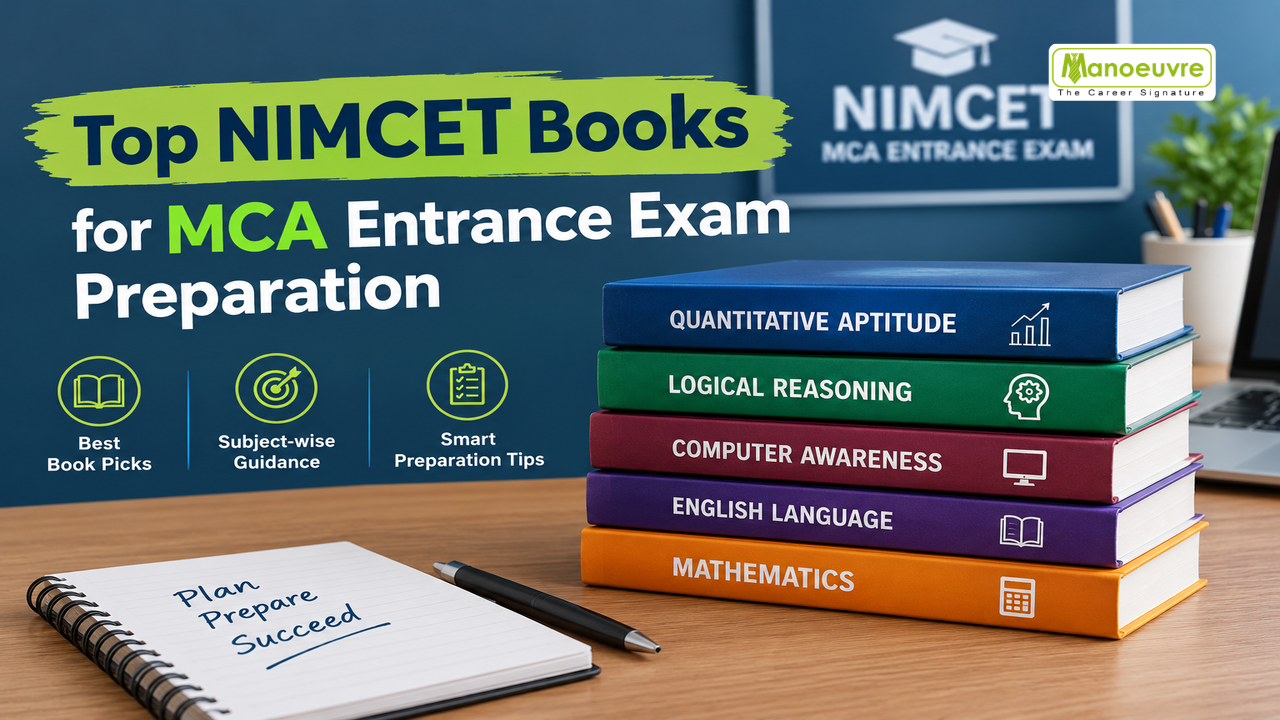
Top NIMCET Books for MCA Entrance Exam Preparation: Section-Wise Guide Choosing the right books can make NIMCET preparation much more manageable. The challenge is not finding study material; there is plenty of it available. The real challenge is deciding what is actually worth studying and which resources cover the topics you are expected to prepare.For students targeting MCA in NITs, NIMCET is an important entrance exam, and preparation needs to be focused on the current syllabus. A good NIMCET book should help you understand concepts, practise different types of questions and gradually improve your accuracy and speed.Instead of collecting several books and switching between them, it is better to choose resources that match the exam and use them consistently. NIMCET Syllabus: What Should Your Books Cover? The revised NIMCET syllabus, effective from 2026, covers four sections: Mathematics, Analytical Ability & Logical Reasoning, Computer Awareness and General English. Mathematics has the highest number of questions, followed by Analytical Ability & Logical Reasoning. Section Questions Major Areas Mathematics 50 Algebra, Calculus, Coordinate Geometry, Trigonometry, Probability & Statistics, Set Theory & Logic Analytical Ability & Logical Reasoning 40 Reasoning, Puzzles, Coding-Decoding, Data Interpretation, Data Sufficiency and more Computer Awareness 20 Computer Basics, Hardware, Software, Data Representation, Internet and Email General English 10 Vocabulary, Grammar, Comprehension, Word & Phrase Meaning, Technical Writing This is why there is no single book for NIMCET preparation that needs to do everything. Your resources should collectively cover the syllabus properly. How to Choose the Best NIMCET Books Before buying a book, check what it actually offers. A popular title is not automatically the right choice for your preparation.Check the syllabus coverageStart with the current NIMCET syllabus and compare it with the contents of the book. This is particularly important for Mathematics because the syllabus covers several areas, including Algebra, Calculus, Coordinate Geometry and Trigonometry.Look for enough practiceA book should give you more than explanations. Once you understand a concept, you need enough questions to become comfortable solving it under time pressure.Prefer topic-wise practiceTopic-wise questions make preparation easier to organise. You can finish one topic, identify mistakes and then move to the next instead of solving random questions without knowing what needs improvement.Check the level of questionsA useful NIMCET book should ideally include basic questions along with moderate and exam-level problems. Starting with difficult questions without understanding the fundamentals can make preparation unnecessarily frustrating.Look for previous-year questionsPrevious-year questions are useful for understanding how concepts are tested. They can also show you which areas need more attention.Avoid buying too many booksHaving five books for one section does not mean you are better prepared. In most cases, completing one reliable resource properly is more useful than repeatedly starting new ones. Top NIMCET Books for Mathematics Mathematics deserves the most attention because it carries 50 questions in the current NIMCET syllabus.When choosing a Mathematics book, look for proper coverage of:● Set Theory and Logic● Probability and Statistics● Algebra● Coordinate Geometry● Calculus● TrigonometryThe Mathematics syllabus goes beyond basic arithmetic. It includes topics such as quadratic equations, logarithms, progressions, matrices and determinants, permutations and combinations, binomial theorem, conics, limits, differentiation, integration and trigonometric equations.A good Mathematics resource should therefore provide clear explanations followed by plenty of questions. Students who are weak in Mathematics should first focus on understanding the concept before moving towards timed practice. Top NIMCET Books for Analytical Ability & Logical Reasoning Analytical Ability & Logical Reasoning accounts for 40 questions, making it another major part of the exam.Your reasoning book should provide practice for areas such as:● Blood relations● Coding-decoding● Direction tests● Seating arrangements● Puzzles● Syllogisms● Alphanumeric series● Statements and conclusions● Verbal and non-verbal reasoning● Data interpretation● Data sufficiency● Numerical reasoningThe current syllabus also includes deductive reasoning, inductive reasoning, problem solving, critical thinking and data visualization.For this section, practice matters as much as understanding the method. The more different question types you solve, the easier it becomes to recognise the approach needed during the actual NIMCET exam. Top NIMCET Books for Computer Awareness Computer Awareness has 20 questions and focuses mainly on fundamental computer concepts rather than advanced programming.A suitable MCA NIMCET book or Computer Awareness resource should cover:● Computer organisation● CPU and instructions● Input and output devices● Computer memory● Storage devices● Binary and hexadecimal representation● Binary arithmetic● Two's complement● Floating-point representation● Boolean algebra● Operating systems● System and application software● Internet and email● Basic online securityThe best resource for this section is one that explains these concepts in a straightforward way and provides objective questions for practice. Top NIMCET Books for General English General English carries 10 questions, but it should not be completely ignored. The syllabus includes comprehension, vocabulary, grammar, sentence forms, word formation, meanings of words and phrases, technical writing, accuracy and fluency.For this section, choose a resource that gives you regular practice in:● Grammar● Vocabulary● Reading comprehension● Sentence usage● Word and phrase meanings● Basic technical EnglishYou can combine book-based practice with regular reading. This is often more useful than trying to memorise large vocabulary lists without seeing how words are actually used. NIMCET Books for MCA Entrance Preparation Students searching for NIMCET books for MCA entrance should remember that NIMCET preparation needs to follow the NIMCET syllabus specifically.A general MCA entrance book may contain useful questions, but it should not replace a resource that covers the topics prescribed for NIMCET. The same applies to a generic NIT entrance test preparation book.If your goal is an MCA in NIT, start with the official syllabus, select section-wise resources and then add previous-year questions and mock tests to your preparation. How Many Books Do You Need for NIMCET? There is no fixed number of books that every student needs.A practical approach is to have:● One main Mathematics resource● One Logical Reasoning resource● One Computer Awareness resource● One English resource● Previous-year questions● Mock testsYou can use additional material if a particular topic is difficult, but there is little benefit in continuously changing books.The important thing is to finish what you start, revise regularly and keep track of the questions you get wrong. How to Use NIMCET Books for Preparation Simply reading a book from beginning to end is not enough. Try to use your resources in stages.Start with concepts: Understand the basic method before attempting difficult questions.Practise topic-wise: Solve enough questions to become comfortable with a particular topic.Review mistakes: Dig into your error instead of just checking the answer.Return to weak areas: If you repeatedly make mistakes in the same topic, revise it instead of moving on just because the chapter is completed.Add timed practice: Once your concepts are reasonably strong, start solving questions with a time limit.Use previous-year questions: They help you connect what you have studied with the kind of questions you may face in the exam. How Books and Mock Tests Help You in NIMCET Preparation Books help you build concepts and practise different types of questions, while mock tests help you apply that preparation under time pressure. Using both gives your NIMCET preparation a better balance between learning and exam practice. Resource Main Benefit NIMCET Books Build concepts and strengthen fundamentals Topic-wise Practice Improve accuracy and question-solving skills Previous-Year Questions Understand the type and level of questions Mock Tests Improve speed, time management and accuracy Mock Analysis Identify mistakes and weak topics Revision Retain important concepts and formulas Don't focus only on your mock-test score. Check the questions you got wrong, left unanswered or took too long to solve. Use your NIMCET exam preparation books to revise weak topics and then practise them again.A simple approach is: learn from books → practise → attempt mocks → analyse mistakes → revise. This helps you make better use of both your study material and mock tests. Common Mistakes While Choosing NIMCET Books A few mistakes can make preparation harder than it needs to be:● Buying too many books without finishing any● Choosing books without checking the current syllabus● Spending most of the preparation time on Mathematics while ignoring other sections● Reading concepts without solving enough questions● Skipping previous-year questions● Changing resources every time a topic feels difficult● Taking mock tests without analysing mistakesThe goal is not to complete the maximum number of books. It is to become comfortable with the questions you are likely to face. Conclusion The right NIMCET books can make preparation more organised, but the book itself is only one part of the process. Start with the current syllabus, choose resources that cover the required topics and give yourself enough time to practise.Focus especially on Mathematics and Analytical Ability & Logical Reasoning, while keeping Computer Awareness and General English in your regular study routine. Once your concepts are clear, bring in previous-year questions and mock tests to see how well you can apply what you have learned.A small set of useful resources, used consistently, is usually far more valuable than a large collection of books that remain unfinished. FAQs 1. Who is eligible for NIMCET?Eligibility depends on the current admission and academic requirements specified for NIMCET. Students should always check the latest official admission notification before applying.2. Which book is best for NIMCET?There is no single book that is best for every student. Choose resources based on the current syllabus, your preparation level and the amount of practice they provide.3. Is NIMCET easy to crack?NIMCET can be challenging because students need to manage different sections along with speed and accuracy. Consistent preparation and regular practice can make the exam much more manageable.4. Is NIMCET worth it?For students interested in pursuing MCA through participating NITs and other institutes accepting NIMCET scores, it can be a valuable entrance exam. Students should compare the participating institutes, programmes and admission requirements before deciding.5. How many books are enough for NIMCET preparation?You do not need a large collection of books. A few well-chosen section-wise resources, combined with previous-year questions and mock tests, can provide a solid preparation base.6. Which book is best for NIMCET Mathematics?Choose a Mathematics book that matches the current NIMCET syllabus and offers clear concepts, solved examples and sufficient practice questions across the major topics.7. Are previous-year papers important for NIMCET preparation?Yes. Previous-year questions help you understand the types of problems asked and give you an opportunity to practise applying concepts in an exam-oriented way.8. Can I prepare for NIMCET using books and mock tests?Yes. Books can help you build concepts and practise questions, while mock tests help you improve speed, accuracy and time management. Using both gives your preparation a more complete structure.
19 Sep 2026
0 comments
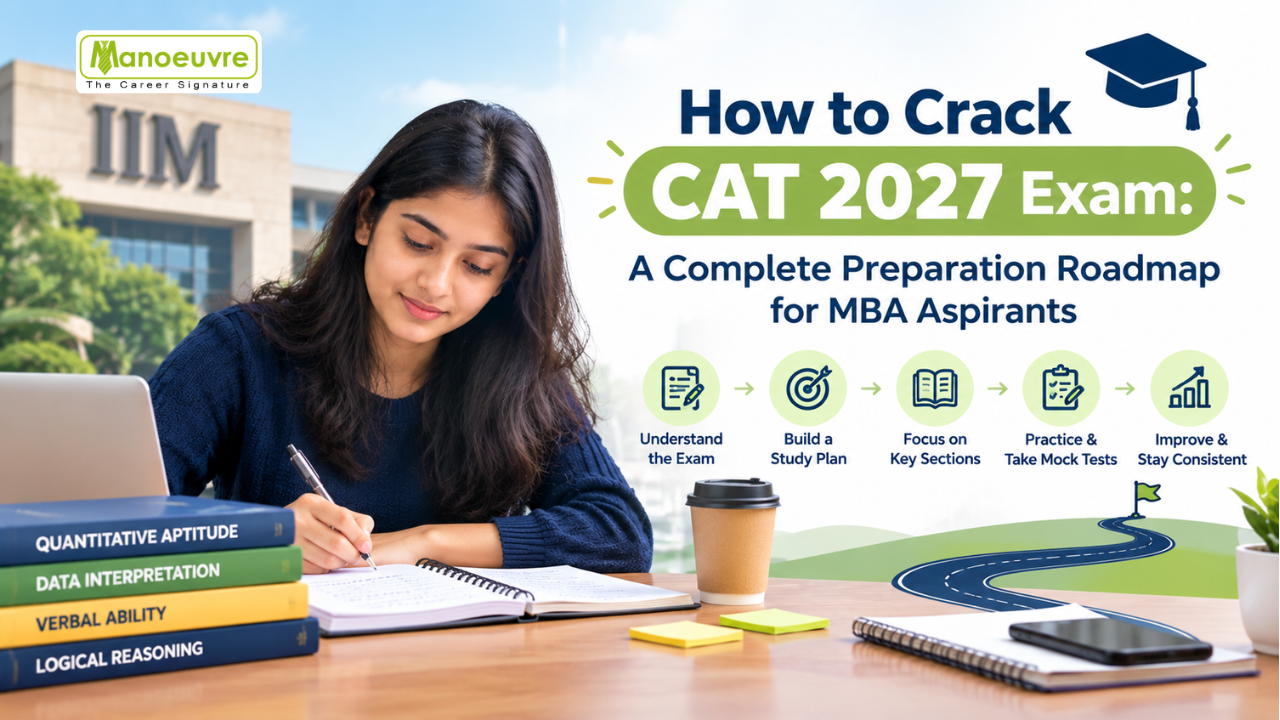
How to Crack CAT 2027 Exam: A Complete Preparation Roadmap for MBA Aspirants Preparing for CAT 2027 can appear overwhelming given the level of competition, the breadth of the syllabus, and the speed required to solve questions within the given time. However, effective preparation does not require studying every topic at once. It requires a clear understanding of the exam pattern, a solid foundation in basics, regular and structured practice, and consistent learning from mistakes.For those researching how to crack the CAT exam for MBA admissions, the first requirement is a preparation plan that can be followed consistently. A steady routine maintained over several months tends to produce better results than short bursts of intensive study followed by long gaps.This guide outlines a practical approach to preparing for CAT 2027. Understand the CAT Exam Before You Begin Preparation Before diving into prep, take time to understand how the exam is organized and what each section entails. CAT evaluates candidates across three sections:● VARC - Verbal Ability and Reading Comprehension● DILR - Data Interpretation and Logical Reasoning● QA - Quantitative AptitudeEqual proficiency in all three sections is not required at the outset. The first step is to assess your current level of preparedness.Attempt a few questions from each section, or take a diagnostic mock test. The score at this stage is not important. The objective is to identify your strengths, weaknesses, and the question types that require more time to solve. Begin CAT 2027 Preparation with the Fundamentals For candidates starting preparation from the beginning, it is advisable not to attempt difficult questions immediately.● Quant - Revise basic concepts and formulas before progressing to more challenging problems.● VARC - Develop a consistent reading habit and focus on understanding passages rather than memorising vocabulary alone.● DILR - Begin with manageable sets and gradually increase the level of difficulty.A strong foundation makes subsequent practice significantly more effective. Creating a CAT 2027 Study Plan An effective CAT 2027 study plan should be divided into distinct stages rather than attempting to cover all areas simultaneously.Stage 1: Build the FoundationThis stage should focus on understanding core concepts across all three sections, recognising different question types, and solving easy to moderate questions without emphasis on speed. Accuracy and conceptual clarity should take priority at this point. This is also the stage to identify topics that require additional attention and to establish a consistent study routine.Stage 2: Increase PracticeOnce the fundamentals are reasonably clear, preparation should shift towards mixed and timed practice. This includes solving varied DILR sets and reading comprehension passages, and combining Quant questions from different topics to build the ability to identify the required concept quickly.At this stage, preparation should move from learning concepts to applying them under time constraints.Stage 3: Focus on Mocks and RevisionAs the exam approaches, mock tests should form a central part of preparation. However, the value of a mock test lies primarily in the analysis that follows it, not in the score alone.After each mock test, review the following:● Which questions were answered incorrectly, and why● Which questions consumed excessive time● Which questions should have been skipped● Whether errors were conceptual or due to calculation mistakes● Which section had the greatest impact on overall performanceMaintaining a mistake log and reviewing it regularly can help identify recurring patterns. Section-Wise Preparation for CAT 2027 Each section of the CAT exam requires a distinct approach. Applying the same method across VARC, DILR and Quant is unlikely to yield the best results. Section Core Focus Areas Preparation Approach VARC Reading Comprehension, Verbal Ability Read regularly and practise a variety of passage types and verbal questions DILR Data Interpretation, Logical Reasoning Practise diverse sets and develop speed along with sound set selection Quant Arithmetic, Algebra, Geometry, Number System Strengthen concepts, practise mixed questions, and introduce timed practice CAT VARC PreparationRegular reading contributes significantly to VARC preparation. Editorials, essays and long-form articles across different subjects can help build familiarity with unfamiliar topics and longer passages.While practising, attention should be given to:● Reading comprehension● Para-based questions● Sentence arrangement● Verbal reasoning● Vocabulary in context● Understanding the author's argumentIn the initial stages, focus should be on understanding the tone, central idea and structure of a passage rather than on completing it quickly. Speed generally improves with consistent practice.CAT DILR PreparationDILR requires both logical reasoning ability and the capacity to work through unfamiliar information without losing time. It is advisable to practise a range of set types rather than limiting practice to familiar formats.Preparation should cover:● Tables and charts● Arrangements● Games and tournaments● Distribution● Networks● Caselets● Logical conditionsSet selection is a critical skill in this section. During practice, candidates should note which sets can be solved efficiently and which ones require excessive time, as this understanding supports better decision-making during the actual exam.CAT Quantitative Aptitude PreparationFor Quant, concepts should be strengthened before attempting difficult questions. Once a topic is well understood, question variety should be increased, followed by the gradual introduction of time limits.Important areas include:● Arithmetic● Algebra● Geometry● Number system● Modern mathematics● Percentages● Profit and loss● Ratio and proportion● Averages● Time, speed and distance● Time and workProgress isn't about quantity. Instead, measure yourself by the quality of your responses, your error patterns, and whether you're actually learning from each question. When an error occurs, it is important to understand its cause. Addressing recurring mistakes early tends to be more beneficial than solving a larger volume of questions. How Many Hours Should You Study for CAT 2027? There's no universal formula saying you need to study 5 hours or 8 hours every day. Different students need different timeframes based on their starting level, learning pace, and existing knowledge. The appropriate duration depends on the time available before the exam, the candidate's current level of preparation, and other daily commitments.For candidates starting early, even a few focused hours each day, maintained consistently, can be effective. Those with college, work or other responsibilities should create a schedule that reflects the time realistically available to them.A routine that can be sustained over several months generally produces better outcomes than an intensive schedule that cannot be maintained. Can You Crack CAT 2027 Without Coaching? Yes, self-study is a viable option, though it requires discipline. Candidates preparing independently should ensure they have reliable study material, a structured preparation plan, regular practice, and adequate mock tests.Coaching can provide structure and guidance, but enrolling in a course does not replace individual effort and practice. Similarly, self-study can be effective when supported by a clear plan and consistent progress tracking.Go with what suits your learning and schedule. How to Improve Your CAT Preparation ● Analyse mistakes regularly. Work on patterns of errors, not new problems. ● Practise with a timer. Add time pressure only once you understand the concept. ● Revise on a consistent basis. Concepts and formulas that are not revised are easily forgotten.● Read daily. Regular reading builds comfort with lengthy and unfamiliar passages.● Take mocks seriously. The purpose of a mock test extends beyond the score; it should inform your approach.● Avoid frequent changes in strategy. Allow sufficient time to evaluate whether a preparation method is working. Common Mistakes to Avoid During CAT Preparation Common Mistake What You Should Do Instead Starting with difficult questions Build fundamentals first and increase difficulty gradually Using too many study materials Rely on a few reliable resources and complete them thoroughly Ignoring a weak section Identify weak areas through practice and give them regular attention Taking mocks without analysis Review incorrect, skipped and time-consuming questions after every mock Focusing only on attempts Track accuracy along with the number of questions attempted Spending too long on one question Recognise when to move on to preserve time for other questions Leaving revision until the end Revise concepts and formulas consistently throughout preparation The objective is not to eliminate every mistake, but to identify them early and refine your approach as preparation progresses. Final Thoughts on CAT 2027 PreparationThere is no single method that guarantees success in CAT. Different candidates reach their goals through different preparation routines.Begin by assessing your current level, strengthening your fundamentals, and developing a realistic CAT 2027 preparation strategy. Gradually increase the difficulty of your practice, incorporate mock tests, and use your mistakes to refine your approach.Candidates with more preparation time should use it to build strong fundamentals rather than rushing through the syllabus. Those with limited time should prioritise important areas, practise strategically, and dedicate more time to performance analysis.The primary objective of CAT preparation should be steady improvement in accuracy, speed, decision-making and overall confidence. Maintaining consistency and adjusting strategy based on mock-test performance are essential to this process. Frequently Asked Questions 1. Can I crack CAT in three months? Yes, preparation within three months is possible, provided the approach remains focused. Prioritize core topics, frequent practice, tests, and analysis. 2. Is the CAT exam difficult to crack? CAT is a competitive exam, and its difficulty varies depending on a candidate's fundamentals, quality of practice, and ability to manage time effectively during the exam.3. How should I start my CAT preparation from scratch?Begin by understanding the three sections, assessing your current level, and building your fundamentals. Next, create a schedule with practice, revision, and tests. 4. How many hours should I study for CAT 2027? No standard hour count fits all students. A realistic daily schedule should be created based on the time available and followed consistently.5. Can I crack CAT 2027 without coaching? Yes. Self-study is a viable option provided the candidate has suitable study material, a proper preparation plan, regular practice and access to good-quality mock tests.6. How can I improve my CAT mock-test scores? Every mock test should be analysed after completion. Conceptual mistakes, time-management issues, questions that should have been skipped, and sections requiring improved accuracy should all be identified.7. When should I start CAT 2027 preparation? Starting early allows more time to build fundamentals, practise different question types, revise thoroughly, and attempt an adequate number of mock tests. However, the appropriate starting point depends on the candidate's current level and available study time.
18 Sep 2026
0 comments
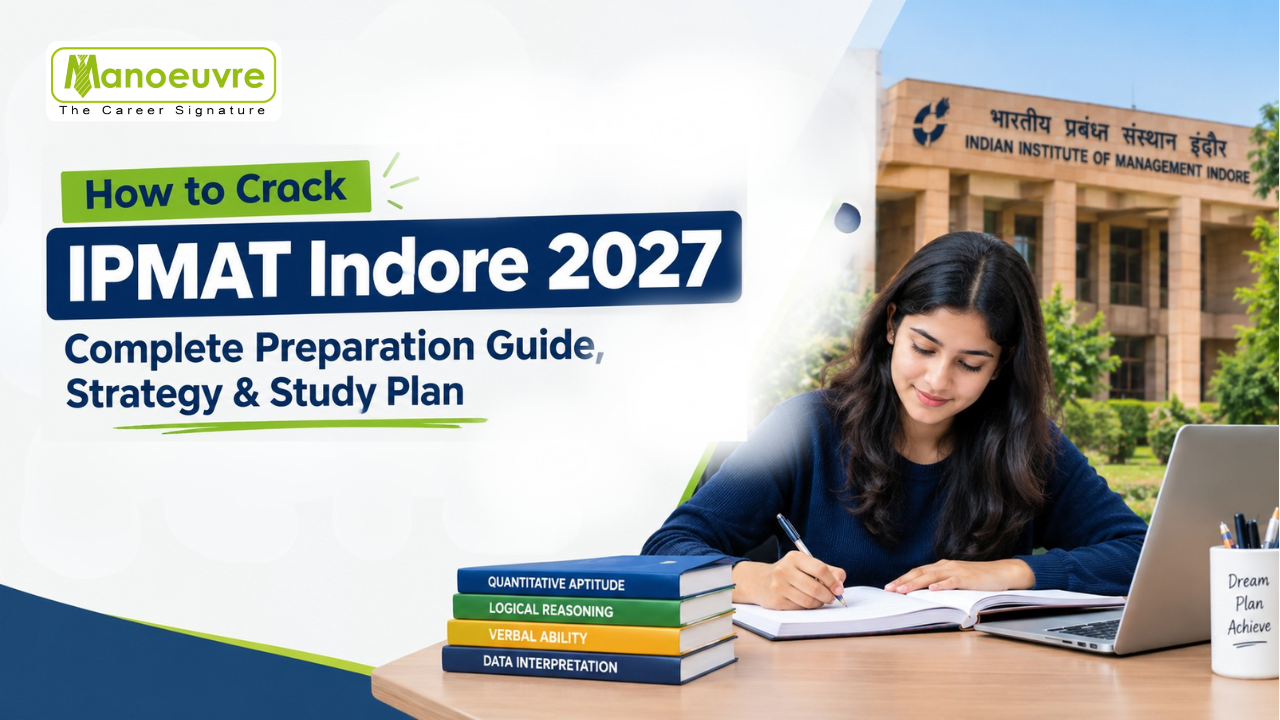
How to Crack IPMAT Indore 2027: Complete Preparation Guide, Strategy & Study Plan Cracking IPMAT Indore 2027 requires more than simply solving questions every day. You need a clear understanding of the exam, strong fundamentals, consistent practice, smart time management, and a preparation strategy that develops both speed and accuracy.The Five-Year Integrated Programme in Management (IPM) at IIM Indore is designed for students who want to pursue management education directly after Class 12. IIM Indore launched the programme in 2011, and the programme combines undergraduate-level foundational education with management education in the later years.If you are planning to appear for IPMAT Indore 2027, starting early can give you enough time to strengthen your concepts, practise different question types, take mock tests, analyse your performance, and prepare for the Personal Interview stage.This guide explains how to prepare for IPMAT Indore 2027, including the exam structure, section-wise strategy, study plan, mock-test approach, recommended preparation methods, common mistakes, and interview preparation.Important: IPMAT Indore may revise its admission criteria, exam pattern, eligibility requirements or selection process for the 2027 admission cycle. The 2026 details mentioned below should therefore be treated as the latest available reference until IIM Indore releases the official IPMAT 2027 notification. IPMAT Indore 2027: What Should You Know First? Before starting your preparation, understand what the examination is testing.The latest official IPMAT Indore pattern available for the 2026 admission cycle consisted of three sections:● Quantitative Ability – Multiple Choice Questions (QA-MCQ)● Quantitative Ability – Short Answer Questions (QA-SA)● Verbal Ability – Multiple Choice Questions (VA-MCQ)Each section had a 40-minute duration, making the total test duration 120 minutes. Each question carried 4 marks. The 2026 pattern specified negative marking for incorrect answers except in the Quantitative Ability Short Answer section. Section Question Type 2026 Reference Duration Quantitative Ability MCQ 40 minutes Quantitative Ability Short Answer 40 minutes Verbal Ability MCQ 40 minutes Total — 120 minutes The sections were to be attempted in a pre-specified order, with the exact order determined by the institute.For 2026, candidates needed positive raw scores and minimum section-wise marks to enter the PI-eligible pool. The Aptitude Test Score used a 25% weight each for QA-MCQ and QA-SA and 50% for VA. The final Composite Score used 65% ATS and 35% Personal Interview.This makes one point very important: you should not prepare only for Quantitative Ability or only chase overall marks. A balanced preparation strategy matters. IPMAT Indore 2027 Preparation Strategy A strong preparation strategy can be divided into four broad stages: Phase 1: Build Your Fundamentals Start by strengthening the concepts required for the examination.For Quantitative Ability, focus on areas such as:● Number System● Percentages● Ratio and Proportion● Profit and Loss● Simple and Compound Interest● Averages● Time, Speed and Distance● Time and Work● Algebra● Geometry● Mensuration● Permutation and Combination● Probability● Modern MathematicsFor Verbal Ability, begin building:● Reading comprehension● Vocabulary● Grammar● Sentence correction● Para jumbles● Sentence completion● Verbal reasoningDo not rush into difficult questions before your fundamentals are clear. Phase 2: Develop Speed and Accuracy Once your basic concepts are comfortable, start solving questions under time pressure.Your goal should not simply be:“How many questions can I solve?”Instead, ask:“How many questions can I solve correctly within the available time?”Maintain an error log containing:● Questions answered incorrectly● Questions that took too long● Questions you guessed● Concepts you repeatedly forget● Calculation mistakes● Questions you skipped but could have solvedReview this error log regularly. Phase 3: Previous-Year Questions + Mock Tests Previous-year questions help you understand the type and difficulty of questions you may encounter.Start with topic-wise practice and gradually move towards complete papers and mock tests.When taking a mock, reproduce actual test conditions:● Set a timer● Avoid distractions● Follow the section sequence● Do not pause unnecessarily● Attempt the paper in one sittingAfter the mock, spend enough time analysing it.Your mock analysis should answer:1. Which section was strongest?2. Which section was weakest?3. Which questions consumed excessive time?4. Which mistakes were conceptual?5. Which mistakes were careless?6. Which questions should have been skipped?7. Which topics need additional practice?Remember:A mock test without analysis is only half the preparation. Phase 4: Final Revision During the final weeks, avoid constantly adding new study material.Instead, focus on:● Formula revision● Vocabulary revision● Important concepts● Previous-year questions● Error logs● Mock-test analysis● Time-management practiceThe final stage should improve your accuracy and confidence rather than create unnecessary confusion. IPMAT Indore 2027 Quantitative Ability Preparation Strategy Quantitative Ability can become one of the most important parts of your preparation because it contains both MCQ and Short Answer formats in the latest available IPMAT Indore pattern.1. Start With ArithmeticBuild strong command over:● Percentages● Ratio● Proportion● Averages● Profit and Loss● Time and Work● Time, Speed and Distance● Mixtures● Simple and Compound InterestThese topics also help develop calculation speed and mathematical thinking.2. Move to AlgebraOnce arithmetic is comfortable, work on:● Linear equations● Quadratic equations● Inequalities● Functions● Sequences and series● Algebraic identities3. Strengthen GeometryPractise:● Lines and angles● Triangles● Circles● Quadrilaterals● Coordinate geometry● Mensuration4. Practise Short-Answer QuestionsDo not leave Short Answer questions for the final months.Since there are no answer choices to eliminate, you need to develop the ability to reach the answer independently.Practise these questions regularly and focus on:Concept → Calculation → Verification → Answer IPMAT Indore 2027 Verbal Ability Preparation Strategy Verbal Ability is not a section that can usually be mastered through last-minute preparation.The best approach is consistent exposure to English.Develop a Daily Reading HabitRead for approximately 30–45 minutes every day.You can use:● Editorial articles● Newspapers● Business articles● Opinion pieces● Essays● Long-form articles● Quality non-fictionWhile reading, don't simply focus on finishing the article.Try to identify:● Main idea● Author's tone● Argument● Supporting evidence● Inference● Meaning of unfamiliar words from contextBuild Vocabulary in ContextInstead of memorising hundreds of isolated words, learn words through sentences.Maintain a vocabulary notebook with:Word → Meaning → Synonym → Antonym → Example sentenceRevise the words repeatedly rather than continuously adding new ones.Practise Reading ComprehensionStart with shorter passages and gradually move towards longer and more difficult ones.After solving each passage, analyse:● Why your answer was correct● Why the other options were incorrect● Which sentence contained the relevant evidence● Whether you made an inference error IPMAT Indore 2027 Study Plan Your study plan should change as you move closer to the examination.12–9 Months Before the ExamFocus on fundamentals.Priority:● Quantitative concepts● Basic grammar● Reading habit● Vocabulary● Topic-wise practice9–6 Months Before the ExamIncrease practice intensity.Priority:● Advanced topic-wise questions● Previous-year questions● Timed practice● RC practice● Short-answer Quant practice6–3 Months Before the ExamStart introducing regular mock tests.Priority:● Full-length mocks● Sectional tests● Time management● Error analysis● RevisionFinal 3 MonthsShift towards exam-oriented preparation.Priority:● Full mocks● Previous-year papers● Error log● Formula revision● Vocabulary revision● Weak-topic improvement Sample Daily IPMAT Indore Preparation Timetable A student preparing alongside Class 11 or Class 12 studies can divide their preparation approximately like this: Activity Suggested Time Quantitative Ability Concepts 60 minutes Quantitative Practice 60 minutes Reading Comprehension 30 minutes Vocabulary & Grammar 30 minutes Previous-Year Questions / Error Analysis 30 minutes Total 3.5 hours This is only a sample. Your schedule should be adjusted according to your school, board-exam workload, current preparation level and available time.The key is consistency rather than simply studying for a large number of hours on a few days. How to Prepare for IPMAT Indore While Preparing for Class 12 Boards Many students worry that board preparation and IPMAT preparation will clash.A better approach is to identify the overlap.Your school mathematics preparation can strengthen several quantitative fundamentals, while regular English reading can support both board-level comprehension and entrance-exam preparation.During periods of heavy board-exam workload:● Prioritise your board syllabus● Maintain a short daily reading habit● Revise Quant formulas● Continue vocabulary practice● Reduce mock frequency temporarilyAfter major board examinations, increase entrance-exam practice and mock-test frequency. How Many Mock Tests Should You Take for IPMAT? There is no universal number of mocks that guarantees success.Instead of chasing a particular number, build your mock frequency progressively.Early PreparationFocus more on sectional and topic-wise tests.Middle PreparationAdd full-length mocks regularly.Final MonthsIncrease full-length mock frequency while leaving enough time for analysis.For every mock, record: Metric What to Track Score Overall performance Accuracy Correct vs attempted Time Time spent per section/question Errors Conceptual vs careless Skipped Questions Whether skipping was appropriate Weak Topics Areas requiring revision The objective is not simply to increase your number of mocks.The objective is to make every mock improve your next attempt. IPMAT Indore Previous-Year Questions: Why They Matter Previous-year questions can help you understand:● Question formats● Difficulty level● Recurring concepts● Time pressure● Sectional demands● Your current preparation levelStart by solving questions topic-wise.Later, attempt them under timed conditions.Keep particularly difficult questions in a separate revision folder so that you can revisit them before the examination. IPMAT Indore Personal Interview Preparation The selection process can include a Personal Interview, and the latest official 2026 domestic admission procedure used the PI as part of the final Composite Score.Do not wait until after the aptitude test to start thinking about the interview.Prepare around areas such as:Academic BackgroundBe comfortable discussing:● Your Class 10 and 12 subjects● Favourite subjects● Academic interests● Projects and activitiesWhy Management?You should be able to explain your interest in management naturally rather than memorising a prepared speech.Current AffairsFollow:● Business● Economy● Technology● Major national developments● International developments● Important social issuesPersonal QuestionsBe prepared to discuss:● Your strengths● Areas you are working on● Hobbies● Achievements● Extracurricular activities● Career interestsPractise speaking clearly and concisely.The goal is not to memorise perfect answers.The goal is to communicate your actual thoughts confidently. Common Mistakes Students Make While Preparing for IPMAT 1. Starting With Difficult QuestionsAdvanced questions are of little use if your fundamentals are weak.Build your base first.2. Ignoring Verbal AbilitySome students spend most of their preparation time on Quant and leave English for later.That can create an unnecessary disadvantage.Maintain daily reading and verbal practice.3. Avoiding Short-Answer QuantDo not postpone Short Answer preparation.Practise solving without relying on options.4. Taking Mocks Without AnalysisYour score alone doesn't tell you what went wrong.Analyse every important mistake.5. Collecting Too Many BooksMore study material does not automatically mean better preparation.Choose reliable resources and complete them properly.6. Ignoring Time ManagementKnowing how to solve a question is different from solving it efficiently under exam conditions.Practise timed sets regularly.7. Neglecting RevisionStudents often keep learning new concepts but fail to revisit old ones.Schedule weekly revision. How to Improve Your IPMAT Score A simple improvement cycle is:Learn → Practise → Test → Analyse → Revise → RepeatFor example:Learn: Percentages↓Practise: 30–50 questions↓Test: Timed sectional test↓Analyse: Identify errors↓Revise: Review concepts↓Repeat: Attempt a new testThis cycle is more effective than repeatedly solving random questions without analysing performance. Can You Crack IPMAT Indore Without Coaching? Yes, structured self-study is possible.However, the important question is not simply whether coaching is necessary.Ask yourself:● Can you create and follow a study plan?● Can you identify your weak areas?● Can you find reliable preparation material?● Can you analyse mock tests objectively?● Can you maintain consistency?● Do you have access to quality doubt-solving support?If you can manage these independently, self-study can work.If you struggle with planning, consistency, test analysis or doubt resolution, structured coaching can provide additional support. How to Know If Your IPMAT Preparation Is on Track Don't judge your preparation only by the number of chapters completed.Track measurable indicators:Quantitative Ability● Accuracy● Average solving time● Short-answer performance● Topic-wise scoresVerbal Ability● RC accuracy● Reading speed● Vocabulary retention● Grammar accuracyMock Tests● Overall score● Section-wise performance● Accuracy● Time management● Repeated mistakesYour performance should gradually become more consistent as the examination approaches. IPMAT Indore 2027 Preparation: 10 Rules to Follow 1. Start with fundamentals.2. Practise Quant every week.3. Read English every day.4. Do not ignore Short Answer Quant.5. Solve previous-year questions.6. Take regular mock tests.7. Analyse every mock.8. Maintain an error log.9. Revise consistently.10. Start PI preparation before the aptitude test is over. Frequently Asked Questions About IPMAT Indore 2027 1. When should I start preparing for IPMAT Indore 2027?Starting early gives you more time to strengthen fundamentals, practise questions and gradually introduce mock tests. Ideally, begin as early as your academic schedule allows.2. Is IPMAT Indore difficult?The difficulty depends on your preparation level, fundamentals, speed, accuracy and ability to perform under time pressure. Consistent preparation is important because the test combines Quantitative Ability and Verbal Ability.3. What are the sections in IPMAT Indore?In the latest available 2026 pattern, the Aptitude Test had Quantitative Ability MCQ, Quantitative Ability Short Answer and Verbal Ability MCQ sections.4. Is there negative marking in IPMAT Indore?The 2026 official admission procedure specified a negative mark for each incorrect answer except in the Quantitative Ability Short Answer section. Candidates should check the official 2027 notification for the applicable rules.5. How important are short-answer questions in IPMAT?They require you to arrive at an answer without relying on multiple-choice options, making conceptual understanding and calculation accuracy particularly important.6. How many hours should I study for IPMAT Indore?There is no fixed number of hours that works for every student. A consistent 3–4 hours of focused preparation can be more productive than irregular long study sessions.7. Should I solve IPMAT previous-year papers?Yes. Previous-year questions can help you understand the question formats, difficulty and areas you need to improve.8. Are mock tests important for IPMAT preparation?Yes. Mocks help you practise time management and identify weaknesses. However, analysing the mock is as important as taking it.9. Can I prepare for IPMAT along with Class 12 boards?Yes. With proper scheduling, many preparation activities can complement your academic preparation. Increase entrance-focused practice when your board-exam workload decreases.10. Is coaching necessary for IPMAT Indore?Coaching is not the only route to preparation. Students can prepare through self-study, provided they have a structured plan, reliable resources, regular practice and effective mock-test analysis.11. When should I start PI preparation?Start developing communication skills and awareness well before the aptitude test. Once shortlisted, move to focused PI preparation.12. Where should I check the final IPMAT Indore 2027 exam pattern?Always refer to the official IIM Indore admission notification for the 2027 cycle because eligibility, exam pattern, dates and selection criteria can change from one admission cycle to another. The institute's official admissions page is the authoritative source for updates. Final Thoughts Cracking IPMAT Indore 2027 is not about studying everything at once. It is about following a structured process consistently.Build your Quantitative Ability fundamentals, develop a strong reading habit, practise Verbal Ability regularly, master both MCQ and Short Answer Quant formats, solve previous-year questions, take mock tests and analyse your mistakes.At the same time, don't ignore the Personal Interview stage. Your preparation should gradually develop not only your aptitude but also your ability to communicate clearly and discuss your academic interests and current affairs.The most effective preparation cycle is simple:Build Concepts → Practise → Take Tests → Analyse → Revise → ImproveStart early, track your progress, and keep adjusting your strategy based on your performance.For the latest eligibility criteria, exam pattern, dates and admission rules, always check the official IIM Indore notification when the IPMAT Indore 2027 admission cycle is announced.Your preparation does not need to be perfect from Day 1. It needs to become better every week.

17 Sep 2026
0 comments
Best Books for CAT Exam Preparation: CAT Books for Quant, DILR & VARC Preparing for CAT is not just about studying for long hours. Quality of study, practice method, and regular improvement matter most. The right books can make this process much easier by giving you a structured way to learn concepts, practise questions and work on your weak areas.For students preparing for CAT, books can be especially useful for building fundamentals before moving on to sectional tests and mock exams. Whether you are starting your preparation or aiming for a 99+ percentile, having the right study material can help you make your preparation more focused.In this guide, we will look at the role of books in CAT preparation, the topics you should cover, how books can improve your score and how to use them effectively. What Is CAT? The Common Admission Test (CAT) is a national-level management entrance examination conducted by the Indian Institutes of Management. CAT scores are used for admission to postgraduate management programmes at the IIMs and are also accepted by several other management institutes.The exam tests a candidate's ability in areas such as reading comprehension, verbal reasoning, data interpretation, logical reasoning and quantitative aptitude. A good CAT score can therefore open the door to some of the leading management programmes in India.It's not about memorizing - it's about understanding. It checks how well you can understand a problem, identify the right approach and arrive at an answer within a limited amount of time. Career Opportunities After an MBA Through CAT CAT is an entrance exam, but the larger goal for many students is to pursue an MBA or another management programme and build a career in business.After completing an MBA, students can explore roles across areas such as:● Marketing and brand management● Finance and investment● Business consulting● Human resources● Operations and supply chain● Business analytics● Product management● Sales and business development● General managementThe actual career path depends on factors such as the institute, specialisation, skills, internships and professional experience. CAT can be the first step towards accessing management education that leads to these opportunities. CAT Exam Highlights Before starting your preparation, it helps to understand the basic structure of the CAT exam. Knowing the exam mode, sections, question types and marking scheme gives you a clearer idea of what you will be preparing for and helps you plan your study material accordingly. Particular Details Exam Name Common Admission Test (CAT) Conducting Body Indian Institutes of Management Exam Mode Computer-Based Test Exam Sections VARC, DILR and QA Question Types MCQ and non-MCQ questions Marking Scheme Positive marks for correct answers with negative marking applicable to incorrect MCQs Exam Purpose Admission to postgraduate management programmes The exact CAT pattern, number of questions and other exam-day details can change, so candidates should always check the official notification for the year they are appearing. The official CAT information confirms the three sections: VARC, DILR and QA, with both MCQ and non-MCQ formats used in the examination. CAT Exam Syllabus The CAT syllabus is divided into three sections:● Verbal Ability and Reading Comprehension (VARC): Tests reading comprehension and verbal ability.● Data Interpretation and Logical Reasoning (DILR): Focuses on interpreting data and solving logical reasoning problems.● Quantitative Ability (QA): Covers mathematical concepts and their application in problem-solving.The three sections test different skills, making balanced preparation important for a strong overall CAT score. How CAT Books Can Boost Your Score Good books help you understand concepts, practice varied questions, and feel confident. With consistent practice, they can support improvement in speed, accuracy and problem-solving ability.1. Build Strong ConceptsBooks provide structured explanations that help you understand important CAT concepts before moving to advanced questions.2. Improve Problem-SolvingRegular practice exposes you to different question types and helps you develop faster and more effective solving approaches.3. Increase Speed and AccuracySolving questions regularly, especially with a time limit, helps you improve your calculation speed while reducing mistakes.4. Strengthen DILR SkillsPractising different sets can make you more comfortable with unfamiliar data, arrangements and logical problems.5. Improve Reading ComprehensionRegular VARC practice helps you become better at understanding passages, identifying key ideas and answering inference-based questions.6. Make Revision EasierBooks serve as guides for formulas, concepts, hard questions, and areas needing more work. Best Books for CAT Quantitative Aptitude When choosing a Quantitative Aptitude book, look for material that covers the major CAT topics and provides enough practice at different difficulty levels.A useful Quant book should help you work on:● Arithmetic concepts and applications● Algebraic problem solving● Geometry● Number systems● Modern mathematics● Mixed practice● CAT-level questionsStart with concept-based questions and gradually move towards more challenging problems. After mastering a topic, practice with a timer to get faster. Recommended Book for CAT Quantitative AptitudeManoeuvre’s Quantitative Aptitude Book offers a structured way to strengthen your fundamentals and gradually move towards CAT-level problem solving, making it useful for both learning and regular practice. Best Books for CAT DILR Preparation DILR requires working through various set formats. Look for books that provide practice across areas such as:● Tables and charts● Caselets● Arrangements● Distribution● Games and tournaments● Venn diagrams● Logical puzzles● Mixed DILR setsAttempt whole sets, not just separate questions. This will help you practise understanding the information first and then deciding how to approach it.Recommended Books for CAT DILRManoeuvre’s DILR Books provide varied practice designed to improve your ability to understand sets, identify patterns, and arrive at solutions efficiently-skills that are essential for tackling DILR under time pressure. Best Books for CAT VARC Preparation VARC materials should offer practice in both comprehension and verbal skills. Useful areas include:● Reading comprehension● Para summaries● Para jumbles● Sentence-based questions● Inference● Main idea● Author's tone● Verbal reasoningAlong with solving questions, make reading a regular part of your preparation. This can help you become more comfortable with different writing styles and improve your ability to understand passages efficiently.Recommended Book for CAT VARCManoeuvre’s English/VARC Book combines conceptual guidance with focused practice to help improve comprehension and verbal reasoning, while building the confidence needed to handle CAT-level questions. How to Choose Books for CAT Preparation You do not need to choose study material simply because it is popular. Look for books that fit your preparation level and give you enough scope for practice.Consider whether the book:● Covers the CAT syllabus properly● Explains concepts clearly● Includes solved examples● Provides questions at different difficulty levels● Has CAT-level practice● Offers detailed solutions● Can be used for revisionThe right material should make it easier for you to move from learning a concept to applying it independently. How to Use CAT Books for Maximum Score Improvement Simply buying books will not improve your CAT score. Your approach to using them matters.Follow a simple preparation cycle:Learn → Practise → Analyse → Revise → TestStart by understanding the concept. Solve the examples given in the book and then attempt questions on your own. Whenever you get a question wrong, spend time understanding the mistake rather than immediately moving to the next one.Once you are comfortable with a topic, start solving questions under a time limit. Later, use sectional tests and mock exams to check how well you can apply what you have studied. CAT Books and Mock Tests: How Do They Work Together? Books and mock tests serve different purposes, and using both can make your preparation more effective.Books teach concepts and let you practice varied questions. Sectional tests help you apply those concepts within a fixed time.Mock tests give you a broader picture of your preparation and help you understand how you perform across all three sections.The process can be as simple as:Study → Understand Concepts → Solve Problems → Test Sections → Full Mocks → Check Performance → Get BetterDo not treat mock-test analysis as an afterthought. If a particular topic repeatedly causes problems, return to your books, revise the concept and practise similar questions again. FAQs on Books for CAT Preparation 1. How to prepare for CAT MBA?Start by understanding the syllabus, choose suitable study material, build your concepts, practise regularly, take sectional tests and use mock exams to improve your exam strategy.2. Which books are best for CAT preparation?The best CAT preparation books are those that cover the syllabus clearly, provide sufficient practice and include questions that gradually build your problem-solving ability.3. Which books are useful for CAT Quantitative Aptitude preparation?Select books that teach concepts, show applications, include exam-level questions, and explain solutions clearly. 4. Which books are useful for CAT DILR preparation?Look for DILR books that provide a variety of data interpretation and logical reasoning sets, including arrangements, charts, caselets, distribution and puzzle-based questions.5. Which books are useful for CAT VARC preparation?VARC books should provide regular practice in reading comprehension, para-based questions, inference, sentence arrangement and verbal reasoning.6. Can CAT books improve speed and accuracy?Yes. Consistent practice can help you become faster at recognising question types, selecting the right approach and solving problems while maintaining accuracy.7. Are books enough for CAT preparation?Books can provide a strong foundation, but CAT preparation also benefits from sectional tests, mock exams, previous questions and regular performance analysis.
16 Sep 2026
0 comments
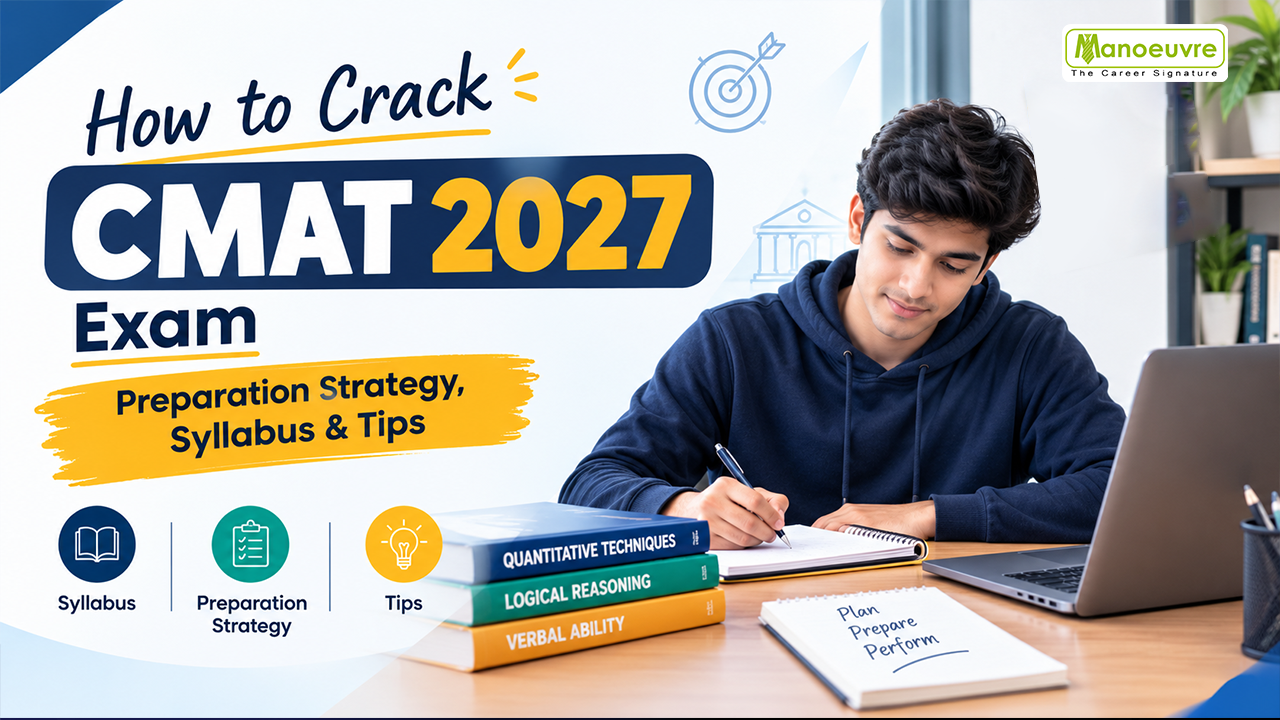
How to Crack CMAT 2027 Exam: Preparation Strategy, Syllabus & Tips Preparing for CMAT is not just about finishing the syllabus and taking a few mock tests at the end. The bigger challenge is learning how to manage different sections, improve speed, avoid unnecessary mistakes and make the most of the time available.If you are targeting CMAT 2027, starting early gives you enough time to work on your weak areas instead of rushing through everything in the final few weeks. A sensible CMAT 2027 preparation plan should include concept building, regular practice, revision and mock-test analysis.Here is a practical approach to help you understand what to study and how to prepare for the exam. CMAT 2027 Exam Highlights Before starting your CMAT 2027 preparation, it helps to have a quick understanding of the exam. CMAT 2027 details aren't out yet, so use 2026 as your guide. Particular Details Exam Name Common Management Admission Test (CMAT) Conducting Body National Testing Agency (NTA) Exam Level National Level Mode of Exam Computer-Based Test Frequency Once a year Expected Exam Month January 2027 Duration 3 hours Main Sections Logical Reasoning, Quantitative Techniques & Data, Language Skills, Awareness, Enterprise Marking Scheme Right answer = 4 marks | Wrong answer = -1 mark Maximum marks 400 Note: The CMAT 2027 exam pattern, marking scheme and schedule will be confirmed by NTA through the official notification. The details above are based on the latest available CMAT examination pattern and should be checked again when the CMAT 2027 notification is released. CMAT 2027: What Should You Know First? CMAT is a national entrance exam run by NTA for management programs. CMAT scores are used by AICTE-approved institutions, university departments and affiliated colleges for admission to management programmes.The exam covers areas such as Quantitative Techniques & Data Interpretation, Logical Reasoning, Language Comprehension, General Awareness, and Innovation & Entrepreneurship.Before beginning your preparation, go through the latest CMAT syllabus, understand the exam structure and get familiar with the type of questions asked. CMAT Exam Date 2027 and Registration CMAT 2027 dates aren't out yet. The CMAT 2026 schedule can be used as a reference to understand the likely timeline.For CMAT 2026, registration was conducted before the examination, the admit card was released on 21 January 2026, and the exam was held on 25 January 2026. NTA later released the CMAT 2026 scorecard in February. Event CMAT 2026 CMAT 2027 Registration October-November 2025 Expected: October-November 2026 Admit Card 21 January 2026 Expected: January 2027 Exam Date 25 January 2026 Expected: January 2027 Result 13 February 2026 Expected: February 2027 The CMAT 2027 dates are expected dates based on the previous cycle, not officially announced dates. Check NTA's website for registration, admit card, and exam dates. CMAT Syllabus: What Do You Need to Prepare? The CMAT syllabus covers five areas, testing students across quantitative ability, reasoning, language, general awareness and business-related knowledge. Instead of spending equal time on every topic, understand what each section expects and then plan your preparation accordingly. CMAT Section What It Covers Quantitative Techniques & Data Interpretation Basic mathematics, arithmetic, algebra, numbers, geometry and data-based questions Logical Reasoning Puzzles, arrangements, series, coding-decoding, relationships and other reasoning questions Language Comprehension Reading comprehension, grammar, vocabulary and verbal ability General Awareness Current affairs, static GK, business, economy and important national and international events Innovation & Entrepreneurship Entrepreneurship, innovation, startups, business concepts and related developments The syllabus gives you the broad areas to prepare, but your focus should gradually shift from understanding topics to solving questions accurately within the available time. How to Start CMAT 2027 Preparation You do not need to begin by studying for several hours every day. Begin by figuring out where you are right now. 1. Take a Diagnostic TestAttempt a mock or sample paper before serious preparation. What you gain is more important than what you score. You may discover that Quant is taking too long, your Reading Comprehension accuracy is low or you are leaving too many questions in Logical Reasoning.2. Divide the Syllabus Into Smaller TargetsInstead of writing “complete Quant” in your study plan, break it into manageable topics.For example, give yourself a few days for arithmetic concepts, followed by practice sets and revision. Smaller targets are easier to track and less overwhelming.3. Give More Time to Weak AreasStudents often spend most of their preparation time on subjects they already enjoy. That feels productive, but it does not necessarily improve the overall score.Keep your stronger sections active while giving additional practice to the areas where you consistently lose marks. CMAT 2027 Preparation Strategy: Section-Wise Approach Once you have gone through the syllabus, the next step is to decide how to prepare for each section. Every section needs a slightly different approach. Quant requires regular problem-solving, Reasoning improves with variety, while General Awareness needs consistent revision.Prioritize these topics in your preparation: CMAT Section Topics to Cover Quantitative Techniques & Data Interpretation Numbers, ratio, time & work, percentages, geometry, charts, profit & loss, speed-distance, algebra, interest, averages, arithmetic, equations, mensuration, tables and graphs Logical Reasoning Puzzles, arrangements, coding-decoding, series, blood relations, directions, syllogisms, analogy, classification, statements and logical relationships Language Comprehension Reading comprehension, vocabulary, grammar, sentence correction, verbal ability, synonyms, antonyms and para-based questions General Awareness Current affairs, business and economy, awards, sports, government schemes, important national and international events and static GK Innovation & Entrepreneurship Entrepreneurship, startups, innovation, business terms, entrepreneurs, funding, business environment and related developments Quantitative Techniques & Data InterpretationBuild your basics first, especially in arithmetic, and then gradually work on speed. Do not depend on shortcuts before you are comfortable with the concepts.For Data Interpretation, practise tables, charts and graphs regularly. Focus on accurate calculations and learn to avoid spending too much time on a single set.Logical ReasoningRegular practice is the key to improving Logical Reasoning. Cover different types of questions such as puzzles, arrangements, series, coding-decoding, blood relations, directions and syllogisms.While practising, keep track of time and learn to skip questions that are taking too long.Language ComprehensionMake reading a regular part of your preparation instead of leaving it for the last few weeks. Read different types of articles and practise Reading Comprehension, grammar and vocabulary questions.Review your mistakes to understand where you are losing marks and improve gradually.General AwarenessKeep up with current affairs throughout your CMAT 2027 preparation rather than trying to cover everything at the end.Focus on major national and international events, business, economy, government initiatives and other important developments. Review consistently to keep information sharp. Innovation & EntrepreneurshipBegin by understanding basic concepts related to entrepreneurship, startups, innovation, funding and business.Follow important developments in the startup and business world, and focus on understanding concepts instead of memorising long lists of facts. CMAT 2027 Preparation: Mock Tests and Previous-Year Questions Mocks should not be treated as something you start only when the syllabus is finished.Once you have covered the basic concepts, begin with sectional tests and gradually move towards full-length mocks.After every test, look beyond the score. Check:● Which questions did you get wrong?● Which questions took too much time?● Were your mistakes due to concepts, calculation or reading?● Which questions should you have skipped?● Which topics need another round of practice?Previous-year questions are equally useful because they help you understand the style and level of questions you need to handle. How to Improve CMAT Speed and Accuracy Speed improves naturally when you become familiar with the questions, but you still need deliberate practice.Use timed question sets, practise calculations regularly and avoid spending several minutes trying to force your way through one difficult question.Accuracy is just as important. If you are attempting many questions but making frequent errors, simply increasing your speed will not solve the problem.The goal should be to find a balance between attempts, accuracy and time management. Common Mistakes While Preparing for CMAT 2027 Some preparation mistakes can cost students more time than difficult questions themselves.● Starting without understanding the syllabus● Collecting too many study resources● Ignoring General Awareness until the end● Taking mocks without analysing them● Spending too long on one question● Revising only before the exam● Concentrating on favorite sections and avoiding weaker ones ● Changing the preparation strategy every few weeksA simple plan followed consistently is usually more useful than a complicated plan that keeps changing. CMAT 2027 Preparation Timeline Your preparation can broadly be divided into four stages: Stage Main Focus Starting Phase Understand syllabus and assess your level Concept Phase Build fundamentals and practise topic-wise Practice Phase Timed sets, previous-year questions and sectional tests Final Phase Full mocks, revision, weak areas and exam strategy If you have only one month left, do not try to learn every topic from scratch. Concentrate on important areas, practise questions, take mocks and revise your mistakes. Final Tips to Crack CMAT 2027 Exam To crack CMAT 2027 exam, you do not need a complicated strategy. You need a preparation routine that you can actually maintain.Understand the syllabus, identify your weak areas and work on them consistently. Take mocks regularly, but spend just as much time understanding your mistakes. Keep revising instead of constantly moving on to new topics.Most importantly, do not judge your preparation by the number of hours you study. Judge it by whether your accuracy, speed and mock-test performance are improving. FAQs 1. What is the CMAT exam?CMAT, or the Common Management Admission Test, is a national-level entrance examination conducted by the National Testing Agency for admission to management programmes. Its scores are accepted by participating AICTE-approved institutions, university departments and affiliated colleges.2. Is CMAT accepted in IIT?Yes, CMAT may be accepted for certain IIT management programmes, depending on the institute and admission year. For example, IIT (ISM) Dhanbad has been listed among institutes accepting CMAT scores. Check the latest admission notification before applying. 3. Is the CMAT result out?The CMAT result is usually released in February after the examination. For CMAT 2027, the result is expected in February 2027, subject to the official NTA schedule.4. Can I clear CMAT in 1 month?Yes, it is possible, particularly if your basic concepts are already strong. With one month available, focus on important topics, previous-year questions, mock tests, revision and improving accuracy instead of trying to cover every topic in depth.5. Can I get IIM through CMAT?No, IIMs focus on CAT for main programs. CMAT is used by participating management institutes that accept CMAT scores.6. Is CMAT held twice a year?CMAT is generally conducted once a year. Check NTA's official notification for exam schedule details. 7. Which Tier 1 colleges accept CMAT?JBIMS Mumbai and SIMSREE Mumbai are among the reputed Maharashtra management institutes where CMAT scores can be considered through the applicable admission process. Other institutes may also accept CMAT, so check the latest eligibility and admission rules before applying.
15 Sep 2026
0 comments
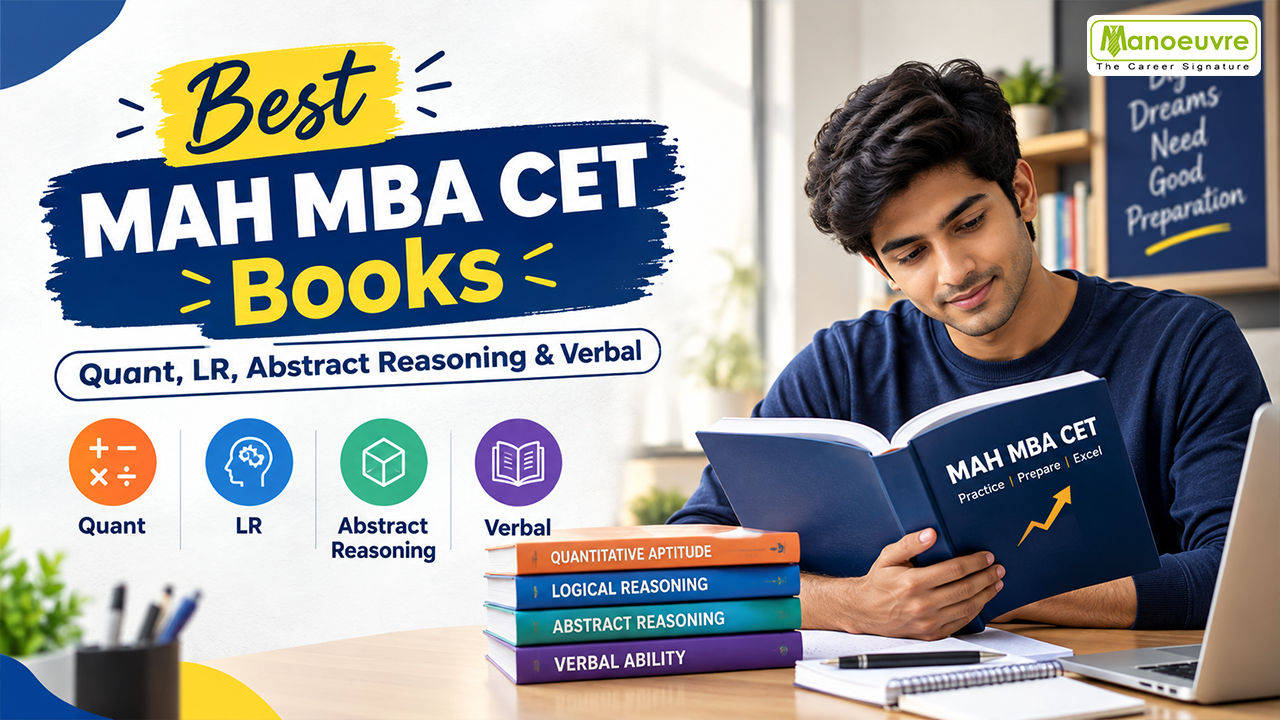
Best MAH MBA CET Books: Quant, LR, Abstract Reasoning & VerbalPreparing for MAH MBA CET can feel confusing when there are so many books and study resources available. Many students gather multiple materials without knowing which ones actually help. Select books based on what the exam covers and your prep stage. A useful book should explain concepts clearly, provide enough practice and help you become faster and more accurate.This guide covers the different types of MBA CET books you can use for preparation, along with tips on choosing study material, using mock tests and planning your preparation. MAH MBA CET Exam Highlights MAH MBA CET Exam OverviewThe MAH MBA CET is a Maharashtra state-level entrance test used for admission to eligible MBA and MMS programmes offered by participating institutes. Understanding the exam structure is important before starting your MBA CET preparation, as it helps you select the right books and study material. Exam Particular Details Exam Name MAH-MBA/MMS-CET Full Form Maharashtra Common Entrance Test for MBA/MMS Conducting Authority State Common Entrance Test Cell, Maharashtra Exam Level State Level Exam Mode Online Computer-Based Test (CBT) Question Type Multiple Choice Questions (MCQs) Total Questions 200 Maximum Marks 200 Exam Duration 150 Minutes Medium English and Marathi Marks per Question 1 Mark Negative Marking No MAH MBA CET Syllabus and Section-Wise PatternThe MAH MBA CET syllabus is divided into four sections. Logical Reasoning has the highest number of questions, followed by Quantitative Aptitude, Verbal Ability & Reading Comprehension, and Abstract Reasoning. MBA CET Section Number of Questions Maximum Marks Logical Reasoning 75 75 Abstract Reasoning 25 25 Quantitative Aptitude 50 50 Verbal Ability & Reading Comprehension 50 50 Total 200 200 Regular practice and speed are crucial since you have 150 minutes for 200 questions. The absence of negative marking also allows candidates to attempt questions strategically without losing marks for incorrect answers. What Should You Look for in an MAH MBA CET Book? Before choosing an MAH MBA CET book, check whether it matches the exam requirements. The right resource should not only explain concepts but also give you enough questions to practise them.Look for books that offer:● Coverage of the relevant MBA CET syllabus● Clear and simple explanations● Solved examples● Topic-wise practice questions● Different levels of difficulty● Practice sets for speed and accuracy● Detailed solutions for incorrect questionsYour preparation does not become better simply because you have more books. A small set of useful resources that you actually complete is usually more practical. Best Books for MAH MBA CET Quantitative Aptitude A Quant book should cover the mathematical concepts required for the exam and provide plenty of questions for practice. For students looking for focused MAH MBA CET books, the Manoeuvre Quant Book can be used as a dedicated resource for building concepts and practising Quantitative Aptitude questions. Important areas generally include:● Arithmetic● Percentages● Profit and loss● Ratio and proportion● Averages● Time, speed and distance● Time and work● Interest● Number system● Algebra● Geometry● Mensuration● Data interpretationWhen selecting a Quant book, give preference to one that explains the basics before moving to tougher questions. This is particularly useful for students who are not very comfortable with mathematics.Once your concepts are clear, use the practice questions to improve calculation speed and accuracy. Best Books for MAH MBA CET Logical Reasoning Logical Reasoning demands practice across different question types. Therefore, an LR book should contain a broad range of questions rather than repeatedly focusing on one format. The Manoeuvre LR Book can be used for structured Logical Reasoning practice, helping students work through different question types and improve their problem-solving approach. You can look for practice covering:● Puzzles● Seating arrangements● Coding-decoding● Blood relations● Directions● Series● Syllogisms● Venn diagrams● Statements and conclusions● Analytical reasoningWhile practising, try to understand the logic behind each question. If you repeatedly make the same type of mistake, note it down and revisit that topic instead of simply moving to the next chapter. Best Books for MAH MBA CET Abstract Reasoning Abstract Reasoning involves identifying patterns and relationships between figures. Since these questions are visual in nature, regular practice is important. The Manoeuvre Abstract Reasoning Book can be used for practising different figure and pattern-based questions relevant to this section. An Abstract Reasoning book can include topics such as:● Figure series● Figure analogy● Classification● Odd one out● Pattern recognition● Figure completion● Visual sequencesWhen solving these questions, pay attention to changes in shape, position, direction, rotation and the number of elements. Practising different patterns can gradually make these questions easier to recognise. Best Books for MAH MBA CET Verbal AbilityFor Verbal Ability, choose a book that combines language concepts with sufficient practice. The Manoeuvre Verbal Book can be used as a dedicated resource for practising grammar, vocabulary and different types of verbal questions for MBA CET preparation. A good Verbal Ability book should cover areas such as:● Grammar● Vocabulary● Synonyms and antonyms● Sentence correction● Fill in the blanks● Sentence completion● Para jumbles● Verbal reasoningGo slow - build vocabulary bit by bit and revise consistently. Build your vocabulary gradually and revise regularly. Reading articles, editorials and other quality content can also complement your preparation. Best Books for MAH MBA CET Reading Comprehension Reading Comprehension needs a slightly different approach because understanding the passage quickly is just as important as answering the questions correctly. For focused RC practice, students can use the Manoeuvre RC Book to work on passage-based questions and improve comprehension skills. Your RC practice material should include different types of passages and questions based on:● Main idea● Inference● Author's tone● Supporting details● Conclusions● Vocabulary in contextStart by focusing on comprehension. Once you become comfortable with the passages, introduce timed practice to improve your reading speed. MAH MBA CET Book List: Books, Practice and Mock TestsBooks are only one part of effective MBA CET preparation. Once you have learnt the concepts, you need opportunities to apply them.A balanced study material for MBA CET can include: Resource Main Purpose Quant book Concepts and mathematical practice LR book Reasoning concepts and problem-solving Abstract Reasoning book Figure and pattern practice Verbal Ability book Grammar and vocabulary RC material Reading and comprehension practice Previous-year questions Familiarity with question formats Topic-wise tests Practice after individual topics Sectional tests Section-wise speed and accuracy MBA CET mock test Full-length exam practice Revision notes Quick revision before tests You do not have to use every resource from the beginning. Start with books and topic-wise practice, and gradually increase your testing as your preparation progresses. How to Use MBA CET Mock Tests EffectivelyAn MBA CET mock test gives you an opportunity to practise in a time-bound environment. However, taking a mock is only half the process.After every test, check:● Which questions you got wrong● Which questions you could not attempt● Which topics caused repeated mistakes● Where you spent too much time● How your accuracy varied across sectionsInstead of immediately moving to another mock, spend some time fixing the issues you found.A simple cycle to follow is:Attempt → Analyse → Improve → Revise → Attempt AgainThis makes mock tests a useful part of your preparation rather than simply a way of checking your score. MAH MBA CET Preparation StrategyYour MAH MBA CET preparation should follow the requirements of each section. Section Preparation Focus Quantitative Aptitude Build concepts, practise calculations and improve speed Logical Reasoning Practise different question types and develop accuracy Abstract Reasoning Regularly solve figure and pattern-based questions Verbal Ability Strengthen grammar, vocabulary and sentence skills Reading Comprehension Improve comprehension and reading speed Start by building your concepts through the appropriate books. After that, increase your focus on practice sets and timed questions.As the exam approaches, give more importance to sectional tests, revision and full-length MBA CET mock tests. This also helps you understand which areas still need attention. How to Choose the Best Book for MAH MBA CET There is no single best book for MAH MBA CET that will suit every student. Your choice should depend on what you need from the resource.If your basics are weakChoose books with detailed explanations, solved examples and easier practice questions.If your concepts are already clearLook for resources with more mixed and exam-oriented practice.If you are preparing close to the examPrioritise revision, timed practice, previous-year questions and mock tests rather than starting several new books.Always check the syllabusBefore selecting an MBA CET book, compare its contents with the current syllabus. This helps you avoid spending valuable preparation time on unnecessary topics. Common Mistakes While Choosing MBA CET Books Students often make the mistake of believing that more resources automatically mean better preparation. Some common mistakes include:● Buying too many books● Choosing material without checking the syllabus● Using very difficult material unnecessarily● Ignoring practice questions● Reading solutions without attempting questions● Delaying mock tests until the last few weeks● Not analysing mistakes after tests● Switching between resources too frequentlyA focused approach is much easier to manage. Select useful resources, complete them properly and revise your weak areas regularly. Final Takeaway Choosing the best book for CET MBA preparation is less about finding the biggest or most popular resource and more about finding material that suits your requirements.A practical MAH MBA CET book list can include separate resources for Quantitative Aptitude, Logical Reasoning, Abstract Reasoning, Verbal Ability and Reading Comprehension. Add previous-year questions, topic-wise practice and MBA CET mock tests as you progress.Most importantly, use your books actively. Read the concept, solve questions, identify mistakes and revisit difficult areas. With consistent practice and regular testing, your study material becomes much more useful for actual exam preparation. FAQs 1. Which book is best for MBA CET preparation?Manoeuvre MBA CET book is one that matches the syllabus, explains concepts clearly and provides enough practice. The right choice can also depend on whether you are a beginner, intermediate or advanced learner.2. What is the MBA CET exam for?MAH MBA CET is a management entrance examination used for admission to eligible MBA/MMS programmes offered by participating institutes in Maharashtra.3. How many subjects are in MBA CET?The main areas covered in preparation are Logical Reasoning, Abstract Reasoning, Quantitative Aptitude, Verbal Ability and Reading Comprehension.4. Which book is best for MAH MBA CET Quantitative Aptitude?Choose a Quant book that covers the required mathematical topics and provides enough solved examples and practice questions to build speed and accuracy.5. Which book is best for MAH MBA CET Logical Reasoning?An LR book covering puzzles, arrangements, coding-decoding, series, analytical reasoning and other relevant question types can be useful for preparation.6. Which book is best for MAH MBA CET Verbal Ability?A good Verbal Ability book should cover grammar, vocabulary, sentence-based questions, para jumbles and other relevant verbal topics along with practice exercises.7. Should I choose MBA CET books according to the syllabus?Yes. Checking the MBA CET syllabus before selecting study material helps you focus on relevant topics and avoid spending unnecessary time on areas that are not part of your preparation.
Featured Blogs
How to Crack IPMAT Indore 2027: Complete Preparation Guide, Strategy & Study Plan
September 18, 2026 MBA Entrance
 LAW 5years Entrance
 LAW 3years Entrance
 MCA Entrance
 CUET PG Entrance
 BBA Entrance
 BCA Entrance
 Hotel-Management
 B.ED Entrance