 MBA Entrance
 LAW Entrance
 MCA Entrance
 TISS Entrance
 BBA Entrance
 Hotel-Management
 B.ED Entrance
 BCA Entrance
- Enquiry: +91 88285 81455 |
- Support: +91 88579 45882 |
- 10:00 AM - 07:00 PM


09 Jun 2026
0 comments
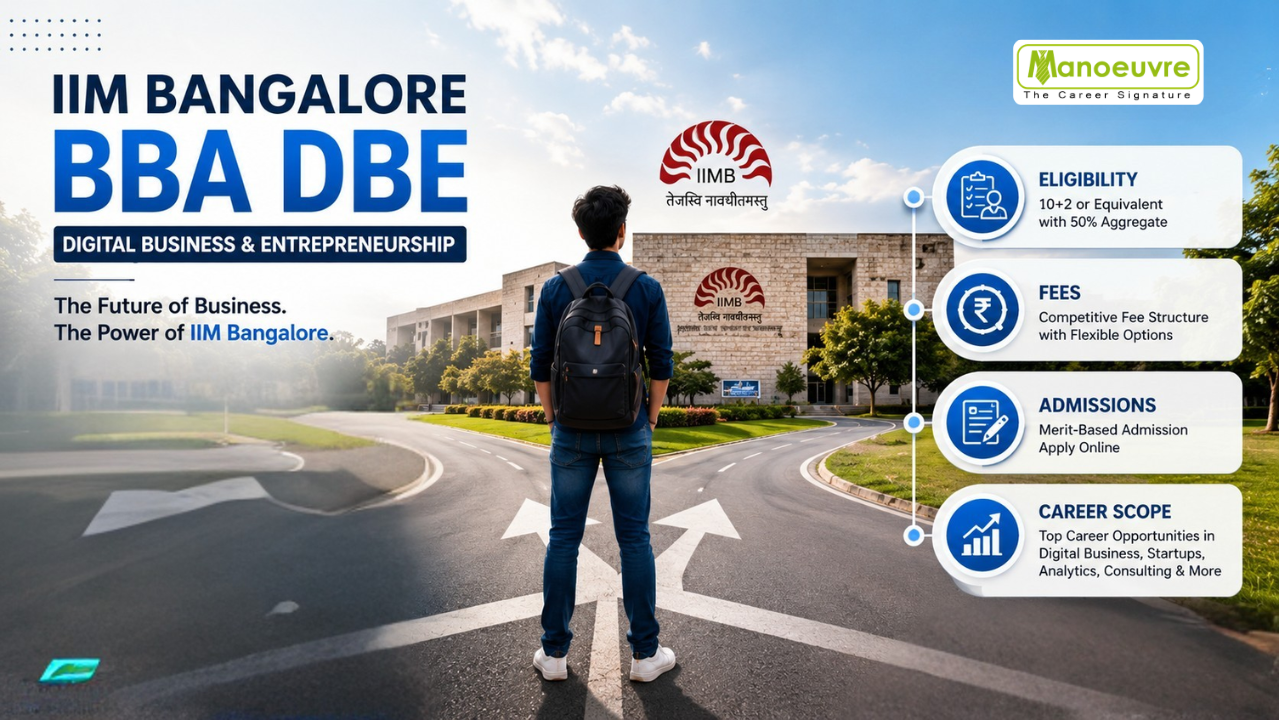
IIM Bangalore BBA DBE: Eligibility, Fees, Admission Process & Career Scope The Indian Institute of Management Bangalore introduced the Bachelor of Business Administration in Digital Business and Entrepreneurship (BBA DBE) to redefine how undergraduate management education is delivered. Created for students who want to build expertise in technology-driven business environments and entrepreneurship, the program offers a flexible online learning format while maintaining the academic standards associated with a top-tier management institute. Whether you are a high school student eyeing a premier management brand or a working professional aiming to upskill, this comprehensive guide covers everything you need to know about the IIM Bangalore BBA DBE course, including its stakable structure, entrance pathways, financials, and ultimate career horizons. 1. Program Overview & Key Features The BBA in Digital Business and Entrepreneurship is a first-of-its-kind undergraduate degree from IIM Bangalore. The program is specifically built for a digital-first economy, shifting the focus from legacy management theories to real-world execution, data analytics, and startup design.Asynchronous & Remote LearningThe program is delivered completely online. The pedagogical architecture is primarily asynchronous (recorded lectures) balanced with synchronous interactive components. This eliminates the necessity of moving to Bengaluru or attending a brick-and-mortar facility, making premier business education geographically accessible across India.The Power of a Dual DegreeBecause the course does not require real-time physical presence on campus, it opens up a massive opportunity for dual-degree paths. Students can simultaneously pursue a traditional offline degree—such as a local BCom, a standard BBA, or even an Integrated Program in Management (IPM)—while parallelly earning an undergraduate qualification from IIMB. This enables students to double their academic credentials and layer their resumes with a highly decorated management brand.Stakable Structure & Multi-Exit FlexibilityThe program breaks away from rigid multi-year commitments through its modular, stackable design. If life, business, or financial obligations require you to pause your studies, the university offers formal recognition at the end of each academic milestone:● Year 1 Exit: Certificate in Digital Business and Entrepreneurship● Year 2 Exit: Diploma in Digital Business and Entrepreneurship● Year 3 Exit: Full Bachelor of Business Administration (BBA) DegreeWhile the ideal timeline spans 3 years, the flexible track permits candidates to stretch their learning journey across a maximum window of 6 years. Students can take up to 3 consecutive term breaks, provided each single academic year's coursework is wrapped up within 2 years.Credit Allocation and Alumni StatusThe academic matrix comprises 135 credits in total, distributed evenly at 45 credits per year across 3 distinct terms. A massive differentiator for this online course is the credentialing upon completion: students who graduate with the full 3-year BBA degree are granted official IIM Bangalore Alumni Status, linking them directly into one of the most powerful corporate networks in Asia. 2. Eligibility Criteria IIM Bangalore has established an inclusive yet structurally sound set of academic prerequisites to ensure applicants can manage the rigorous workload.Academic Qualifications● Class 10: The candidate must have cleared their 10th-grade board examination from a recognized board. Crucially, Mathematics is a mandatory subject at the Class 10 level.● Class 12: The course is open to students currently appearing for their 12th boards or those who have already cleared them.○ General, NC-OBC, and EWS applicants must secure a minimum of 60% marks (or equivalent CGPA).○ SC, ST, and PwD applicants require a minimum of 55% marks (or equivalent CGPA).Nationality and Age LimitsCurrently, the registration pipeline is limited strictly to Indian Nationals. However, there is completely no age bar. The student cohorts run the gamut from 17-year-old fresh school-leavers to 52-year-old seasoned executives, turning it into a uniquely diverse learning environment where cross-generational insights emerge naturally. 3. Admission Pathways & Entrance Test Gaining entry into this prestigious cohort does not rely on a single gateway. IIMB offers multiple entry tracks, strategically selecting your highest relative performance across the options to formulate your final selection.Pathway A: The Dedicated IIMB DBE Entrance TestFor candidates who do not possess other national standardized entrance scores, IIM Bangalore administers its own custom computer-based examination at designated centers throughout India.The exam architecture tests foundational analytical, mathematical, and linguistic capabilities:● Structure: 4 core sections—Verbal Ability & Reading Comprehension (VARC), Quantitative Aptitude (QA), Logical & Analytical Reasoning, and General Awareness.● Format: 60 objective questions to be solved within a strict 90-minute limit (Total of 60 marks).● Difficulty Benchmark: The general analytical parts mirror the difficulty index of exams like IPMAT Rohtak or JIPMAT. However, the arithmetic and advanced quantitative portions carry the sharp, conceptual rigor typically seen in the IPMAT Indore papers.Pathway B: Standardized National TestsIf you have already prepared for traditional engineering or centralized undergraduate streams, you can leverage your existing scores. IIMB officially evaluates:● CUET UG: Scores from Section 3 (General Test) are valid.● JEE Main: Ranks and scores are accepted.Minimum Selection Cut-offsMeeting the baseline eligibility does not mean automatic entry. The university evaluates performance against fixed, category-based minimum percentage or percentile thresholds:Testing VehicleGeneral CategoryNC-OBC / EWSSC / ST / PwDIIMB Entrance Test50% Marks45% Marks40% MarksCUET UG (Section 3)70th Percentile65th Percentile60th PercentileJEE Main50th Percentile45th Percentile / Rank40th Percentile / Rank 4. Key Admission Dates & Application Process To secure a seat, candidates must stay closely aligned with the yearly administrative execution cycle.● Application Window: Forms typically go live online around April 13th and close on June 30th.● IIMB Entrance Test Date: The proctored exam is held nationwide on July 26th.● Results & Offers: Merit lists and admission rollouts are declared within the first or second week of August.● Academic Commencement: Virtual classrooms and live onboarding kick off from September onwards.Processing Fees & Infrastructure CentersTo complete the digital registration at the official portal (dbe.iimb.ac.in), a non-refundable processing fee of ₹3,000 is mandatory for General, NC-OBC, and EWS applicants, while a reduced fee of ₹1,500 applies to SC, ST, and PwD candidates.The physical examination nodes for the custom computer-based test span major metro and tier-1 cities across the country, including New Delhi, Kolkata, Patna, Ranchi, Bhubaneswar, Guwahati, and many others. 5. Course Fee Structure & Financial Aid Financing an elite education can be a hurdle, but the fee model here is engineered to be substantially more accessible than conventional, residential multi-lakh IPM or BBA tracks across premier business schools.The absolute tuition fee for the entire 3-year timeline aggregates to ₹4,50,000. Instead of demanding upfront lumpsum capital, IIM Bangalore spreads this across 9 discrete academic terms:● Year 1 (Certificate Stage): ₹1,25,000 total — billed evenly as ₹41,666 per term across 3 terms.● Year 2 (Diploma Stage): ₹1,50,000 total — billed evenly as ₹50,000 per term across 3 terms.● Year 3 (Degree Stage): ₹1,75,000 total — billed evenly as ₹58,333 per term across 3 terms.Extension Continuity Fee If you choose to avail of the flexible track options to drop a term or step away to handle outside business priorities, you must pay a nominal institutional continuation fee of ₹2,000 per term during your leave of absence to preserve your active registration.Scholarships & Affordability FrameworksTo guarantee economic hurdles do not keep brilliant minds away, a structural financial aid system is baked into the model:● SC/ST/PwD Candidates: Automatically receive a sweeping 50% tuition fee waiver, bringing the complete 3-year expense down to a highly competitive ₹2,25,000.● NC-OBC and EWS Candidates: If the documented annual household income sits below the ₹8 Lakh mark, the institute extends scaled financial aid packages covering anywhere from 15% to 20% of the term fee. 6. Technical & Assessment Requirements As a 100% cloud-hosted learning ecosystem, certain hard criteria govern your daily technical infrastructure.The Hardware MandateYou cannot complete or properly experience this program solely via a smartphone or basic mobile browser. Many advanced interactive assignments, simulation models, drag-and-drop dashboards, and remote-proctored verification mechanisms will simply fail to execute properly on mobile viewports.Every student must possess a reliable laptop or desktop machine outfitted with a functional webcam, clean audio input, and stable high-speed broadband. Google Chrome remains the recommended, tested browser interface for all learning platform components.Balanced Evaluation MechanicsAcademic grades are split between ongoing involvement and hard-controlled metrics, preventing cramming habits:1. Continuous Learning Assessment (CLA - 25% Weightage): This component evaluates your consistency through short modular quizzes, group projects, active discussion forum peer contributions, case study submissions, and attendance inside live review components.2. Final Term Examinations (75% Weightage): To preserve the ironclad academic integrity of an IIM qualification, final assessments are highly secure. They are administered as supervised, computer-based tests at physical, proctored centers located in key cities across India.Note: Specialized, project-heavy modules or creative entrepreneurship lab units may occasionally bypass the center-based exam setup in favor of a 100% internal evaluation built on milestone project reviews. 7. Placements & Career Scope The most common question surrounding an online undergraduate program from an elite institution concerns the placement infrastructure.The Placement FrameworkBecause of the highly distributed nature of this online format, IIM Bangalore does not offer a traditional on-campus placement drive with physical company presentations and interview slots on campus.Instead, the institute provides institutional support through a specialized corporate networking marketplace. This dedicated digital platform matches qualified DBE graduates directly with high-growth tech firms, corporate partners, and venture capital syndicates looking for specialized digital talent.Corporate Horizons and Domain AdaptabilityThe unique curriculum—blending deep economic theory with digital channel management, data analytics, and operational automation—makes graduates uniquely competitive. Unlike traditional BBA candidates who possess generalist corporate knowledge, a DBE graduate understands product management, customer acquisition costs, algorithmic optimizations, and digital supply architectures.Key domains welcoming these graduates include:● Digital Product Operations: Stepping into junior product owner or product analyst slots.● Data-Driven Consulting: Helping mid-tier firms build online presence and digital transformation strategies.● Growth Marketing & Strategy: Managing analytics pipelines, programmatic advertising, and performance marketing frameworks.● Venture Incubators: Joining venture teams as early analysts evaluating market structures.The Entrepreneurial LaunchpadTrue to its name, a massive percentage of students leverage this knowledge base to fund, design, and scale their own corporate startups. By avoiding heavy residency expenses while learning directly from world-class entrepreneurial minds, students gain the exact financial modeling frameworks, growth formulas, and cap-table understanding needed to construct lean business ventures. Summary Matrix MetricDetails at a GlanceTotal Program Value₹4.5 Lakhs (payable across 9 term installments)Time FrameMinimum 3 Years | Stretchable up to 6 YearsCore CredentialsCertificate (Yr 1) | Diploma (Yr 2) | Full BBA Degree + IIMB Alumni Status (Yr 3)Primary Entry PathsDedicated IIMB DBE Test | CUET UG (Sec 3) | JEE MainInfrastructureCompletely remote asynchronous learning | Center-based end-term exams By combining the prestige of the IIM brand with a highly contemporary, flexible digital business curriculum, the IIM Bangalore BBA DBE path presents an unprecedented roadmap for the next generation of digital disruptors and corporate strategists. Frequently Asked Questions (FAQs) Q1. What degree title do I earn after finishing the IIMB BBA DBE course?Completing the entire nine trimesters awards you the official Bachelor of Business Administration in Digital Business and Entrepreneurship (BBA DBE) degree from IIM Bangalore.Q2. Can I pursue the IIMB online BBA DBE course alongside a regular offline college degree?Yes. The asynchronous format allows you to enroll in this digital business program while simultaneously completing a regular, face-to-face degree like a standard BCom or BSc to build a dual-degree resume.Q3. Is there an option to leave the BBA DBE course early with a certificate or diploma?Yes, the BBA DBE course features a flexible stackable layout. Exiting after Year 1 awards you a Certificate in Digital Business and Entrepreneurship, while leaving after Year 2 grants you a Diploma.Q4. Does IIM Bangalore organize regular campus placement drives for the online BBA DBE course?No traditional, on-campus physical placement drives are held for the BBA DBE course. However, the institute provides career assistance through a dedicated digital platform that helps graduates connect with technology firms, startups, and potential employers.Q5. Are the final term examinations for the BBA DBE course conducted online from home?No. To protect academic integrity, final exams for the BBA DBE course account for 75% of your grade and must be taken as in-person computer-based tests at physical centers across India.Q6. What minimum percentiles are required if applying for the BBA DBE course via CUET UG or JEE Main?General category applicants applying for the BBA DBE course need at least the 70th percentile in CUET UG (Section 3) or the 50th percentile in JEE Main.Q7. Is there an age limit to apply for the BBA DBE course?No, applicants of all age groups are eligible to apply for the BBA DBE program. The cohort welcomes school-leavers right after their 12th boards as well as veteran corporate professionals looking to upskill in digital strategies.Q8. Can I complete the entire BBA DBE course and view study modules on a mobile phone?No. A laptop or desktop PC with a webcam is mandatory for the BBA DBE course. The core learning management portal and interactive assignments will not run correctly on mobile browsers.Q9. Do online BBA DBE course learners get physical access to the IIM Bangalore campus?No. This is a purely remote course, meaning students enrolled in the BBA DBE course do not get access to physical campus amenities in Bengaluru. However, you receive full access to the institute's comprehensive online library.Q10. Will I get official IIM Bangalore Alumni Status if I exit the BBA DBE course after the first or second year?No. The coveted IIM Bangalore Alumni Status is exclusively granted to students who complete all three years of the BBA DBE course and earn the full undergraduate bachelor's degree.
08 Jun 2026
0 comments
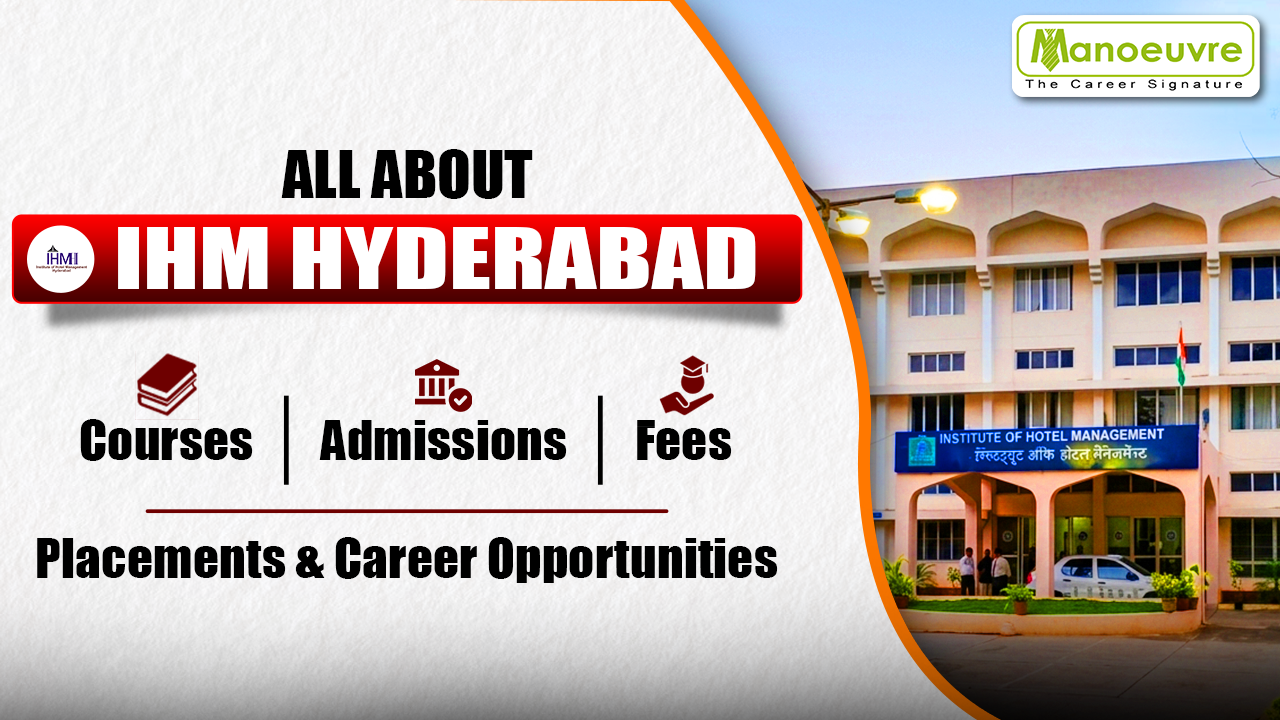
All About IHM Hyderabad: Courses, Admissions, Fees, Placements & Career Opportunities The hospitality industry continues to be one of the fastest-growing sectors globally, creating thousands of opportunities in hotel management, tourism, food service, and luxury hospitality. Among India's leading hotel management institutes, Institute of Hotel Management Hyderabad (IHM Hyderabad) stands out as one of the most sought-after destinations for students aspiring to build successful careers in hospitality.Known for its academic excellence, industry-oriented curriculum, impressive placements, and strong alumni network, IHM Hyderabad consistently attracts top-ranked candidates through the NCHMCT JEE entrance examination.In this detailed guide, we cover everything you need to know about IHM Hyderabad admission, programs offered, fee structure, campus facilities, placement records, and future career prospects. Why Choose IHM Hyderabad? When students compare top hotel management colleges in India, IHM Hyderabad frequently appears among the top choices.Some key reasons behind its popularity include:● Widely recognized as one of India's leading institutes for hotel management education. ● Considered one of the most preferred IHMs in South India.● Affiliated with the National Council for Hotel Management and Catering Technology (NCHMCT).● Degree awarded by Jawaharlal Nehru University (JNU), New Delhi.● Strong placement record with leading hospitality brands.● Excellent infrastructure and practical learning facilities.● Affordable fee structure compared to private hotel management colleges.Its blend of academic rigor and practical exposure makes it an attractive option for students looking for long-term growth in the hospitality sector. About IHM Hyderabad IHM Hyderabad has a rich history dating back to 1972 when it was established as a Food Craft Institute. Over the years, it evolved into a premier hospitality education institution.The institute introduced professional hotel management programs in the 1980s and later adopted the flagship Bachelor of Science degree in Hospitality and Hotel Administration, making it one of India's leading centers for hospitality education.At present, the institute emphasizes a balanced approach that combines academic instruction, hands-on training, industry internships, and overall personality enhancement to prepare students for successful hospitality careers. Courses Offered at IHM Hyderabad Students can pursue various hospitality-focused programs depending on their career goals.B.Sc. Hospitality and Hotel AdministrationThis is the flagship undergraduate program and the most popular choice among aspirants.Key Highlights:● Duration: 3 Years● Degree awarded through JNU● Admission through NCHMCT JEE● Industry-oriented curriculum● Mandatory industrial trainingThe course covers:● Food Production● Food & Beverage Service● Front Office Operations● Housekeeping Management● Hospitality Marketing● Hotel Accounting● Tourism Studies● Communication SkillsDiploma and Certificate ProgramsDepending on availability, the institute may also offer specialized hospitality-related diploma or certificate courses focusing on:● Food Production● Bakery & Confectionery● Food Service Management● Hospitality OperationsStudents should check the latest admission notification for updated course offerings. Campus Facilities and Student Life One of the biggest advantages of studying at IHM Hyderabad is its modern infrastructure designed to simulate real hospitality environments.Practical Training LaboratoriesStudents receive hands-on training in:● Advanced Training Kitchens● Bakery Labs● Housekeeping Labs● Front Office Labs● Restaurant Training FacilitiesDigital Learning ResourcesThe campus offers:● Automated e-library● Computer laboratories● Language development center● Internet-enabled classroomsStudent Development ActivitiesApart from academics, students actively participate in:● Cultural events● Hospitality competitions● Personality development workshops● Industry interaction sessions● Entrepreneurship initiativesUnique student-driven projects such as campus cafés help learners gain practical business exposure before entering the professional world. IHM Hyderabad Admission Process Admission to the flagship undergraduate program is conducted through the NCHMCT JEE examination.Step 1: Register for NCHMCT JEECandidates must complete the online application process within the prescribed deadline.Step 2: Appear for the Entrance ExaminationThe national-level exam evaluates candidates on multiple aptitude areas relevant to hospitality management.Step 3: Check ResultsAfter declaration of results, candidates receive an All India Rank.Step 4: Participate in CounselingQualified candidates must register for the centralized counseling process and fill their preferred institute choices.Step 5: Seat AllotmentBased on rank, category, and seat availability, colleges are allotted.Step 6: Admission ConfirmationCandidates must pay the seat acceptance fee and complete document verification to secure admission. Eligibility Criteria Students planning to apply must satisfy the following requirements:Educational QualificationCandidates should have:● Passed Class 12 or equivalent examination.● Studied English as a compulsory subject.● Completed education from a recognized board.Stream EligibilityStudents from all streams can apply:● Science● Commerce● Arts● Vocational EducationAge CriteriaCurrently, there is no age restriction for appearing in NCHMCT JEE. NCHMCT JEE Exam Pattern The entrance examination pattern has undergone significant changes in recent years.Exam Overview● Total Questions: 120● Duration: 120 Minutes● Total Marks: 480● Correct Answer: +4 Marks● Wrong Answer: -1 MarkSection-Wise DistributionSectionQuestionsNumerical Ability & Analytical Aptitude15Reasoning & Logical Deduction15General Knowledge & Current Affairs15English Language45Aptitude for Service Sector30Students aiming for top hotel management institutes generally target scores above 380 marks for a stronger rank position. Seat Intake at IHM Hyderabad The institute offers approximately 300 seats in its flagship undergraduate program.Category-Wise DistributionCategorySeatsOpen116OBC77SC43EWS29ST21Other CategoriesRemaining SeatsThe seat matrix may vary slightly based on government regulations and reservation policies. IHM Hyderabad Cut-Off Trends Admission competitiveness has increased significantly due to growing demand for hospitality education.General CategoryHistorically:● Opening ranks have been among the top performers nationwide.● Closing ranks may extend beyond 2,500 in later counseling rounds.Reserved CategoriesCut-offs vary every year depending on:● Number of applicants● Seat availability● Reservation policy● Difficulty level of the examinationStudents should use previous-year ranks only as a reference rather than a guaranteed benchmark. Counseling Process Explained After qualifying in the entrance examination, candidates participate in online counseling.RegistrationCandidates must:● Register on the counseling portal.● Pay the counseling registration fee.● Upload required documents.Choice FillingStudents can select preferred institutes in order of priority.For example:1. IHM Pusa2. IHM Mumbai3. IHM Hyderabad4. Other participating institutesFreeze and Float OptionsFreezeSelect this option if you are satisfied with the allotted institute and want to confirm the seat.FloatChoose this option if you wish to retain the current seat while participating in future rounds for a better preference.Seat Acceptance FeeA seat acceptance fee is paid after allotment and is adjusted against the academic fee, making it part of the overall admission cost. IHM Hyderabad Fee Structure One of the biggest advantages of IHM Hyderabad is its strong return on investment.The approximate expenditure for the complete three-year degree program is around ₹4.8 to ₹5 lakhs.Estimated Semester-Wise FeesSemesterApproximate FeeFirst Semester₹96,515Second Semester₹78,000Third Semester₹75,500Fourth Semester₹76,000Fifth Semester₹77,875Sixth Semester₹77,875Fee revisions may occur periodically, so students should verify the latest structure during admission. Placements at IHM Hyderabad Placement opportunities are among the strongest reasons students choose this institute.The institute consistently records high placement rates, particularly among students who successfully complete training and maintain good academic performance.Placement Highlights● Strong campus recruitment record● Hospitality and service sector opportunities● National and international placement exposure● Internship-to-job conversion possibilitiesSalary PackagesTypical salary trends include:Package TypeApproximate SalaryHighest Package₹7–8 LPAAverage Package₹3.5–4.5 LPAEntry-Level Package₹1.8–2.4 LPAMajor RecruitersLeading companies regularly recruiting from the campus include:● Taj Hotels● Oberoi Hotels & Resorts● Hyatt Hotels● The Lodhi● Reliance Group● Aditya Birla Group● Sodexo● Tim Hortons● PumaThe diversity of recruiters demonstrates that hospitality graduates are valued across multiple industries beyond traditional hotels. Career Opportunities After IHM Hyderabad Graduates can pursue careers in various sectors.Hotel OperationsRoles include:● Front Office Executive● Food & Beverage Manager● Housekeeping Supervisor● Guest Relations ExecutiveCulinary IndustryStudents interested in food production can become:● Commis Chef● Sous Chef● Executive Chef● Bakery SpecialistCruise and Aviation IndustryHospitality professionals are increasingly recruited by:● Cruise Lines● Airlines● Airport Hospitality ServicesLuxury HospitalityHigh-end resorts and international hotel chains offer attractive career growth opportunities.EntrepreneurshipMany graduates establish businesses such as:● Restaurants● Cloud Kitchens● Cafés● Catering Companies● Event Management FirmsCorporate SectorHospitality graduates are also employed in:● Customer Experience Management● Retail Operations● Facility ManagementCorporate Administration Is IHM Hyderabad Worth It? For students seeking quality hospitality education, excellent industry exposure, and strong placement opportunities, IHM Hyderabad remains one of the best options in India.Its established reputation, practical learning approach, affordable fee structure, and consistent recruitment record make it a preferred choice for aspiring hospitality professionals. Whether your goal is to work with leading hotel brands, join the aviation sector, become a chef, or start your own hospitality venture, IHM Hyderabad provides a solid foundation for long-term career success. Conclusion IHM Hyderabad has built a strong reputation as one of India's leading hotel management institutes. With industry-focused education, modern facilities, a nationally recognized degree, and excellent placement support, it offers tremendous value to students interested in hospitality careers.If you are preparing for the NCHMCT JEE and aiming for a reputed hotel management institute, IHM Hyderabad deserves a place among your top preferences due to its academic excellence, professional training, and promising career outcomes. FAQs – IHM Hyderabad 1. What is the admission process for IHM Hyderabad?Admission to IHM Hyderabad is based on the NCHMCT JEE entrance exam, followed by centralized online counseling and seat allotment.2. What courses are offered at IHM Hyderabad?IHM Hyderabad primarily offers the B.Sc. in Hospitality and Hotel Administration along with select diploma and certificate programs in hospitality-related fields.3. What is the total fee for the B.Sc. course at IHM Hyderabad?The total fee for the three-year B.Sc. Hospitality and Hotel Administration program is approximately ₹4.8–5 lakhs.4. What is the seat intake at IHM Hyderabad?IHM Hyderabad has an intake of around 300 seats for its flagship undergraduate hospitality program.5. What are the placement opportunities at IHM Hyderabad?Students receive placement opportunities from leading hospitality brands, airlines, retail companies, and service-sector organizations, with placement rates often exceeding 90%.6. Which companies recruit from IHM Hyderabad?Top recruiters include Taj Hotels, Oberoi Hotels & Resorts, Hyatt, Sodexo, Reliance Group, Aditya Birla Group, Tim Hortons, and Puma.7. What is the average salary package offered at IHM Hyderabad?The average salary package generally ranges between ₹3.5 LPA and ₹4.5 LPA, depending on the role and recruiter.8. Is IHM Hyderabad a good choice for a career in hotel management?Yes, IHM Hyderabad is considered one of the top hotel management institutes in India due to its strong academic reputation, industry exposure, modern facilities, and excellent placement record.
05 Jun 2026
0 comments
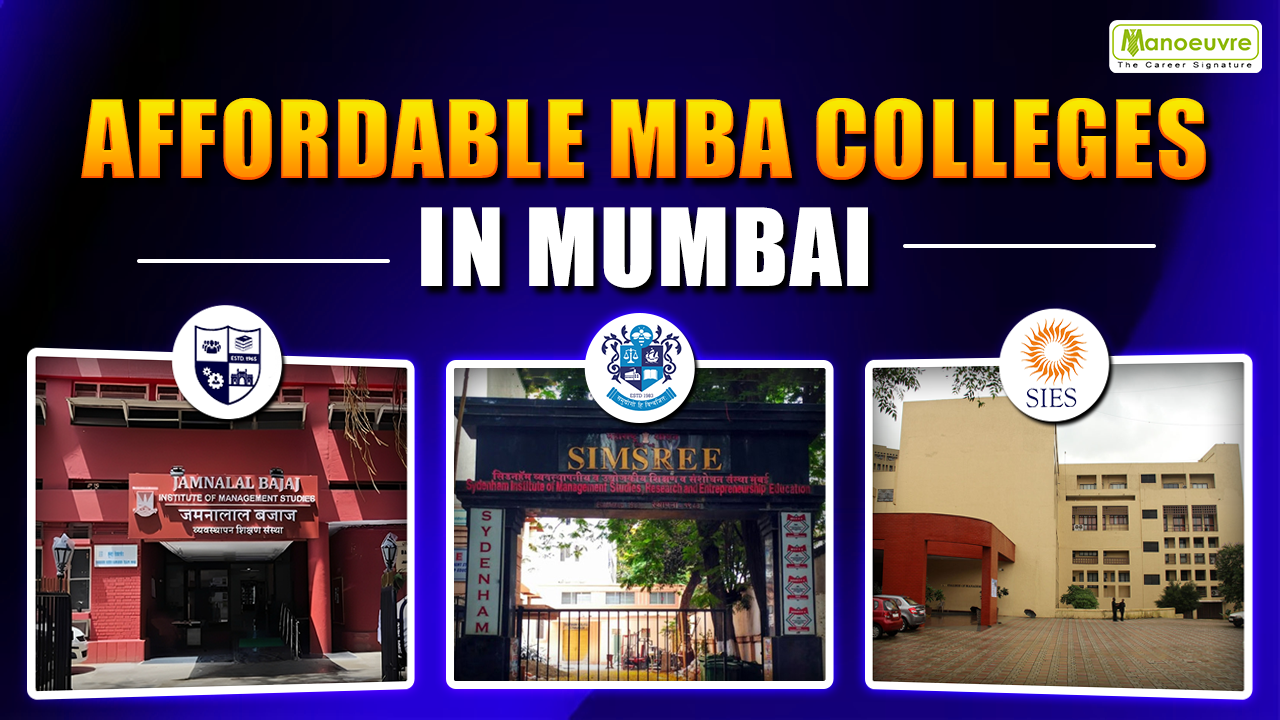
Affordable MBA Colleges in Mumbai Mumbai is one of the most preferred destinations for MBA aspirants due to its thriving business ecosystem, corporate exposure, and excellent career opportunities. However, pursuing an MBA from a reputed institute does not always require spending ₹20–30 lakhs. Several affordable MBA colleges in Mumbai offer quality management education, strong placement support, and excellent return on investment (ROI) at comparatively lower fees.For students preparing for MAH MBA CET, CAT, CMAT, XAT, MAT, and other management entrance exams, choosing the right college is as important as securing a good score. This guide covers some of the best affordable MBA colleges in Mumbai along with their fees, placement statistics, ROI, admission process, and key highlights. Why Mumbai Is a Top Destination for MBA Education Mumbai is India's financial capital and home to thousands of businesses ranging from startups to multinational corporations. Students studying management in Mumbai benefit from:● Corporate networking opportunities● Industry exposure through internships● Live projects and case studies● Access to top recruiters● Better placement opportunities● Entrepreneurial ecosystemThese advantages make Mumbai an attractive location for management education and career growth. Affordable MBA Colleges in Mumbai: Fees, Placements & ROI One of the biggest factors students consider while selecting a management institute is the return on investment. A college offering lower fees and strong placements can significantly reduce financial pressure while ensuring a successful career.CollegeApprox. Total Fees (2 Years)Average PackageHighest PackageJBIMS Mumbai₹8.3 Lakhs (MMS)₹24–26.5 LPA₹55.6 LPASIMSREE Mumbai₹1.3–1.5 Lakhs (MMS)₹15.10 LPA₹22.50 LPASIES COMSMMS: ~₹4.96 Lakhs PGDM: ₹9–10 Lakhs₹8–9.26 LPA₹17 LPAMET League of CollegesMMS: ~₹4.41 Lakhs PGDM: ₹12.6 Lakhs₹7.6 LPA₹20 LPAChetana's (CIMR / CRKIMR)PGDM: ₹9.4 Lakhs₹7 LPA₹13.3 LPA Placement figures and fees may vary slightly based on the latest admission cycle. 1. Jamnalal Bajaj Institute of Management Studies (JBIMS) JBIMS is widely regarded as one of India's premier management institutes. Often called the "CEO Factory," it offers exceptional placements at a fee structure that is significantly lower than many top private MBA colleges.JBIMS Highlights● Established in 1965● Located in Churchgate, Mumbai● Strong alumni network● Industry-oriented curriculumJBIMS FeesApproximate Total Fees: ₹8.3 LakhsJBIMS Placement Statistics● Average Package: ₹24–26.5 LPA● Highest Package: ₹55.6 LPA● Placement Rate: Nearly 100%● Recruiters: 60+ leading companiesTop Recruiters● Goldman Sachs● McKinsey & Company● Boston Consulting Group (BCG)● JPMorgan Chase● HSBC● PwC● DeloitteWhy JBIMS Is AffordableMany private MBA colleges charge ₹20–30 lakhs for similar placement opportunities. JBIMS delivers comparable career outcomes at a fraction of the cost, making it one of the best ROI MBA colleges in India. 2. SIMSREE Mumbai The Sydenham Institute of Management Studies, Research and Entrepreneurship Education (SIMSREE) is among the most sought-after management institutes for MAH MBA CET aspirants.SIMSREE Highlights● Government-aided institution● Excellent academic reputation● Strong corporate connections● Located in South MumbaiSIMSREE FeesApproximate Total Fees: ₹1.3–1.5 LakhsSIMSREE Placement Statistics● Average Package: ₹15.10 LPA● Highest Package: ₹22.50 LPA● Placement Rate: Consistently strong● Recruiters from Finance, Marketing, Consulting, and Operations sectorsWhy SIMSREE Is AffordableFew MBA colleges in India can match the ROI offered by SIMSREE. Students often recover their entire educational investment within the first few months of employment. 3. SIES College of Management Studies SIES is one of Mumbai's most recognized management institutes and attracts students from across Maharashtra.SIES Highlights● Industry-focused learning approach● Modern infrastructure● Corporate interaction programs● Placement-oriented curriculumSIES FeesApproximate Total Fees: MMS ₹4.96 Lakhs PGDM ₹9–10 LakhsSIES Placement Statistics● Average Package: ₹8–9.26 LPA● Highest Package: ₹17 LPA● Placement Rate: Around 95–100%Why Students Choose SIESSIES offers a balanced combination of affordability, placement support, and industry exposure, making it a preferred choice among MBA aspirants. 4. MET Institute of Management MET Institute of Management has established itself as a respected institution for management education in Mumbai.MET Highlights● Industry-driven curriculum● Corporate training programs● Professional development workshops● Strong alumni supportMET FeesApproximate Total Fees: MMS ₹4.41 Lakhs PGDM ₹12.6 Lakhs MET Placement Statistics● Average Package: ₹7.6 LPA● Highest Package: ₹20 LPAWhy MET Offers Good ValueStudents gain access to practical learning opportunities while keeping educational costs significantly lower than many premium private institutions. 5. Chetana's Institute of Management and Research Chetana's is a popular destination for students seeking quality MBA education through MAH MBA CET and other entrance exams.Chetana's Highlights● Experienced faculty● Industry-oriented programs● Strong academic environment● Practical learning focusChetana's FeesApproximate Total Fees: PGDM ₹9.4 LakhsPlacement Statistics● Average Package: ₹7 LPA● Highest Package: ₹13.3 LPAWhy Consider Chetana'sThe institute offers a strong balance between affordability and career opportunities, especially for students targeting marketing, finance, and HR roles. MBA ROI Comparison: Affordable vs Expensive MBA Colleges Many students believe that higher fees automatically lead to better career outcomes. However, return on investment is a more important metric.ParameterAffordable MBA CollegesExpensive MBA CollegesFees₹1–10 Lakhs₹18–30 LakhsPlacement OpportunitiesGood to ExcellentExcellentCorporate ExposureStrongStrongEducation QualityHighHighLoan BurdenLowerHigherROIOften HigherDepends on Placement OutcomeStudents who secure admission into institutes like JBIMS and SIMSREE often enjoy some of the best ROI figures in Indian management education. Admission Process for MBA Colleges in Mumbai Most affordable management institutes accept scores from:● MAH MBA CET● CAT● CMAT● XAT● MAT● ATMAAdmission Steps1. Appear for the entrance examination.2. Obtain a competitive score.3. Participate in counseling or CAP rounds.4. Complete document verification.5. Secure admission based on merit and seat availability.For Maharashtra students, MAH MBA CET remains one of the most popular pathways to admission. How to Choose the Right MBA College Before finalizing a college, consider the following:Placement PerformanceReview average salary packages, placement percentage, and recruiter profiles.Specializations OfferedSelect a college that matches your academic interests and long-term career aspirations.Popular specializations include:● Marketing● Finance● Human Resources● Operations● Business Analytics● EntrepreneurshipFaculty QualityExperienced faculty members often contribute significantly to academic and professional development.Industry ExposureLook for institutes offering internships, live projects, industrial visits, and guest lectures.Alumni NetworkAn active alumni community can help students gain industry connections, career guidance, and mentorship support. Career Opportunities After MBA Graduates from affordable MBA colleges can pursue careers in various sectors.Marketing ManagerResponsible for branding, customer acquisition, and market strategy.Financial AnalystAnalyzes financial data and supports investment decisions.Human Resource ManagerHandles recruitment, employee engagement, and workforce planning.Operations ManagerManages business processes and organizational efficiency.Business Development ManagerFocuses on growth opportunities and client relationships.Management ConsultantProvides strategic recommendations to improve business performance.ConclusionFinding affordable MBA colleges in Mumbai is not difficult if students focus on ROI rather than fees alone. Institutes such as JBIMS, SIMSREE, SIES, MET, Chetana's, and provide excellent opportunities for aspiring managers without requiring an excessive financial investment.For students preparing for MAH MBA CET and other MBA entrance exams, these institutes offer a practical pathway toward a successful management career. By evaluating fees, placements, industry exposure, and long-term career prospects, candidates can make informed decisions and maximize the value of their MBA journey. Frequently Asked Questions (FAQs) Which MBA college in Mumbai offers the best ROI?SIMSREE and JBIMS are widely considered among the best ROI MBA colleges due to their relatively low fees and strong placement records.What is the average MBA fee in affordable colleges in Mumbai?Most affordable MBA colleges charge between ₹1 lakh and ₹10 lakhs for the entire program.Is MAH MBA CET accepted by top MBA colleges in Mumbai?Yes, many leading management institutes in Mumbai accept MAH MBA CET scores for admission.Can I get good placements from affordable MBA colleges?Yes. Institutes such as JBIMS, SIMSREE, and SIES consistently provide strong placement opportunities.Which specialization has the highest demand?Marketing, Finance, Business Analytics, Operations, and Human Resources continue to be highly sought-after specializations.Are scholarships available for MBA students?Many institutes offer merit-based and category-based scholarships to eligible students.Is Mumbai a good city for MBA education?Yes. Mumbai offers excellent corporate exposure, networking opportunities, internships, and career growth prospects.What entrance exams should I prepare for?Students typically prepare for MAH MBA CET, CAT, CMAT, XAT, MAT, and ATMA depending on their target colleges.
04 Jun 2026
0 comments
MAH BBA CET Counselling Process 2026: Step-by-Step Guide Securing a good score in the MAH BBA CET 2026 examination is only the first step toward getting admission into top BBA colleges in Maharashtra. After the declaration of results, candidates must participate in the MAH BBA CET Counselling Process 2026 to secure a seat in their preferred institute.The Maharashtra State Common Entrance Test Cell conducts the Centralized Admission Process (CAP) for admission to Bachelor of Business Administration (BBA) programs offered by participating colleges across Maharashtra. Understanding each stage of counselling is essential because missing a deadline or making an incorrect choice can affect admission opportunities.This guide explains the complete MAH BBA CET Counselling Process 2026 in a simple step-by-step format. What is MAH BBA CET Counselling 2026? MAH BBA CET Counselling is the admission process conducted by the Maharashtra CET Cell after the declaration of MAH BBA CET results.Through CAP rounds, seats are allotted based on:● MAH BBA CET Score● Merit Rank● Reservation Category● Candidate Preferences● Seat AvailabilityThe entire process is conducted online, allowing students from Maharashtra and other states to participate conveniently. Step 1: Online CAP Registration The first step is registering for the Centralized Admission Process (CAP) through the official Maharashtra CET Cell portal.During registration, candidates must provide:● Personal Information● Academic Details● Category Details● Domicile Information● Contact Details● MAH BBA CET Application InformationCandidates should verify all information carefully before submitting the application form. .video-container { display: flex; gap: 20px; flex-wrap: wrap; } .video-wrapper { flex: 1 1 450px; aspect-ratio: 16 / 9; } .video-wrapper iframe { width: 100%; height: 100%; border: 0; } @media (max-width: 768px) { .video-container { flex-direction: column; } } Step 2: Upload Required Documents After successful registration, candidates must upload scanned copies of the required documents.Documents Required for MAH BBA CET Counselling 2026● MAH BBA CET Score Card● MAH BBA CET Application Form● Aadhaar Card or Valid Photo ID● Passport-size Photograph● Candidate Signature● Class 10 Marksheet● Class 12 Marksheet● School Leaving Certificate / Transfer Certificate● Domicile Certificate (if applicable)Category-Specific Documents● Caste Certificate● Caste Validity Certificate● Non-Creamy Layer Certificate● EWS Certificate● Income Certificate● Disability Certificate (if applicable)Candidates should ensure that all uploaded documents meet the prescribed format and size requirements. Step 3: Document Verification After uploading documents, candidates undergo the verification process.Verification may be conducted through:E-ScrutinyDocuments are verified online by the designated authorities.Physical VerificationIf directed by the CET Cell, candidates may need to report to specified verification centres and present their original documents for validation. Only successfully verified candidates become eligible for the merit list. Step 4: Publication of Provisional Merit List The Maharashtra CET Cell releases a provisional merit list containing:● Candidate Name● Application Number● MAH BBA CET Score● Merit Rank● Category DetailsStudents should carefully verify all information.If any discrepancy is found, candidates can submit grievances within the correction period. Step 5: Final Merit List Release After resolving all grievances, the CET Cell publishes the Final Merit List.This list becomes the basis for:● College Allocation● Seat Allotment● CAP Round AdmissionsNo major corrections are usually allowed after the final merit list is published. Step 6: Seat Matrix Publication Before preference filling begins, the CET Cell releases the seat matrix.The seat matrix includes:● Institute-wise Seats● Course Intake Capacity● Category-wise Reservation● Home University Seats● Other University Seats● Minority Seats● All India SeatsThis information helps students make informed choices while filling preferences. Step 7: Option Form Filling Option form filling is one of the most important stages of MAH BBA CET Counselling 2026.Candidates must select and arrange colleges according to their preference order.Smart Preference Filling StrategyDream CollegesInstitutes with higher cut-offs where admission may be challenging.Target CollegesColleges matching the candidate's expected percentile range.Backup CollegesInstitutes with comparatively lower cut-offs to ensure admission security.The preference order should be carefully planned because seat allotment follows the sequence selected by the candidate. Step 8: CAP Round Seat Allotment After option form submission, the CET Cell conducts CAP rounds.Seat allotment depends on:● Merit Rank● Category● Preference Order● Seat AvailabilityThe allotment result is published online.Candidates can download their allotment letter and check the allotted college.Generally, multiple CAP rounds are conducted to fill available seats. Step 9: Freeze and Betterment Option After receiving a seat allotment, candidates usually get the following options:FreezeCandidates satisfied with their allotted college can accept the seat and proceed with admission.BettermentCandidates seeking admission to a higher-preference college can participate in the next CAP round, subject to applicable rules.Understanding these options is important before making a final decision. Step 10: Reporting to the Allotted Institute Candidates who accept their allotted seat must report to the college within the specified deadline.Documents generally required during reporting include:● Original Documents● Allotment Letter● Verification Receipt● Admission Fee Receipt● Identity ProofFailure to report within the stipulated timeline may result in cancellation of the allotted seat. What Happens If You Miss a CAP Round? If a candidate misses a counselling round:● They may still be eligible for subsequent CAP rounds (subject to CET Cell rules).● Seats that remain unfilled may be offered during the upcoming counselling rounds. ● Institute-level admissions may be conducted after CAP rounds conclude.However, missing important deadlines can significantly reduce admission opportunities. Common Mistakes to Avoid During MAH BBA CET Counselling 2026 Delaying Document PreparationArrange all certificates before counselling begins.Filling Limited College PreferencesInclude a balanced mix of dream, target, and backup colleges.Ignoring Merit List CorrectionsAlways verify details during the grievance period.Missing Reporting DeadlinesFailure to report can result in seat cancellation.Not Following Official NotificationsRegularly check counselling updates released by the CET Cell. Tips for Successful MAH BBA CET Admission ● Complete CAP registration early.● Keep digital and physical copies of documents ready.● Monitor official notifications regularly.● Analyze previous year cut-offs before filling preferences.● Include sufficient backup colleges.● Verify every detail before final submission.● Track all counselling deadlines carefully.● Save acknowledgement receipts and verification documents.A well-planned counselling strategy can significantly improve admission chances. Conclusion The MAH BBA CET Counselling Process 2026 is the gateway to securing admission in leading BBA colleges across Maharashtra. From CAP registration and document verification to option form filling and seat allotment, every stage requires careful attention.Candidates who stay informed, prepare documents in advance, and follow counselling schedules diligently will have a stronger opportunity to gain admission to the BBA institute of their choice. As soon as the Maharashtra CET Cell announces the counselling schedule, students should begin preparations to ensure a smooth admission process. Conclusion The MAH BBA CET Counselling Process 2026 is the gateway to securing admission in leading BBA colleges across Maharashtra. From CAP registration and document verification to option form filling and seat allotment, every stage requires careful attention.Candidates who stay informed, prepare documents in advance, and follow counselling schedules diligently will have a stronger opportunity to gain admission to the BBA institute of their choice. As soon as the Maharashtra CET Cell announces the counselling schedule, students should begin preparations to ensure a smooth admission process. MAH BBA CET Counselling Process 2026 FAQs 1. What is MAH BBA CET Counselling 2026?It is the CAP-based admission process for BBA colleges in Maharashtra.2. Is MAH BBA CET Counselling 2026 mandatory for admission?Yes, counselling participation is necessary for admission through MAH BBA CET.3. How can I register for MAH BBA CET Counselling 2026?Candidates can register online through the Maharashtra CET Cell portal.4. What documents are required for MAH BBA CET Counselling 2026?Scorecard, marksheets, ID proof, domicile certificate, and category certificates (if applicable).5. What is the merit list in MAH BBA CET Counselling 2026?It is a rank list prepared based on MAH BBA CET scores and verified documents.6. What is option form filling in MAH BBA CET Counselling 2026?It is the process of selecting and prioritizing preferred BBA colleges.7. How is seat allotment done in MAH BBA CET Counselling 2026?Seats are allotted based on merit rank, category, preferences, and seat availability.8. What does Freeze mean in MAH BBA CET Counselling 2026?Freeze means accepting the allotted college and confirming admission.9. Can I participate in betterment rounds during MAH BBA CET Counselling 2026?Yes, eligible candidates can opt for betterment to seek a higher-preference college.10. What happens if I miss MAH BBA CET Counselling 2026 deadlines?You may lose your opportunity to participate in that counselling round or secure admission.

04 Jun 2026
0 comments
Top MBA Colleges with the Best ROI: Where Your Money Pays Off What Does ROI Mean in MBA Education?Pursuing an MBA is one of the most significant educational investments a student can make. While rankings, campus facilities, and brand reputation often influence admission decisions, many MBA aspirants now consider Return on Investment (ROI) as a key parameter when evaluating business schools. A high ROI MBA program ensures that the money spent on tuition, accommodation, and other expenses is justified by strong placement opportunities and salary growth after graduation. Simply put, the best MBA colleges are not always the most expensive ones. In many cases, institutions with moderate fees deliver exceptional placement outcomes, making them a smarter financial choice.This guide explores the top MBA colleges with the best ROI in India and explains how you can evaluate an MBA program beyond rankings.ROI, or Return on Investment, measures the value students receive compared to the money they spend on their MBA degree.A simple ROI calculation includes:ROI = Average Placement Package ÷ Total MBA FeesHowever, a comprehensive evaluation should also consider:● Alumni network strength● Career growth opportunities● Industry exposure● Internship opportunities● Brand recognition● Long-term salary progression● Location advantagesA college may have higher fees but still offer excellent ROI if graduates consistently secure high-paying jobs and leadership positions. Why ROI Matters More Than Ever MBA fees at leading business schools have increased significantly over the past decade. Many programs now cost between ₹20 lakh and ₹35 lakh, making it essential for students to assess the financial returns before making a decision.A strong ROI helps students:● Recover educational expenses quickly● Reduce education loan burdens● Achieve faster financial stability● Access better career opportunities● Maximize long-term earnings potentialFor many aspirants, choosing a college with strong placement records and reasonable fees can be more beneficial than selecting a highly ranked institution with a massive financial commitment. 1. Faculty of Management Studies (FMS), Delhi FMS Delhi is widely regarded as India's ROI champion. Despite being one of the country's most prestigious management institutions, its fee structure remains remarkably affordable. The MBA program costs approximately ₹2.3 lakh, while average placement packages exceed ₹30 lakh annually. This extraordinary combination makes FMS one of the most sought-after destinations for CAT aspirants.Highlights● Total Fees: Around ₹2. lakh● Average Package: Above ₹32 lakh● Major Recruiters: Consulting, Finance, FMCG, Technology● Entrance Exam: CAT 2. Tata Institute of Social Sciences (TISS Mumbai) TISS Mumbai is widely recognized for offering one of the best management programs in Human Resource Management and Labour Relations in India. Unlike conventional MBA colleges, TISS focuses on combining business leadership with social impact and organizational development. The institute has consistently delivered exceptional placement outcomes despite maintaining a highly affordable fee structure. As a result, TISS is often considered one of the highest ROI management institutes in the country. Graduates are recruited by leading multinational corporations, consulting firms, and conglomerates for strategic HR and leadership roles.Highlights● Total Fees: ₹2 Lakhs● Average Package: ₹29 LPA● Major Recruiters: Accenture, Deloitte, Tata Administrative Services (TAS), Aditya Birla Group, Reliance Industries, HUL● Entrance Exam: CAT 3. SIMSREE Mumbai The Sydenham Institute of Management Studies, Research and Entrepreneurship Education (SIMSREE) is one of Maharashtra's most respected management institutes. Located in Mumbai, SIMSREE offers excellent industry exposure while maintaining an affordable fee structure. The institute consistently attracts top recruiters across consulting, finance, and banking sectors. Its low fees and strong placement performance make it one of the best ROI MBA colleges in India.Highlights● Total Fees: ₹1.3 – ₹1.5 Lakhs● Average Package: ₹15.10 LPA● Major Recruiters: Deloitte, EY, PwC, KPMG, Accenture, ICICI Bank● Entrance Exam: MAH MBA CET, CAT, CMAT 4. JBIMS Mumbai Often referred to as the "CEO Factory," JBIMS Mumbai is among the most respected management institutes in India. Located in Mumbai, the financial capital of the country, the institute offers students unparalleled exposure to banking, finance, consulting, and corporate leadership opportunities. One of the biggest advantages of JBIMS is its affordable fee structure compared to the impressive placement outcomes it delivers. The institute consistently attracts top recruiters and maintains a strong alumni network comprising industry leaders and CXOs across sectors. For aspirants seeking high-quality management education without spending a fortune, JBIMS remains one of the best ROI MBA colleges in India.Highlights● Total Fees: ₹8.3 Lakhs● Average Package: ₹26.5 LPA● Major Recruiters: Goldman Sachs, JP Morgan, Deloitte, Accenture, HDFC Bank, ICICI Bank● Entrance Exam: MAH MBA CET, CAT, CMAT. 5. Indian Institute of Management Ahmedabad (IIM Ahmedabad) IIM Ahmedabad is widely regarded as India's premier business school and consistently ranks among the top management institutions globally. Although the fee structure is significantly higher than many government-funded MBA colleges, the institute offers exceptional career opportunities, global recognition, and one of the strongest alumni networks in the corporate world. Graduates frequently secure leadership roles in consulting, finance, technology, and general management. The brand value of IIM Ahmedabad often translates into long-term career growth, making it a worthwhile investment despite the higher cost.Highlights● Total Fees: ₹35 Lakhs● Average Package: ₹34–35.5 LPA● Major Recruiters: McKinsey & Company, BCG, Bain & Company, Goldman Sachs, Amazon, Microsoft● Entrance Exam: CAT By the end of Class 11, you should be comfortable with: ● Passage reading speed ● Time management ● Question patterns This will make Class 12 preparation much smoother. 6. Indian Institute of Management Bangalore (IIM Bangalore) IIM Bangalore has established itself as one of the most prestigious management institutes in Asia. Located in India's technology hub, the institute benefits from strong connections with multinational corporations, startups, and global consulting firms. The MBA program is known for its academic rigor, leadership development opportunities, and excellent placement outcomes. Students gain exposure to international exchange programs and industry-driven projects that significantly enhance employability and career growth.Highlights● Total Fees: ₹33.7–36.6 Lakhs● Average Package: ₹33.1–35.5 LPA● Major Recruiters: Accenture Strategy, BCG, Bain & Company, Google, Microsoft, Amazon● Entrance Exam: CAT 7. Indian Institute of Management Calcutta (IIM Calcutta) Known for its excellence in finance, analytics, and quantitative disciplines, IIM Calcutta consistently reports some of the highest salary packages among Indian business schools. The institute enjoys a strong reputation among recruiters in investment banking, consulting, and technology sectors. Its extensive alumni network and rigorous curriculum help students secure high-paying roles both in India and internationally. For aspirants aiming for careers in finance and consulting, IIM Calcutta offers exceptional returns on investment.Highlights● Total Fees: ₹33.5 Lakhs● Average Package: ₹36 LPA● Major Recruiters: Goldman Sachs, JP Morgan, Citi, BCG, Accenture Strategy, Google● Entrance Exam: CAT 8. SPJIMR Mumbai SP Jain Institute of Management and Research (SPJIMR) is one of India's leading private business schools and is recognized for its innovative curriculum and industry-oriented approach. Its academic model emphasizes hands-on learning experiences, leadership building, and meaningful engagement with social development projects. Despite being a private institution, SPJIMR delivers placement outcomes that compete with top IIMs, making it one of the strongest ROI options among private MBA colleges in India.Highlights● Total Fees: ₹24.8 Lakhs● Average Package: ₹32.6 LPA● Major Recruiters: Accenture, Deloitte, HUL, Tata Group, Asian Paints, Aditya Birla Group● Entrance Exam: CAT, GMAT 9. Department of Management Studies IIT Delhi DMS IIT Delhi combines the prestigious IIT brand with a highly affordable MBA program. The institute attracts students interested in consulting, analytics, operations, and technology management. Strong industry partnerships and the IIT ecosystem provide excellent networking opportunities. With relatively lower fees and competitive salary packages, DMS IIT Delhi is considered one of the most cost-effective MBA programs in India.Highlights● Total Fees: ₹12 Lakhs● Average Package: ₹22.5 LPA● Major Recruiters: Deloitte, Accenture, KPMG, EY, Google, Microsoft● Entrance Exam: CAT 10. Indian Institute of Management Lucknow (IIM Lucknow) IIM Lucknow is known for its academic excellence, experienced faculty, and strong placement performance. The institute attracts recruiters from consulting, finance, marketing, operations, and product management domains. Its extensive alumni network and industry engagement initiatives provide students with significant career advantages. Its combination of reasonable educational investment and strong placement results makes it a highly preferred choice for MBA aspirants across India. Highlights● Total Fees: ₹20.75 Lakhs● Average Package: ₹31–32.3 LPA● Major Recruiters: BCG, Bain & Company, HUL, ITC, Amazon, Deloitte● Entrance Exam: CAT 11. Indian Institute of Management Kozhikode (IIM Kozhikode) IIM Kozhikode has witnessed remarkable growth over the past decade and is now counted among India's leading management institutions. The institute is known for its innovative teaching methods, academic rigor, and diverse student community. Its consistent placement performance and growing interest from leading recruiters have strengthened its value proposition for MBA aspirants. Graduates secure opportunities across consulting, finance, marketing, and technology sectors. Highlights● Total Fees: ₹22.5 Lakhs● Average Package: ₹28.18 LPA● Major Recruiters: Deloitte, EY, Accenture, Infosys, Amazon, ICICI Bank● Entrance Exam: CAT 12. Indian Institute of Management IndoreIIM Indore is among the fastest-growing IIMs and has consistently improved its placement performance over the years. The institute offers a comprehensive curriculum, strong corporate engagement, and multiple specialization opportunities. Its graduates are recruited across consulting, finance, marketing, operations, and technology sectors. With competitive fees and strong placement outcomes, IIM Indore remains an excellent option for students seeking long-term career growth.Highlights● Total Fees: ₹24.11 Lakhs● Average Package: ₹29.57 LPA● Major Recruiters: PwC, Deloitte, Accenture, HUL, Tata Group, Aditya Birla Group● Entrance Exam: CAT 13. PUMBA Pune The Department of Management Sciences (PUMBA), Savitribai Phule Pune University, is among the most affordable MBA colleges in India. The institute has built a strong reputation for delivering quality management education at a fraction of the cost charged by many private business schools. PUMBA's strong academic foundation, experienced faculty, and consistent placement outcomes make it a preferred destination for students seeking maximum returns on their educational investment.Highlights● Total Fees: ₹1.25 Lakhs● Average Package: ₹9.40 LPA● Major Recruiters: TCS, Infosys, Deloitte, Cognizant, HDFC Bank, ICICI Bank● Entrance Exam: MAH MBA CET, CAT, CMAT Factors to Consider Beyond ROI While ROI is important, students should avoid making decisions solely based on placement packages.Career GoalsChoose a college that aligns with your preferred industry, whether it is consulting, finance, marketing, analytics, entrepreneurship, or product management.Alumni NetworkA powerful alumni community can provide mentorship, networking opportunities, and career advancement throughout your professional journey.Location AdvantageInstitutions located in business hubs such as Mumbai, Delhi, Bengaluru, and Pune often offer better internship and networking opportunities.Brand ValueThe reputation of a business school can influence career growth for decades, making it an important long-term consideration.Learning ExperienceFaculty quality, peer learning, international exposure, and leadership development programs contribute significantly to overall MBA value. Final Thoughts Choosing an MBA college is one of the most important career decisions you'll make. While rankings and reputation matter, evaluating ROI can help ensure that your investment generates meaningful returns.Institutions such as FMS Delhi, TISS Mumbai, SIMSREE Mumbai, JBIMS Mumbai, PUMBA Pune, DMS IIT Delhi, and several IIMs have consistently demonstrated that students do not necessarily need to spend a fortune to achieve outstanding career outcomes. Many of these institutes offer exceptional placement opportunities while keeping educational costs remarkably affordable, making them ideal choices for ROI-conscious MBA aspirants.Before finalizing your applications, carefully evaluate factors such as tuition fees, placement records, specialization offerings, and alumni success stories. A well-informed decision today can significantly impact your professional success tomorrow. FAQs1. What is ROI in MBA education? ROI measures the return students get from an MBA compared to the total cost of the program.2. Which MBA college has the best ROI in India? FMS Delhi is widely considered the best ROI MBA college due to its low fees and high placement packages.3. Why is ROI important for MBA aspirants? ROI helps students determine whether the investment in an MBA is financially worthwhile.4. Which MBA colleges offer low fees and high placements? FMS Delhi, TISS Mumbai, SIMSREE Mumbai, JBIMS Mumbai, and DMS IIT Delhi are known for excellent ROI.5. Are IIMs good for MBA ROI? Yes, top IIMs offer strong placements, global recognition, and long-term career growth.6. Which entrance exam is accepted by top ROI MBA colleges? Most top colleges accept CAT, while some also accept MAH MBA CET, CMAT, and GMAT.7. Is a higher MBA fee always better? No, several affordable colleges provide placement packages comparable to expensive institutions.8. How can I calculate MBA ROI? Divide the average placement package by the total MBA fees.9. Which MBA specialization offers the highest ROI? Finance, Consulting, Business Analytics, Product Management, and Technology Management often offer high ROI.10. What should I consider besides ROI when choosing an MBA college? Consider placements, alumni network, faculty, location, specialization, and brand value.

03 Jun 2026
0 comments
What is Freeze and Float in NCHMCT JEE 2026 Counselling NCHMCT JEE counselling is the final and most important stage of securing admission to top hotel management institutes across India. Every year, thousands of candidates participate in the counselling process to get admission into Institutes of Hotel Management (IHMs). During seat allotment, students are required to choose between two important options—Freeze and Float.Many candidates get confused about which option to select after receiving a seat allotment. A wrong decision can affect future upgrade opportunities and admission chances. Therefore, understanding the difference between these options is essential before participating in the counselling rounds.In this article, we will explain the meaning of Freeze and Float, seat acceptance rules, upgrade process, counselling rounds, fee payment guidelines, and important points every candidate should know during NCHMCT JEE 2026 Counselling. Understanding the Freeze Option The Freeze option is selected when a candidate is completely satisfied with the allotted institute and chooses not to be considered for seat upgrades in subsequent counselling rounds. Once a seat is frozen:● The allotted institute is confirmed.● The candidate secures admission in that college.● Participation in future upgradation rounds stops automatically.● The seat cannot be exchanged for another institute later.For example, if a student receives admission in an institute that was among their top preferences and is happy with the allotment, selecting Freeze is usually the safest decision.When Should You Choose Freeze?You may consider freezing your seat if:● You have received your preferred IHM.● You do not want to take the risk of losing your current seat.● The allotted institute matches your academic and career goals.● You are ready to complete the admission process immediately.Choosing Freeze provides certainty because your admission remains secure throughout the counselling process. Understanding the Float Option The Float option allows candidates to accept the currently allotted seat while remaining eligible for seat upgradation in upcoming counselling rounds.By selecting Float:● The present seat remains reserved.● The candidate can be considered for higher preferred institutes.● Upgradation depends on rank, category, and seat availability.● The counselling system automatically checks for better options in the next round.For example, suppose a student receives admission to IHM Goa but has placed IHM Mumbai higher in the preference list. By choosing Float, the student can keep the current seat while waiting for a possible upgrade to IHM Mumbai in the next round.When Should You Choose Float?Float can be beneficial when:● You are satisfied with the current seat but want a better institute.● Higher preference colleges are still available.● You are willing to participate in additional counselling rounds.● You want to maximize your admission opportunities.This option provides flexibility without giving up the currently allotted seat. Key Difference Between Freeze and Float FeatureFreezeFloatCurrent seat acceptedYesYesEligible for upgradeNoYesParticipation in next roundEndsContinuesAdmission securityFully confirmedConfirmed but subject to upgradeBetter college opportunityNot availableAvailableCandidates should carefully evaluate their institute preference list before making a final decision. What Happens During Round 1 Counselling? The first counselling round begins with registration and choice filling.Students must:1. Register for counselling.2. Fill and lock their preferred institute choices.3. Wait for seat allotment based on rank and category.4. Pay the required Seat Acceptance Fee after allotment.5. Upload documents for verification.Seat Acceptance FeeCandidates allotted a seat must pay a Seat Acceptance Fee (SAF) of ₹20,000 within the specified deadline.This amount:● Confirms the allotted seat.● Is adjusted against first-semester fees.● Gets transferred to the final allotted institute.Failure to pay the fee within the deadline results in automatic cancellation of the allotted seat. What Happens if Documents Are Not Verified? Document verification is mandatory after seat acceptance.The allotted seat may be cancelled if:● Required documents are missing.● Eligibility conditions are not fulfilled.● Incorrect information is provided during registration.Therefore, candidates should keep all academic certificates, category certificates, identity proofs, and other required documents ready before counselling begins. Seat Upgradation Rules One of the biggest advantages of selecting Float is the possibility of seat upgradation.Important rules include:No Additional Seat Acceptance FeeCandidates who have already paid the ₹20,000 Seat Acceptance Fee do not need to pay it again after receiving an upgraded seat.Fresh Allotment LetterWhenever a seat is upgraded:● A new allotment letter is generated.● Candidates must download and retain the updated allotment document.Previous Seat Gets CancelledOnce an upgraded institute is allotted:● The earlier seat is automatically surrendered.● The candidate cannot return to the previously allotted institute.For this reason, students should carefully consider the possibility of upgrades before choosing Float. Can Candidates Modify Choices in Later Rounds? During subsequent counselling rounds, candidates may get opportunities to revise their preference order depending on counselling guidelines.If choices are not modified:● The system generally considers the previously submitted preference list.● Upgradation is checked automatically according to the original order.Candidates should always review available vacancies before making changes. Round 2 Counselling: Important Points The second counselling round provides another opportunity for candidates seeking admission.Fresh Registration AllowedStudents who missed Round 1 can register in Round 2 by paying the prescribed registration fee.Vacant Seat AvailabilityOnly seats remaining vacant after the first round are available for allotment.Merit-Based Allocation ContinuesSeat allocation continues to be based on:● NCHMCT JEE rank● Category reservation● Institute preferences● Seat availabilityCandidates should review the vacant seat matrix before making decisions in Round 2. Understanding the First-Round Advantage A common misconception among students is that a higher-ranked candidate entering counselling later can claim seats already allotted in earlier rounds.This is not how the process works.If a candidate secures a seat and completes the required formalities in the first round:● That seat remains occupied.● Later participants can only compete for available vacant seats.Therefore, participating in the earliest possible round significantly improves admission chances. Round 3: The Final Counselling Round The third round is generally the final opportunity for seat allotment and upgrades.Important points include:● Last chance for seat upgradation.● Existing candidates can continue with the Float option if eligible.● Fresh applicants may be allowed based on counselling rules.● Remaining vacancies are filled according to merit.Candidates should remember that premium IHMs often fill most seats during the first two rounds, making competition much tougher in the final round. Withdrawal and Refund Guidelines Counselling authorities may provide withdrawal options during specific stages.However:● Withdrawal requests are accepted only within prescribed timelines.● Refund rules vary according to the counselling schedule.● Final counselling rounds generally have stricter refund policies.Students should carefully read the official counselling brochure before withdrawing a seat.Common Mistakes to Avoid During CounsellingA number of candidates miss out on admission opportunities due to mistakes that could easily be prevented. Some common mistakes include:● Missing the Seat Acceptance Fee deadline.● Uploading incorrect documents.● Ignoring verification requirements.● Selecting Freeze without reviewing future upgrade possibilities.● Choosing Float without understanding upgrade consequences.● Not checking vacant seat availability before the next round.Avoiding these mistakes can significantly improve the counselling experience.Final ThoughtsUnderstanding the difference between Freeze and Float in NCHMCT JEE 2026 Counselling is crucial for making informed admission decisions. The Freeze option is ideal for candidates who are fully satisfied with their allotted institute and want to secure admission immediately. On the other hand, the Float option is suitable for students who wish to retain their current seat while aiming for a better institute in future counselling rounds.Before selecting either option, carefully review your preference list, institute choices, rank position, and future admission goals. Participating actively in the early counselling rounds and completing all formalities on time can greatly increase your chances of securing admission to a top Institute of Hotel Management. Frequently Asked Questions (FAQs) Q1. What does Freeze mean in NCHMCT JEE 2026 Counselling?Freeze means you accept the allotted seat and do not want to participate in any further counselling rounds for seat upgradation. Your admission is secured in the allotted institute.Q2. What is the Float option in NCHMCT JEE 2026 Counselling?The Float option allows candidates to retain their current allotted seat while remaining eligible for upgradation to a higher-preference institute in future counselling rounds.Q3. Can I lose my allotted seat after choosing Float in NCHMCT JEE 2026 Counselling?No. Your allotted seat remains secured unless you receive an upgraded seat in a subsequent counselling round. If a higher-preference seat is allotted later, your earlier seat is automatically released and replaced with the new allotment. Q4. Is it necessary to pay the Seat Acceptance Fee again after seat upgradation in NCHMCT JEE 2026 Counselling?No. Candidates who have already paid the Seat Acceptance Fee and completed verification do not need to pay the fee again after receiving an upgraded seat.Q5. What happens if I do not pay the Seat Acceptance Fee in NCHMCT JEE 2026 Counselling?Failure to pay the Seat Acceptance Fee within the specified deadline will result in cancellation of the allotted seat, and the candidate may only compete for remaining vacant seats in later rounds.Q6. Can I change my choice from Float to Freeze during NCHMCT JEE 2026 Counselling?Yes. Candidates who initially select the Float option can choose to Freeze their seat in a later counselling round if they become satisfied with their allotment.Q7. Is document verification mandatory in NCHMCT JEE 2026 Counselling?Yes. Document verification is a compulsory step in the counselling process. Failure to provide valid documents can lead to cancellation of the allotted seat.Q8. Which option is better in NCHMCT JEE 2026 Counselling: Freeze or Float?The choice depends on your admission goals. Freeze is ideal if you are satisfied with your allotted institute, while Float is suitable if you wish to be considered for a higher-preference IHM in future rounds.Q9. Can candidates participate in Round 2 of NCHMCT JEE 2026 Counselling if they missed Round 1?Yes. Eligible candidates who missed Round 1 can usually register during Round 2 and compete for vacant seats available after the first allotment round.Q10. Is Round 3 the final round of NCHMCT JEE 2026 Counselling?Yes. Round 3 is generally the final counselling round and the last opportunity for seat allotment or upgradation under the NCHMCT JEE counselling process.
Featured Blogs