 MBA Entrance
 LAW Entrance
 MCA Entrance
 TISS Entrance
 BBA Entrance
 Hotel-Management
 B.ED Entrance
 BCA Entrance
- Enquiry: +91 88285 81455 |
- Support: +91 88579 45882 |
- 10:00 AM - 07:00 PM


21 Aug 2026
0 comments
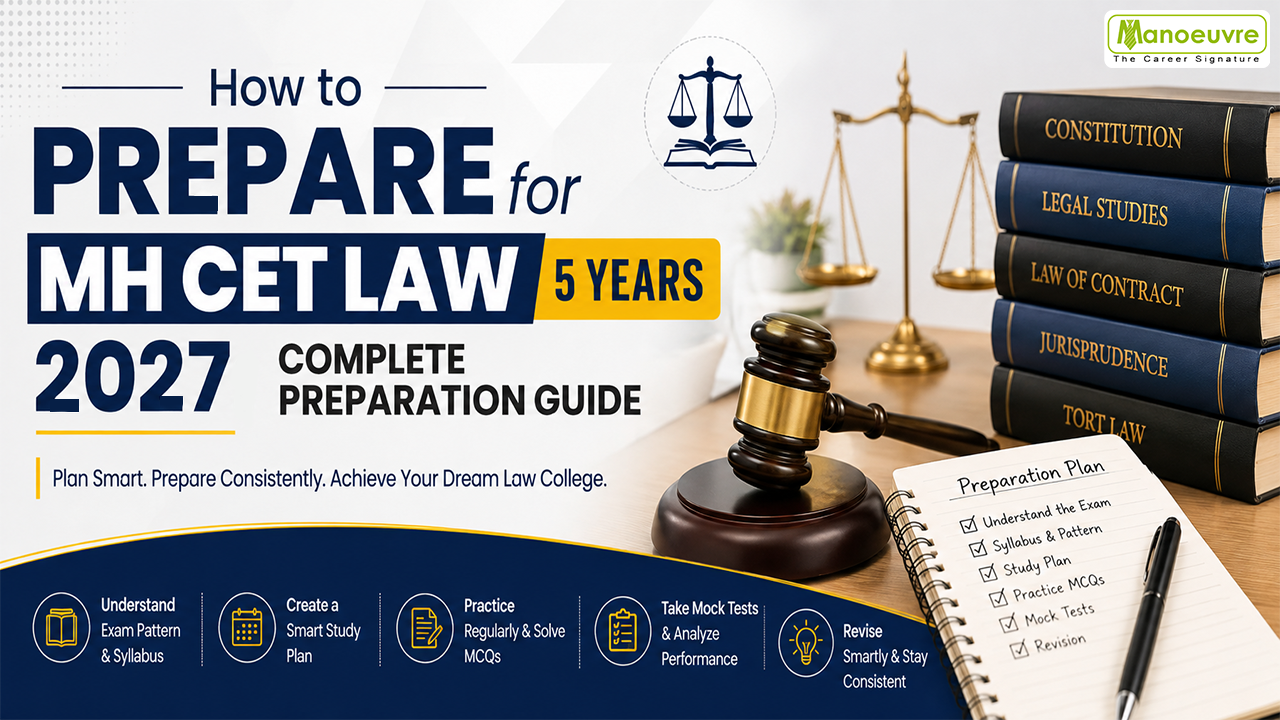
How to Prepare for MH CET Law 5 Years 2027: Complete Preparation Guide If you're planning to appear for MH CET Law 5 Years 2027, starting your preparation early can give you a significant advantage. The examination serves as the entrance test for admission to 5-year integrated LLB programmes offered by government, government-aided, and private law colleges throughout Maharashtra.Scoring well requires more than simply completing the syllabus. You need a clear understanding of the exam pattern, regular practice, strong legal aptitude, and effective time management.This complete MH CET Law 5 Years 2027 preparation guide covers everything you need to know—from the syllabus and study plan to recommended books, mock tests, previous-year papers, and common mistakes to avoid. MH CET Law 5 Years 2027 Exam Overview Understanding the exam pattern and overall structure is the first step towards effective MH CET Law 5 Years 2027 preparation.MH CET Law 5 Years 2027 Exam PatternParticularsDetailsExam ModeOnline (CBT)Duration2 HoursTotal Questions120 MCQsMaximum Marks120Marking Scheme+1 mark for each correct answerNegative MarkingNoSince there is no negative marking, attempting all questions is generally recommended after using the process of elimination wherever necessary. MH CET Law 5 Years 2027 Syllabus The MH CET Law 5 Years syllabus is divided into five major sections. A balanced preparation strategy should cover every section rather than focusing only on one subject.SectionKey TopicsLegal Aptitude & Legal ReasoningLegal principles, constitutional concepts, contracts, torts, legal awarenessGeneral Knowledge & Current AffairsIndian polity, history, economics, national and international eventsLogical & Analytical ReasoningCoding-decoding, blood relations, puzzles, syllogisms, seating arrangementsEnglishReading comprehension, grammar, vocabulary, sentence correctionMathematical AptitudePercentages, ratios, averages, profit and loss, simple arithmeticLegal Aptitude & Legal Reasoning carries significant weight in the exam, so building strong concepts and practising regularly is essential. How to Start MH CET Law 5 Years Preparation Many students begin their preparation without a proper plan, which can lead to incomplete syllabus coverage and insufficient revision.A more effective strategy is to organise your preparation into three structured stages. Phase 1: Understand the Basics — Weeks 1–4Begin by strengthening your core concepts instead of attempting a large number of questions.● Complete and understand the syllabus.● Learn basic legal terminology.● Improve grammar and vocabulary.● Revise fundamental mathematical concepts.● Read newspapers regularly for current affairs.Phase 2: Practice & Strengthen — Weeks 5–12Once your fundamentals are clear, move towards topic-wise practice.● Solve sectional tests.● Improve logical reasoning speed.● Practice reading comprehension every day.● Revise legal principles regularly.● Maintain concise current affairs notes.Phase 3: Mock Tests & RevisionThe final stage should focus on exam simulation and revision.● Attempt full-length mock tests.● Analyse every mistake.● Identify and improve weak areas.● Work on time management.● Revise important GK and legal concepts.A structured approach helps you complete the syllabus while leaving sufficient time for revision and mock-test practice. Section-Wise MH CET Law 5 Years Preparation Strategy 1. Legal Aptitude & Legal ReasoningLegal Aptitude & Legal Reasoning is a high-weightage section of the MH CET Law 5 Years exam and requires both conceptual understanding and regular practice. Instead of simply memorising laws, focus on understanding legal principles and applying them to practical situations. Questions may require you to analyse a principle and apply it to a given set of facts.Preparation Tips● Study basic constitutional concepts.● Learn important legal maxims.● Practice principle-fact questions.● Solve previous-year legal reasoning questions.● Revise important legal vocabulary regularly. 2. General Knowledge & Current AffairsThis section rewards consistent daily preparation rather than last-minute studying.Focus on important areas such as:● Indian Constitution and polity● Important government schemes● Awards and honours● Sports events● National and international events● Science and technology developmentsReading a quality newspaper for 20–30 minutes every day can help improve your awareness of current events.3. Logical & Analytical ReasoningAccuracy is more important than attempting every difficult puzzle. Build your fundamentals first and gradually increase your solving speed.Important topics include:● Number and letter series● Syllogisms● Direction sense● Blood relations● Coding-decoding● Critical reasoning● Puzzles● Seating arrangementsPractise timed question sets regularly to gradually improve both your solving speed and accuracy.4. EnglishThe English section primarily tests your comprehension and language skills.Focus on:● Reading comprehension● Error detection● Vocabulary● Synonyms and antonyms● Sentence improvement● Grammar rulesReading newspaper editorials and quality articles regularly can also help improve reading speed and comprehension. 5. Mathematical AptitudeThe Mathematics section is generally based on fundamental arithmetic concepts.Important topics include:● Percentages● Ratio and proportion● Averages● Time and work● Profit and loss● Simple interest● Compound interest● Basic arithmeticSolving 15–20 mathematics questions each day can gradually enhance both calculation speed and accuracy. 90-Day MH CET Law 5 Years Study Plan The following 90-day study plan can help students preparing alongside school or college.Time PeriodPrimary FocusDays 1–30Complete concepts and basic practiceDays 31–60Sectional tests and previous-year questionsDays 61–75Full-syllabus revisionDays 76–90Mock tests and performance analysisA consistent daily study routine of 3–5 hours is generally more effective than irregular long-hour study sessions. Recommended Study Material for MH CET Law 5 Years Preparation Choosing the right study material is an important part of MH CET Law preparation. Rather than referring to multiple books for different subjects, it is more effective to use a structured resource that covers the complete syllabus and provides enough practice for the exam.Manoeuvre's Law Entrance Books & E-Books are created for law entrance aspirants and cover key areas such as Legal Aptitude, Logical Reasoning, English, GK & Current Affairs, previous-year questions, and practice exercises in one comprehensive resource. Preparation Tip: Master one complete study resource through regular revision instead of referring to multiple books. Importance of Mock Tests in MH CET Law 2027 Preparation Mock tests are one of the most valuable components of MH CET Law 2027 preparation because they allow you to apply your knowledge under exam-like conditions.Benefits of Taking Mock Tests● Improves speed and accuracy.● Identifies weak sections.● Builds exam confidence.● Improves time management.● Familiarises you with the CBT format.● Helps develop an effective question-attempt strategy.After every mock test, spend sufficient time analysing your mistakes, rather than simply checking your score. Mock Test Analysis Checklist You don’t need expensive or complicated material in Class 11. Keep it simple. Recommended resources: For Reading ● The Hindu / Indian Express ● Editorial blogs For GK ● Monthly current affairs PDFs ● Yearly compendiums later For Practice ● Basic reasoning books ● CLAT beginner material ● Previous year questions Remember — depth matters more than quantity. Mock Test Analysis Checklist After completing every mock test, ask yourself:● Which section consumed the most time?● Were the mistakes conceptual or careless?● Which topics require further revision?● How many questions were left unattempted?● Did my accuracy improve compared with previous tests?● Which questions took too long to solve?Maintaining a mistake notebook can help you identify recurring errors and prevent them from being repeated. Previous-Year Papers: Why Do They Matter? Solving previous-year papers is an important part of MH CET Law preparation. They help students understand the nature and difficulty level of questions.Previous-year papers can help you understand:● Question difficulty● Frequently tested topics● Section-wise question distribution● Time required for different sections● Types of legal reasoning questionsTry solving previous-year papers in a timed and distraction-free environment to replicate actual exam conditions. Daily Routine for MH CET Law Aspirants A simple and realistic daily routine is easier to follow consistently.ActivitySuggested DurationNewspaper & Current Affairs30 minutesLegal Aptitude60 minutesLogical Reasoning45 minutesEnglish Practice30 minutesMathematics30 minutesRevision30–45 minutesYou can adjust these timings according to your school, college, or other commitments. Common Mistakes to Avoid During MH CET Law Preparation Many students lose marks because of avoidable preparation mistakes rather than a lack of knowledge.Avoid these common mistakes:● Ignoring legal reasoning until the last month.● Skipping current affairs preparation.● Solving questions without analysing mistakes.● Practising only easy topics.● Attempting too few mock tests.● Not revising completed topics.● Frequently changing books and study resources.● Ignoring time management until the final stage.Consistency and regular revision generally produce better results than continuously studying new topics without revisiting previously completed material. How Coaching Can Help in MH CET Law 5 Years PreparationWhile self-study can work well for many students, some aspirants benefit from structured coaching and expert guidance.A well-structured preparation programme can provide:● Topic-wise classroom learning● Study material aligned with the syllabus● Regular mock tests● Doubt-solving sessions● Performance tracking● Previous-year paper practice● Structured revisionThe right guidance can help students maintain discipline and follow a systematic preparation strategy throughout the year. Final Revision Tips for MH CET Law 5 Years 2027During the final few weeks before the examination, focus more on revision, practice, and accuracy rather than trying to learn everything from scratch.Follow These Final Tips:● Revise important legal principles instead of starting too many new topics.● Take a full-length mock test every 2–3 days.● Read concise current affairs notes daily.● Revise important grammar rules and vocabulary.● Review your mistake notebook.● Practise time management.● Avoid unnecessary changes to your preparation strategy.● Get adequate sleep before the examination.● Stay calm and avoid last-minute stress.A calm, focused, and consistent revision strategy can be more effective than excessive studying during the final week. FAQs – MH CET Law 5 Years 2027 Preparation1. How should I start preparing for MH CET Law 5 Years 2027?Start by understanding the exam pattern and syllabus. Build your fundamentals section-wise, then gradually move towards topic-wise practice, sectional tests, mock tests, and revision.2. Is MH CET Law 5 Years difficult?The difficulty level can vary from year to year. Students who develop strong legal reasoning, logical aptitude, English, mathematical fundamentals, and current affairs knowledge through consistent practice can prepare effectively for the examination.3. How many mock tests should I attempt?Aim to attempt at least 20–30 full-length mock tests before the examination, along with regular sectional tests. More important than the number of tests is analysing your performance after each one.4. Is there negative marking in MH CET Law 5 Years?As per the exam pattern outlined above, there is no negative marking. Each correctly answered question carries one mark. 5. Which section carries the highest importance?Legal Aptitude & Legal Reasoning is one of the key sections of the examination. However, students should maintain balanced preparation across all five sections because a strong overall score requires consistent performance throughout the paper. Final TakeawayPreparing for MH CET Law 5 Years 2027 requires a combination of conceptual clarity, regular practice, current affairs awareness, mock-test analysis, and effective time management.Start early, follow a structured study plan, practise consistently, and regularly analyse your performance. Rather than trying to study everything at once, focus on building strong fundamentals and improving your accuracy and speed step by step.With disciplined preparation and consistent revision, you can approach the MH CET Law 5 Years 2027 examination with greater confidence and readiness.

12 Aug 2026
0 comments
How to Prepare for NLAT 2027: Complete Preparation Strategy & Tips Preparing for NLAT 2027 requires a balanced approach because the examination tests candidates across verbal ability, general knowledge, quantitative aptitude, logical thinking and legal reasoning. Unlike examinations that focus heavily on one particular subject, NLAT requires students to maintain reasonable accuracy across multiple areas while also managing time effectively. The NMIMS National Law Aptitude Test is conducted for admission to the five-year integrated B.A. LL.B. (Hons.) and B.B.A. LL.B. (Hons.) programmes offered by NMIMS School of Law campuses. For the latest available examination pattern, the test consists of 150 objective questions carrying 150 marks, with 30 questions from each of five sections. Candidates get 120 minutes to complete the test, and there is no negative marking. Since the official notification for 2027 may introduce changes, candidates should verify the final pattern and schedule from the NMIMS admission handout when it is released. Understand the NLAT 2027 Exam Pattern Before starting preparation, understand how the paper is structured. The latest official NMIMS-LAT pattern includes five sections: Section Questions Marks Verbal Reasoning 30 30 General Knowledge 30 30 Quantitative Reasoning 30 30 Logical Reasoning 30 30 Legal Reasoning 30 30 Total 150 150 The total duration is two hours and the latest official handout specifies no negative marking. This means you have an average of less than one minute per question. Therefore, preparation should focus not only on knowing concepts but also on speed, question selection and accuracy. How to Start NLAT 2027 Preparation The first step is to understand your current level. Take a sample paper or diagnostic test before beginning serious preparation. This will help you identify whether you are already comfortable with English, mathematics, reasoning, general awareness or legal aptitude. Create three categories: ● Strong areas: Topics you can solve accurately and quickly ● Moderate areas: Topics where you understand the basics but need practice ● Weak areas: Topics where you frequently make mistakes or take too much time Use this assessment to create your study timetable instead of spending equal time on every topic. NLAT 2027 Preparation Strategy for Verbal Reasoning Verbal Reasoning tests language ability and comprehension. The official sample paper includes questions involving vocabulary and English-language usage.Your preparation should include:● Vocabulary● Synonyms and antonyms● Grammar● Sentence correction● Reading comprehension● Sentence completion● Word usage● Basic verbal reasoningHow to Improve Verbal AbilityRead newspapers, editorials, essays and quality articles regularly. As you read, identify unfamiliar words and use the surrounding sentences to understand their meanings. Avoid cramming a large number of words at once; learning vocabulary gradually through regular practice is more effective. Regular reading can also improve comprehension speed, which is useful in other sections where questions require careful understanding of the information provided. Spend at least 30–45 minutes a day on reading and verbal practice. How to Prepare for General Knowledge General Knowledge can cover a broad range of subjects, making random preparation inefficient.Focus on:● Current affairs● National events● International developments● Indian polity● History● Geography● Economy● Science and technology● Awards and honours● Sports● Important organisations● Major legal and constitutional developmentsThe objective should be to understand important events rather than attempting to memorise every piece of news.Make Monthly Current Affairs NotesMaintain a monthly notebook or digital document.Divide it into categories such as:National | International | Economy | Science & Technology | Environment | Sports | Awards | Legal & ConstitutionalAt the end of every month, revise your notes and attempt a short quiz. This makes revision much easier closer to the examination. How to Prepare for Quantitative Reasoning Quantitative Reasoning does not need to become the most time-consuming part of your preparation. Build strong fundamentals first and then gradually improve speed.Important areas can include:● Percentages● Profit and loss● Ratio and proportion● Averages● Number systems● Basic arithmetic● Simple interest● Time and work● Time, speed and distance● Data interpretation● Number patternsThe official NMIMS sample and examination material should be treated as the primary reference for understanding the expected level and question style.Quantitative Practice MethodStart by learning the basic method for each topic.Then solve: Untimed questions Topic-wise sets Timed sets Mixed questions Full-length mock questions Maintain an error notebook. Note down the type of question, the error you made, and the method used to solve it correctly, your mistake and the correct approach. This prevents you from repeatedly making the same error. How to Prepare for Logical Reasoning Logical Reasoning tests your ability to identify patterns, relationships and logical connections. Preparation can include: ● Analogies ● Series ● Coding-decoding ● Blood relations ● Directions ● Syllogisms ● Statements and conclusions ● Puzzles ● Arrangements ● Logical sequences ● Data-based reasoning Do not try to solve every question using the same amount of time. If a puzzle appears complicated and is taking too long, move to another question and return to it later. The aim is to maximise the number of questions you can solve accurately within the available time. How to Prepare for Legal Reasoning Legal Reasoning is particularly important because NLAT is designed for admission to integrated law programmes.However, students preparing for the examination do not need to study the entire law-school curriculum.Focus on:● Basic legal concepts● Legal terminology● Principles and rules● Application of principles to situations● Legal awareness● Constitutional basics● Rights and duties● Important legal developmentsThe key skill is application.When you encounter a principle-based question, first identify the legal principle. Then understand the facts given in the question and determine how that principle applies. Do not choose an answer merely because it sounds legally sophisticated. Build a Daily Reading Habit Reading should be a daily activity rather than something reserved for the final months. A simple routine can be: Activity Time Newspaper/current affairs 30 minutes Vocabulary 15 minutes Reading comprehension 30 minutes Reasoning practice 45 minutes Quantitative practice 45 minutes Legal reasoning 30 minutes Revision/error analysis 15 minutes Students who have school or coaching commitments can adjust these timings. The important thing is to maintain consistency. Practise Questions Every Day Reading theory alone will not prepare you for a time-bound entrance test.After learning a topic, solve questions immediately.For example:Monday: Percentages + Logical Reasoning Tuesday: Grammar + Legal Reasoning Wednesday: Averages + Reading Comprehension Thursday: Current Affairs + Logical Reasoning Friday: Quantitative revision + Legal practice Saturday: Mixed sectional test Sunday: Full mock or revision This keeps preparation varied and prevents one section from being neglected. Take NLAT MockTests Mock tests are one of the most effective ways to improve performance. Initially, focus on understanding the paper. Later, use mocks to improve speed and accuracy. A useful progression is: Early Preparation Take a diagnostic test and occasional sectional tests. Middle Preparation Start taking regular full-length papers and analyse your performance. Final Preparation Increase full-length practice while concentrating on revision and error correction. Do not judge a mock only by its score. After every test, analyse: ● Questions answered incorrectly ● Questions left unanswered ● Questions that took too long ● Topics causing repeated mistakes ● Sections where accuracy is low ● Time spent on each section Because the latest official pattern has no negative marking, candidates should also practise making intelligent attempts rather than unnecessarily leaving questions blank. Improve Your Time Management With 150 questions and 120 minutes, time management is critical.You should experiment with different section orders during mock tests.For example, one student may prefer:Verbal → Legal → Logical → GK → Quantitativewhile another may perform better with:GK → Verbal → Logical → Legal → QuantitativeThere is no single sequence that works for everyone.Choose the order that allows you to begin with sections where you are confident and maintain momentum. Do not spend several minutes trying to solve one difficult question. Mark the question for review, continue with the paper, and revisit it later if you have enough time. Three-Month NLAT Preparation Plan If you have approximately three months remaining, preparation can be divided into three phases.Month 1: Build FundamentalsFocus on understanding concepts.● Complete basic quantitative topics● Revise reasoning fundamentals● Start daily reading● Build vocabulary● Begin legal reasoning● Make current affairs notes● Solve topic-wise questionsThe objective is to create a strong base.Month 2: Increase PracticeMove from learning to application.● Solve mixed question sets● Take sectional tests● Practise reading comprehension● Revise current affairs● Increase quantitative speed● Practise legal principle-based questions● Begin regular full-length mocksSpend time analysing your mistakes.Month 3: Exam-Oriented PreparationThe final month should focus on performance.Prioritise:● Full-length mock tests● Previous/sample questions● Current affairs revision● Vocabulary revision● Formula revision● Legal reasoning practice● Error-log revision● Time management Avoid constantly changing your study material during the final weeks. Six-Month Preparation Strategy Students who start six months before the examination have more time to build skills gradually. Period Main Focus Months 1–2 Fundamentals and reading habit Months 3–4 Topic-wise and sectional practice Month 5 Full-length mocks and revision Month 6 Exam simulation and targeted improvement The additional time should not mean studying without a plan. Use the first few months to strengthen weak areas and the final months to improve examination performance. Common Mistakes to Avoid Preparing Only Legal ReasoningNLAT has five sections with equal weightage in the latest official pattern. Ignoring quantitative, verbal, logical or general knowledge preparation can affect the overall score.Ignoring MathematicsSome law aspirants are uncomfortable with quantitative questions and postpone them. This can create unnecessary pressure later.Start with basic arithmetic and gradually increase difficulty.Reading Current Affairs Without RevisionReading news every day is useful, but without revision, much of the information will be forgotten.Keep concise monthly notes.Taking Mocks Without AnalysisA mock is not complete when you see the score.Analyse your mistakes and identify the reason behind them.Using Too Many BooksMore resources do not automatically mean better preparation.Choose a manageable set of study materials and practise consistently.Leaving Preparation Until the Last Month Language, reading speed and reasoning ability improve through regular practice. Starting your preparation early gives you enough time to gradually strengthen these skills. How to Track Your Progress Maintain a simple weekly performance sheet.Record:● Mock score● Accuracy percentage● Time taken● Section-wise score● Weak topics● Repeated mistakesFor example: Week Mock Score Strongest Section Weakest Section Main Improvement Week 1 — — — Baseline Week 2 — — — Accuracy Week 3 — — — Speed Week 4 — — — Time management The purpose is not to chase a perfect score immediately. Look for steady improvement. Final Tips for NLAT 2027 Preparation Effective preparation is ultimately about consistency.Keep these points in mind:● Read something useful every day.● Practise questions instead of relying only on theory.● Revise current affairs regularly.● Strengthen basic mathematics.● Develop logical thinking through timed practice.● Understand legal principles instead of memorising complicated terminology.● Take regular mock tests.● Analyse every major mistake.● Work on speed only after developing reasonable accuracy.● Follow the official NMIMS notification for any changes to the 2027 examination.The latest official NMIMS information describes NLAT as the entrance examination for its five-year B.A. LL.B. (Hons.) and B.B.A. LL.B. (Hons.) programmes, with the law entrance test conducted across multiple NMIMS School of Law campuses. A well-planned preparation strategy can help you approach the examination with greater confidence. Instead of trying to complete everything at once, divide your preparation into small daily targets, track your progress and regularly work on your weak areas. With consistent practice across all five sections, you can build the speed, accuracy and reasoning skills needed to perform well in NLAT 2027. Frequently Asked Questions 1. What is the best way to prepare for NLAT 2027? The best approach is to follow a structured study plan covering verbal reasoning, general knowledge, quantitative reasoning, logical reasoning and legal reasoning. Regular practice, revision and mock tests are also important.2. What is the ideal time to begin preparing for NLAT 2027? Ideally, preparation should begin at least three to six months before the examination. Starting early gives you enough time to strengthen fundamentals, practise questions and improve time management.3. Is mathematics important for NLAT preparation? Yes. Quantitative Reasoning is one of the sections in the latest examination pattern. Candidates should prepare basic arithmetic and practise calculation-based questions regularly.4. How can I improve my performance in Legal Reasoning? Focus on understanding basic legal concepts and practising questions based on principles and situations. The ability to apply a given principle is more important than memorising complex legal terminology.5. How should I prepare for General Knowledge? Follow current national and international developments and revise important topics from areas such as politics, economics, science, sports, awards, history and legal developments. Maintaining monthly current affairs notes can make revision easier.6. Are mock tests necessary for NLAT preparation? Yes. Mock tests help improve speed, accuracy and time management. They also help you identify weak areas and become familiar with the pressure of completing a full-length examination.7. How can I improve my time management for the exam? Practise timed question sets and full-length tests. Avoid spending too much time on a difficult question and develop a section order that suits your strengths.8. Is there negative marking in NLAT? According to the latest official NMIMS examination information, there is no negative marking. Candidates should, however, verify the rules for the 2027 examination from the official notification when released.9. How many hours should I study for NLAT every day? There is no fixed number of hours that works for everyone. Students can start with around two to three focused hours daily and increase study time as the examination approaches, depending on their preparation level and schedule.

10 Aug 2026
0 comments
How to Prepare for AILET Entrance Exam 2027: Complete Preparation Guide Preparing for a competitive law entrance examination requires more than simply completing the syllabus. Students need to understand the exam structure, develop strong reading and reasoning skills, stay updated with current affairs and practise questions regularly. The AILET 2027 preparation journey should therefore be planned around consistency, accuracy and effective time management. The All India Law Entrance Test is conducted by the National Law University Delhi (NLU Delhi) for admission to its undergraduate law programme. The competition is strong because NLU Delhi is among the most sought-after law institutions in India. For the 2026 examination, the undergraduate paper consisted of 150 multiple-choice questions carrying 150 marks, divided into English Language, Current Affairs & General Knowledge, and Logical Reasoning. The test duration was two hours, with 0.25 marks deducted for every incorrect answer. The university may announce the official details for 2027 separately, so candidates should always verify the final notification before applying or preparing according to a particular pattern. Why Start Preparing Early for AILET 2027? Early preparation gives students enough time to build their fundamentals before moving towards intensive practice. Unlike an examination that can be prepared for only by memorising information, this test requires a combination of language ability, awareness and logical thinking. Starting early allows you to: ● Understand the examination structure ● Complete important topics without rushing ● Develop a daily reading habit ● Improve vocabulary and comprehension ● Strengthen logical reasoning concepts ● Follow current affairs consistently ● Practise previous-year questions ● Take full-length mock examinations ● Identify and improve weak areas Students who begin preparation well in advance can also spend the final months focusing primarily on revision and test-taking skills rather than trying to learn everything at the last minute. Understand the AILET Exam Pattern Before beginning your preparation, understand what the paper demands. In the latest UG pattern available from NLU Delhi, the examination had three sections: Section Questions Marks English Language 50 50 Current Affairs & General Knowledge 30 30 Logical Reasoning 70 70 Total 150 150 The examination duration was 120 minutes. There was negative marking of 0.25 marks for each incorrect response. NLU Delhi also stated that legal principles may appear within Logical Reasoning, but candidates were not required to possess technical legal knowledge to answer those questions. For AILET 2027, students should use the latest official notification as the final reference because the university can revise examination-related details. Understand the AILET Syllabus The next step is to break the syllabus into manageable areas instead of treating the entire examination as one subject.1. English LanguageThe English section primarily tests how comfortably you can understand and interpret written language. Preparation should include:● Reading comprehension● Vocabulary● Synonyms and antonyms● Sentence structure● Grammar● Word usage● Inference-based questions● Main idea and tone● Contextual meaningReading is particularly important because it improves both comprehension and vocabulary simultaneously. Editorials, quality newspapers, magazines and well-written articles can be useful resources.Instead of trying to memorise hundreds of words every week, maintain a vocabulary notebook and record unfamiliar words along with their meanings, usage and related words.2. Current Affairs and General KnowledgeGeneral awareness can become a scoring area if prepared consistently. However, trying to cover current affairs only during the final few weeks can become overwhelming.Focus on areas such as:● National and international events● Government policies and initiatives● Important appointments● Awards and honours● Sports● Science and technology● Important legal and constitutional developments● International organisations● Books and authors● Important reports and indexes● Major economic and social developmentsCreate short monthly notes rather than maintaining lengthy notebooks. Revise them at regular intervals.3. Logical ReasoningLogical Reasoning carries the largest number of questions in the latest UG pattern, making it an important component of preparation.Practise areas such as:● Arguments● Assumptions● Conclusions● Statements● Inferences● Strengthening and weakening arguments● Analogies● Series● Arrangements● Critical reasoning● Logical relationships● Passage-based reasoning The objective should not simply be to solve more questions. You should understand why an option is correct and why the others are incorrect. How to Prepare for AILET 2027 from the Beginning A structured approach can make preparation considerably easier.Step 1: Analyse Your Current LevelBegin with a diagnostic test or previous-year paper. Attempt it under timed conditions without extensive preparation.Analyse:● Questions you could solve● Questions where you made mistakes● Questions that consumed too much time● Topics you found difficult● Areas where you guessed answersThis gives you a realistic starting point.Step 2: Build Strong FundamentalsDo not immediately start solving hundreds of questions every day.First understand the concepts. For example, if you struggle with critical reasoning, learn the different question types before attempting advanced practice sets.Similarly, improve basic grammar and reading comprehension before concentrating entirely on speed.Step 3: Develop a Daily Reading HabitReading is one of the most useful long-term habits for law entrance preparation.Spend around 30–45 minutes each day reading quality material. While reading, ask yourself:● What is the central argument?● What is the author's viewpoint?● What evidence is being presented?● Can I summarise the passage in two or three sentences?● Which unfamiliar words can I learn?This practice can gradually improve comprehension, vocabulary and analytical ability.Step 4: Prepare Current Affairs Throughout the YearDo not wait for the examination announcement to begin general awareness preparation.Divide your current affairs preparation into three activities:Daily: Read important news and identify significant developments.Weekly: Revise the week's important events.Monthly: Create concise revision notes and practise questions. The revision cycle is important because remembering current events requires repeated exposure. AILET 2027 Preparation Strategy by Phase A practical preparation plan can be divided into four stages.Phase 1: Foundation BuildingUse the initial months to understand the syllabus and strengthen fundamentals.Your focus should be:● Basic concepts● Reading habit● Grammar● Vocabulary● Reasoning fundamentals● Daily news● Easy-to-moderate practice questionsDo not worry excessively about mock-test scores at this stage.Phase 2: Intensive PracticeOnce the basics are comfortable, increase the difficulty level.Start solving:● Sectional tests● Topic-wise question sets● Previous-year questions● Timed exercisesMaintain an error notebook. Record recurring mistakes and revise them every week.Phase 3: Mock-Test PracticeAs the examination approaches, introduce full-length mock tests.Initially, take one or two mocks every week. Later, increase the frequency according to your preparation level.After every mock, spend sufficient time analysing it.A mock test is useful only when you understand:● Why you lost marks● Which questions consumed excessive time● Which section affected your score● Whether mistakes occurred because of concepts, reading or carelessness● How many questions you attempted through guessingPhase 4: Final RevisionDuring the final weeks, avoid introducing too many new resources.Focus on:● Current affairs revision● Important vocabulary● Frequently tested reasoning concepts● Previous mistakes● Mock-test analysis● Time management● Accuracy The goal should be to enter the examination with confidence rather than constantly changing your preparation strategy. Create a Practical Daily Study Schedule A good timetable should be realistic enough to follow every day. For example: Activity Suggested Time Current Affairs 30 minutes English/Reading 45 minutes Logical Reasoning 60–90 minutes Current Affairs Revision 20 minutes Practice Questions 45–60 minutes Error Analysis 20–30 minutes Students preparing alongside school or college can modify these timings according to their schedule. Consistency matters more than studying for an unrealistic number of hours. Use Previous-Year Papers Effectively Solving previous-year papers can give you a clear idea of the question format, difficulty level, and areas commonly tested Do not simply solve them once and move on. Use them in three stages: First: Attempt the paper under timed conditions. Second: Analyse every incorrect and doubtful question. Third: Revisit the paper after a few weeks and check whether you have improved. Previous papers can also help identify your recurring weaknesses. How to Improve Speed and Accuracy Since the paper has a fixed time limit and negative marking, attempting every question blindly is not a good strategy. Follow these principles: Read Before You Rush For passage-based questions, understand what the passage is saying before looking for an answer. Avoid Unnecessary Guesswork A wrong answer can reduce your overall score. Attempt questions where you have reasonable confidence rather than guessing repeatedly. Track Time During Practice If you spend too long on one difficult question, you may lose the opportunity to solve several easier ones. Review Your Attempts After each practice session, identify whether your mistakes came from lack of knowledge, misunderstanding, rushing or poor time management. Common Mistakes Students Should Avoid Many students make avoidable mistakes during preparation.Starting Without Understanding the PatternCollecting study material without knowing the actual requirements can result in scattered preparation.Ignoring Current AffairsLeaving general awareness for the final month creates unnecessary pressure.Taking Too Many Mocks Without AnalysisTen unanalysed mocks are less useful than fewer tests followed by detailed review.Studying Only Easy QuestionsThe purpose of practice is to gradually improve your ability to handle different difficulty levels.Changing Resources FrequentlyUsing multiple books, courses and test series simultaneously can create confusion. Select reliable resources and use them consistently.Neglecting Revision Learning something once does not guarantee that you will remember it during the examination. Revision should be part of your weekly routine. Should You Join AILET Coaching? Self-study can work for students who are disciplined, comfortable with the syllabus and capable of evaluating their own performance. However, structured guidance can help students follow a systematic preparation schedule. A good coaching programme can provide: ● Structured classes ● Topic-wise practice ● Mock examinations ● Performance analysis ● Doubt-solving support ● Current affairs guidance ● Study material ● Regular revision Students should compare the faculty, study resources, mock-test quality, batch structure and support system before choosing an institute. Coaching should supplement your preparation, not replace individual practice. Final Preparation Tips for AILET 2027 Keep these points in mind throughout your preparation: Start with a realistic assessment of your current level. Follow the latest official examination notification. Read regularly to improve comprehension and vocabulary. Prepare current affairs throughout the year. Give special attention to Logical Reasoning. Practise previous-year papers under timed conditions. Take mock tests regularly. Analyse every mock instead of focusing only on the score. Maintain an error notebook. Revise important topics repeatedly. Avoid excessive guessing because of negative marking. Keep your final preparation focused and organised. Conclusion Preparing for the AILET 2027 entrance examination is a gradual process. Success does not depend on studying for extremely long hours every day. What matters more is following a structured routine, understanding your weaknesses and improving them consistently.Build your fundamentals first, develop strong reading habits, stay updated with important events, practise Logical Reasoning regularly and gradually introduce timed tests. As the exam approaches, prioritize revision, mock-test evaluation, and improving accuracy rather than taking on large amounts of new content. Most importantly, keep checking the official NLU Delhi website for the final AILET 2027 notification, examination schedule, eligibility requirements and test pattern before making decisions based on previous-year information. The latest available UG information confirms that the university can specify the examination structure and admission requirements through its official notification. With consistent preparation and a clear strategy, students can approach the examination with greater confidence and be better prepared for the competition for admission to NLU Delhi. Frequently Asked Questions 1. What is AILET 2027? AILET 2027 is a national-level law entrance examination conducted by National Law University Delhi for admission to its undergraduate law programme.2. How should I start preparing for AILET 2027? Start by understanding the exam pattern and syllabus, followed by strengthening English, Logical Reasoning and General Knowledge. Gradually include previous-year papers, sectional tests and mock exams.3. How much time is required to prepare for AILET? The required preparation time depends on your existing knowledge and daily study hours. Starting several months in advance gives you enough time to build concepts, practise questions and revise effectively.4. Is reading newspapers important for AILET preparation? Yes. Regular reading can improve comprehension, vocabulary and awareness of important national and international developments. It can also help students become more comfortable with passage-based questions.5. How can I improve my Logical Reasoning for the examination? Practise different types of reasoning questions regularly and analyse your mistakes. Focus on understanding arguments, assumptions, conclusions, inferences and other commonly tested reasoning concepts.6. Are mock tests important for AILET preparation? Yes. Mock tests help you practise under time constraints, identify weak areas and improve question-selection strategies. Their effectiveness increases when you analyse your mistakes after every test.7. Can I prepare for AILET through self-study? Yes, self-study is possible with a disciplined timetable, reliable study material, regular practice and consistent revision. Students who need structured guidance may also consider joining a suitable coaching programme. 8. Does AILET have negative marking? Yes. Under the latest available undergraduate examination pattern, 0.25 marks are deducted for each incorrect answer. Candidates should check the official notification for the final 2027 examination rules.

05 Aug 2026
0 comments
Complete List of 3-Year LLB Entrance Exams in India Introduction A 3-year LLB programme is a popular choice among graduates who wish to enter the legal profession and build a career in law. Unlike the 5-year integrated law course that students can pursue after completing Class 12, the 3-year LLB course is specially designed for candidates who have already completed their graduation in any stream. To secure admission into reputed law colleges, students need to appear for different entrance examinations conducted at the national, state, or university level. These exams evaluate important skills required for legal education, including legal aptitude, logical reasoning, general knowledge, English language ability, and awareness of current affairs. With multiple options available across India, understanding the 3-year LLB entrance exams in India helps students select the right examination and prepare with a clear strategy. What Are 3-Year LLB Entrance Exams? 3-year LLB entrance exams are competitive examinations conducted for admission to LLB programmes after graduation. These exams help colleges assess a candidate’s reasoning ability, analytical skills, language understanding, and basic knowledge of legal concepts.Several government and private law colleges consider scores from these entrance tests for admission. While some universities conduct their own entrance examinations, others provide admission through state-level law entrance tests. Students who have completed graduation courses such as BA, BCom, BSc, BBA, or any other recognised degree programme can apply for these exams, provided they meet the required eligibility criteria. Eligibility Criteria for 3-Year LLB Entrance Exams The eligibility requirements for 3-year LLB entrance exams may differ depending on the university or examination authority. However, most institutions generally follow similar criteria: ● Candidates should hold an undergraduate degree from a recognised university or institution. ● Students from any academic stream can apply for the programme. ● Minimum graduation percentage requirements may vary according to the college and candidate category. ● There is generally no upper age limit for pursuing a 3-year LLB course. ● Final-year graduation students may also be eligible for certain entrance examinations. Before filling out the application form, students should carefully check the official notification of the respective exam to understand the exact eligibility conditions. List of 3-Year LLB Entrance Exams India offers several entrance examinations for students who want to pursue a 3-year LLB programme. Some of the major exams are discussed below:1. MH CET Law 3-Year LLBThe MH CET Law 3-Year LLB is one of the most popular state-level law entrance examinations in India. It is conducted by the State Common Entrance Test Cell, Maharashtra, for admission to various law colleges across Maharashtra.The exam is mainly designed for graduates who want to pursue a 3-year LLB course. Many government, private, and aided law colleges participate in the admission process through this examination.Key Highlights:● Conducting Authority: State CET Cell, Maharashtra● Course: 3-Year LLB● Mode: Online Computer-Based Test● Duration: 2 Hours● Question Type: Multiple Choice QuestionsSubjects Covered:● Legal Aptitude and Legal Reasoning● Logical Reasoning● General Knowledge and Current Affairs● English Language● Basic MathematicsFor students planning to study law in Maharashtra, the MH CET Law 3-Year LLB exam is an important pathway to secure admission in reputed law colleges.2. CUET PG LLB Entrance ExamThe CUET PG LLB Entrance Exam is conducted by the National Testing Agency (NTA) for admission to postgraduate courses offered by participating universities. Some universities accept CUET PG scores for admission to their law programmes.Students interested in applying to these universities can appear for this examination and compete for available seats based on their performance.The exam generally tests areas such as:● Legal concepts● General awareness● Reasoning ability● Language comprehension● Subject-related knowledgeOne of the major advantages of this exam is that students can apply to multiple participating universities through a single entrance test.3. Delhi University 3-Year LLB Entrance AdmissionThe University of Delhi offers admission to its 3-year LLB programme through the CUET PG examination.The Faculty of Law at Delhi University is considered one of the well-known law institutions in India. Students who wish to secure admission must fulfil the eligibility requirements and perform well in the entrance examination.Due to the reputation of the university and limited seats, the competition level for admission is generally high.4. ILS Law College Entrance AdmissionILS Law College is among the reputed law colleges in Maharashtra offering legal education. Admission to its 3-year LLB programme is conducted according to the guidelines issued by the concerned admission authority.Students who are interested in joining this institution should regularly check official updates regarding admission dates, eligibility requirements, and the selection process.5. University-Level 3-Year LLB Entrance ExamsApart from national and state-level examinations, several universities conduct their own admission processes for 3-year LLB courses.These university-level entrance exams may evaluate candidates on different areas, including:● Legal reasoning● General knowledge● English proficiency● Analytical ability● Current affairs Students should check the individual requirements of each university before applying to understand the admission process. State-Level 3-Year LLB Entrance Exams in India Apart from national-level and university-level examinations, several states conduct their own admission processes for students who want to pursue a 3-year LLB course. These exams provide opportunities to secure admission in law colleges within the respective states.Some important examples include:MaharashtraMaharashtra conducts MH CET Law 3-Year LLB for admission to various government, private, and aided law colleges across the state. It is one of the most preferred options for graduates who want to pursue law in Maharashtra.KarnatakaSeveral universities and law colleges in Karnataka follow their own admission procedures for 3-year LLB programmes. Candidates should check the specific requirements of the institution they wish to apply to.Andhra Pradesh and TelanganaLaw admissions in Andhra Pradesh and Telangana may be conducted through state-level entrance examinations and individual university admission processes. Students should regularly check official notifications for updated details.Other StatesDifferent states follow different admission methods for 3-year LLB entrance exams in India. Some may conduct entrance tests, while others may offer admission based on merit or university-level examinations. Since admission rules and exam patterns may change from time to time, candidates should always verify the latest information before applying. Exam Pattern for 3-Year LLB Entrance Exams Although every entrance examination has its own structure, most 3-year LLB entrance exams assess similar skills that are important for legal studies.A general exam pattern includes the following sections:English LanguageThis section evaluates a candidate’s vocabulary, grammar, reading comprehension, and overall language skills. Regular reading practice can help students improve their performance in this section.Legal Aptitude and ReasoningThis section tests the candidate’s understanding of basic legal principles and their ability to apply legal concepts to different situations. Developing conceptual clarity is important for solving these questions accurately.Logical ReasoningLogical reasoning questions assess analytical thinking, problem-solving ability, and decision-making skills. Regular practice can help improve speed and accuracy.General Knowledge and Current AffairsCandidates are expected to stay updated with important national and international events. Reading newspapers, following reliable news sources, and revising current affairs regularly can be helpful.Basic MathematicsSome entrance exams include basic mathematics questions to test numerical ability. Practising fundamental concepts can help candidates handle this section confidently. Understanding the exam pattern before starting preparation allows students to create a better study plan and focus on areas that need more attention.. How to Prepare for 3-Year LLB Entrance Exams? Preparing for 3-year LLB entrance exams in India requires consistent effort, regular practice, and proper time management. Students can follow these strategies to improve their preparation: 1. Understand the Syllabus and Exam Pattern Before beginning preparation, students should understand the complete syllabus and exam pattern. Knowing the importance of each section helps candidates divide their preparation time effectively. 2. Read Current Affairs Regularly Current affairs play an important role in many law entrance exams. Reading newspapers, legal updates, and reliable online sources regularly can help students improve their general awareness. 3. Solve Previous Year Question Papers Practising previous year papers helps candidates understand the exam difficulty level, frequently asked topics, and the type of questions asked in the examination. 4. Improve Logical Reasoning Skills Logical reasoning requires regular practice. Solving different types of reasoning questions can improve speed, accuracy, and confidence during the exam. 5. Attempt Mock Tests Mock tests provide a real exam-like experience and help students analyse their preparation level. They also help identify weak areas and improve time management skills. Common Mistakes Students Make During Preparation Many students prepare for law entrance exams without following a proper strategy. Some common mistakes that candidates should avoid include: ● Ignoring current affairs preparation ● Giving more importance to only one subject ● Not practising enough mock tests ● Delaying revision until the last stage ● Not analysing mistakes after attempting practice tests A balanced preparation approach covering all sections is important to achieve a good score in 3-year LLB entrance exams. Why Professional Guidance Can Help in Law Entrance Preparation? Preparing for law entrance exams along with graduation studies can sometimes become challenging for students. Managing multiple subjects, understanding concepts, and maintaining regular practice requires proper planning. Professional coaching can help students follow a structured preparation approach with expert guidance, study materials, regular assessments, and doubt-solving support. Institutes like Manoeuvre Education provide preparation support for various law entrance examinations through experienced mentors, mock tests, and organised learning programmes. This guidance helps students improve their concepts, build confidence, and stay consistent throughout their preparation journey. Career Opportunities After Completing 3-Year LLB After completing a 3-year LLB degree, graduates can explore several career options in the legal field. Some popular career opportunities include:● Advocate in courts● Legal advisor● Corporate lawyer● Government legal services● Legal consultant● Judiciary preparation● Compliance roles The legal profession offers opportunities across various sectors, including corporate organisations, government departments, law firms, and independent legal practice. Conclusion The 3-year LLB entrance exams in India provide graduates with an opportunity to enter the legal field and build a successful career. With different state-level, university-level, and national-level admission options available, students can choose the examination that best matches their career goals. Understanding the exam pattern, preparing consistently, practising regularly, and staying updated with legal and current affairs topics can significantly improve a candidate’s performance. With the right preparation strategy and guidance, aspirants can increase their chances of securing admission to their preferred law college. FAQs 1. Who can apply for a 3-year LLB course?Graduates from any stream who fulfil the required eligibility criteria can apply for a 3-year LLB course. Candidates should have an undergraduate degree from a recognised university or institution. 2. Which is the most popular 3-year LLB entrance exam in Maharashtra?MH CET Law 3-Year LLB is one of the most popular entrance exams for admission to law colleges in Maharashtra.3. Is CLAT required for a 3-year LLB course?No, CLAT is mainly conducted for admission to 5-year integrated law programmes after Class 12. Most 3-year LLB entrance exams follow separate admission processes conducted by states or universities.4. Can final-year graduation students apply for 3-year LLB entrance exams?Yes, many entrance examinations allow final-year graduation students to apply, depending on the eligibility conditions mentioned by the respective exam authority.5. How long does it take to prepare for 3-year LLB entrance exams? The preparation time depends on a student’s existing knowledge, study routine, and understanding of the subjects. With consistent practice and proper planning, many students can prepare effectively within a few months.

03 Aug 2026
0 comments
How to Prepare for CLAT 2027: The Complete Step-by-Step Guide Success in the Common Law Admission Test (CLAT) depends on smart planning and a structured preparation strategy, not just long study hours. It is about following the right strategy from the very beginning. Every year, thousands of students appear for the exam, but only those with a well-planned preparation approach secure admission to the top National Law Universities (NLUs).If you are aiming for CLAT 2027, now is the perfect time to build a strong foundation. Whether you are in Class 11, Class 12, or taking a gap year, consistent preparation can help you improve your score and confidence.This guide explains every stage of preparation, including understanding the exam, creating a study plan, selecting the right books, practicing mock tests, improving accuracy, and avoiding common mistakes. Understand the CLAT 2027 Exam Pattern Before starting your preparation, you should know what the examination looks like. Understanding the paper pattern helps you prepare smartly instead of studying unnecessary topics.ParticularDetailsExam ModeOffline (Pen and Paper)Duration2 HoursTotal Questions120Question TypeObjective-type questionsCorrect Answer+1 MarkIncorrect Answer-0.25 MarkLanguageEnglishThe paper usually includes questions from:● English Language● Current Affairs including General Knowledge● Legal Reasoning● Logical Reasoning● Quantitative TechniquesEach section requires a different preparation method. Giving equal attention to all sections improves your overall score. Know the CLAT 2027 Syllabus Many students waste time studying topics that never appear in the examination. Instead, focus only on the syllabus prescribed for CLAT.English LanguageThis section checks your reading and comprehension skills.Important topics include:● Reading Comprehension● Vocabulary● Grammar● Sentence Correction● Synonyms and Antonyms● Inference-based Questions Current Affairs and General KnowledgeThis section generally includes questions related to recent developments in India and around the world. Prepare topics like:● National News● International Affairs● Awards● Sports● Science● Government Schemes● Economy● Important Summits● Legal NewsReading newspapers daily is one of the best ways to prepare for this section.Legal ReasoningThis section does not require prior knowledge of law but tests your ability to apply legal principles.Focus on:● Legal Principles● Constitutional Concepts● Rights and Duties● Important Legal Developments● Case-based Questions Logical ReasoningLogical reasoning evaluates your analytical thinking.Practice:● Arguments● Assumptions● Conclusions● Cause and Effect● Critical Reasoning● AnalogiesQuantitative TechniquesMost questions are based on elementary mathematics using charts and graphs.Topics include:● Percentage● Ratio● Profit and Loss● Average● Time and Work● Speed and DistanceData Interpretation Step 1: Set a Realistic Preparation Timeline One of the biggest reasons students struggle is because they start without a proper schedule.Divide your preparation into different phases.Phase 1 – Build ConceptsSpend the initial months understanding every topic.Focus on:● Reading● Learning concepts● Solving basic questionsPhase 2 – Regular PracticeOnce your concepts become clear:● Solve sectional tests● Practice previous papers● Increase question-solving speed Phase 3 – Mock Test PracticeDuring the final months:● Attempt full-length mock tests● Analyse mistakes● Improve weak areas● Revise regularly Step 2: Create a Daily Study Plan Instead of studying one subject for several hours, divide your day into multiple sections.A balanced schedule may include:SubjectSuggested Daily TimeEnglish1 HourCurrent Affairs45 MinutesLegal Reasoning1 HourLogical Reasoning1 HourQuantitative Techniques45 MinutesMock Analysis45 MinutesStudy consistently rather than studying for very long hours occasionally. Step 3: Strengthen Your Reading Habit Reading plays an important role in almost every section.Develop the habit of reading:● Newspapers● Editorials● Legal Articles● Opinion Pieces● MagazinesReading daily helps improve:● Vocabulary● Comprehension● Reading Speed● Critical Thinking● General Awareness Step 4: Choose the Right Study Material Rely on a few trusted study resources instead of switching between multiple books. 📚 Get CLAT 2027 Preparation Books & E-Books:Prepare with structured study material covering English, Legal Reasoning, Logical Reasoning, Quantitative Techniques, Current Affairs, and other important topics for CLAT preparation.Consistent practice with a few well-chosen study resources is far more effective than using numerous books. Step 5: Practice Previous Year Papers Previous year question papers help you understand:● Difficulty level● Frequently asked topics● Question pattern● Time managementSolve them under actual examination conditions.After solving each paper:● Check answers● Identify mistakes● Revise weak concepts Step 6: Attempt Mock Tests Regularly Regular mock tests help you evaluate your preparation and identify areas that need improvement. Benefits include:● Better speed● Higher accuracy● Improved confidence● Time management● Exam temperamentInitially, attempt one mock every week.Later, increase the frequency to two or three mocks every week. Step 7: Analyse Every Mock Test Many students only solve mock tests without analysing them.Improvement happens during analysis.Check:● Which section consumed the most time?● Which questions were guessed?● Which concepts need revision?● What caused incorrect answers?Maintain an error notebook.Review it regularly before every mock. Step 8: Improve Time Management Managing time during the examination is equally important.Useful tips:● Skip lengthy questions initially.● Avoid spending too much time on one passage.● Return to difficult questions later.● Attempt easy questions first.● Keep five to ten minutes for review.Regular practice naturally improves speed. Step 9: Focus on Accuracy Negative marking makes accuracy extremely important.Avoid random guessing.Instead:● Eliminate incorrect options.● Read every passage carefully.● Understand the question before answering.● Attempt only when reasonably confident.Higher accuracy usually leads to better scores. Step 10: Revise Every Week Revision prevents forgetting important concepts.Create weekly revision sessions for:● Vocabulary● Legal Principles● Current Affairs● Mathematics Formulae● Logical ConceptsFrequent revision strengthens long-term memory. Best Preparation Strategy for Each Section English Language● Read editorials daily.● Learn new words.● Solve comprehension passages.● Practice grammar questions. Current Affairs● Read newspapers every morning.● Prepare monthly notes.● Revise important events weekly.● Follow legal developments. Legal Reasoning● Solve passage-based questions.● Learn legal terminology gradually.● Practice principle-fact questions.● Read landmark legal news. Logical Reasoning● Solve puzzles regularly.● Practice analytical questions.● Improve reasoning speed.● Learn different reasoning techniques. Quantitative Techniques● Revise arithmetic basics.● Memorise formulas.● Solve DI questions.● Practice calculations without calculators. Common Mistakes to Avoid During CLAT PreparationMany aspirants lose marks because of avoidable mistakes.Some common ones include:● Ignoring newspapers● Studying without a timetable● Avoiding mock tests● Using too many books● Not analysing mistakes● Last-minute preparation● Ignoring weaker sections● Random guessingSteering clear of these common mistakes can help you achieve better results in the exam. How Many Hours Should You Study?The answer depends on your current preparation level.Generally:● Beginners: 3–4 focused hours daily● Intermediate students: 4–6 hours● Serious aspirants nearing the exam: 6–8 well-planned hoursConsistency matters much more than studying for long hours occasionally. Tips to Stay Motivated Throughout Your Preparation Preparing for a competitive examination takes patience.Stay motivated by:● Setting weekly goals● Tracking your progress● Celebrating small improvements● Taking short study breaks● Maintaining a healthy routine● Sleeping well● Avoiding unnecessary distractionsA positive mindset helps maintain consistency throughout your preparation journey. Why Coaching Can Make Your Preparation EasierAlthough many students prepare independently, coaching can provide additional guidance and structure.A good coaching institute offers:● Experienced faculty● Structured study plans● Regular mock tests● Doubt-solving sessions● Updated study material● Performance analysis● Personal mentorshipExpert guidance helps students avoid common preparation mistakes and stay focused on their goals. Final WordsPreparing for CLAT 2027 is a journey that rewards consistency, discipline, and smart planning. Instead of trying to study everything at once, build strong concepts, practice regularly, analyse your mistakes, and revise consistently. Every mock test, every newspaper article, and every revision session adds to your confidence and brings you one step closer to your dream law college.If you stay committed to your preparation and follow a structured strategy, achieving a high score in CLAT 2027 becomes much more realistic.Start your preparation today, stay consistent with your study plan, and keep improving every week. Small daily efforts can make a big difference on exam day. Frequently Asked Questions (FAQs) 1. When should I start preparing for CLAT 2027?The ideal time is at least one year before the examination. Early preparation gives you enough time to build concepts, practice questions, and revise thoroughly.2. Is coaching necessary for CLAT 2027?Coaching is not compulsory, but it can provide expert guidance, structured study plans, regular mock tests, and personalised feedback that many students find helpful.3. How many mock tests should I attempt before CLAT 2027?Try to attempt around 40–60 full-length mock tests before the exam, and spend sufficient time reviewing your performance after each one 4. Which newspaper is best for CLAT preparation?Reading a reputed English newspaper daily, especially its editorial and legal news sections, helps improve comprehension, vocabulary, and current affairs knowledge.5. How can I improve my score in Legal Reasoning?Practice passage-based legal questions regularly, understand legal principles, stay updated with important legal developments, and analyse mistakes after every mock test.
31 Jul 2026
0 comments
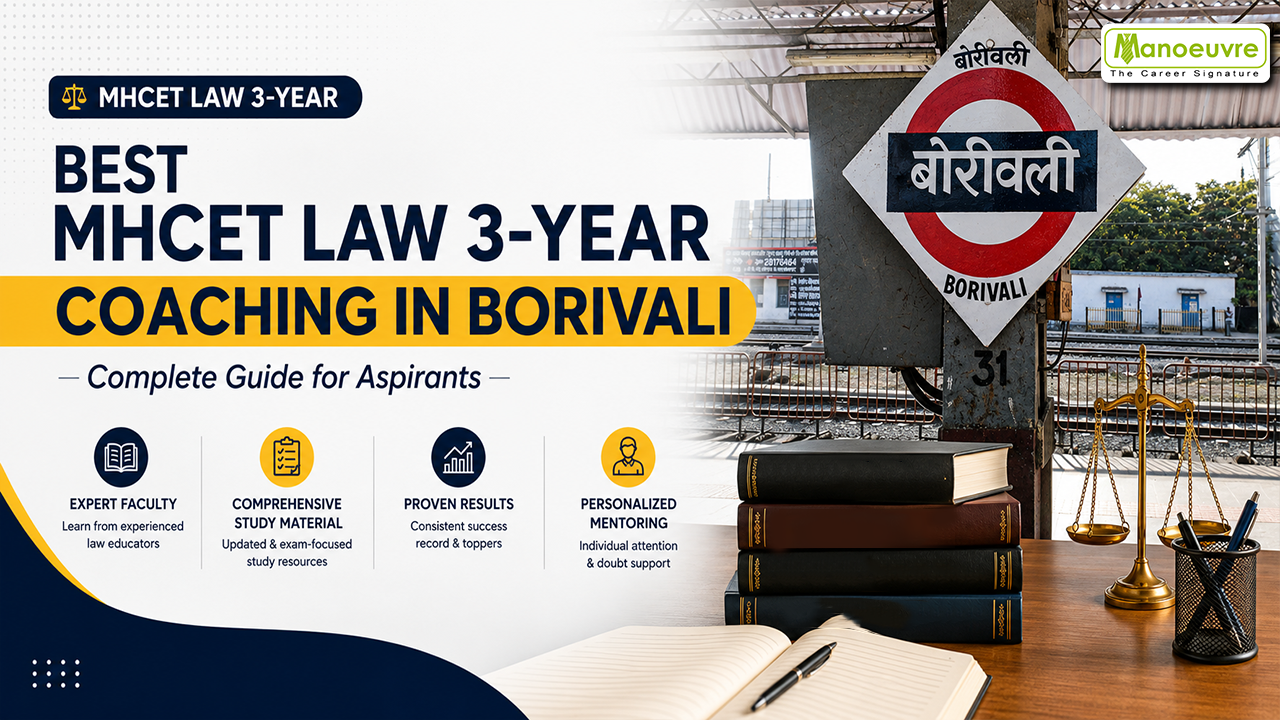
Best MHCET LAW 3-Year Coaching in Borivali: Complete Guide for Aspirants Choosing the right guidance plays an important role when preparing for the MHCET LAW 3-Year entrance exam. Unlike traditional degree examinations, law entrance exams require a strong understanding of multiple sections, regular practice, and the ability to solve questions quickly with accuracy.For graduates planning to pursue a 3-year LLB course in Maharashtra, the MAH LLB 3 Year CET is one of the most important entrance exams. Since the competition continues to increase every year, many aspirants prefer joining a structured coaching program to improve their preparation strategy.Borivali has become a preferred location for students looking for quality law entrance coaching classes in Mumbai due to its connectivity and availability of reputed educational institutes. However, selecting the right coaching institute requires careful consideration of faculty, study resources, mock tests, and overall learning support.This guide explains everything aspirants should know before choosing MHCET LAW 3-Year Coaching in Borivali. Understanding MHCET LAW 3-Year Entrance Exam The MH CET Law 3 Year exam is conducted for candidates seeking admission to the three-year LLB program offered by various law colleges across Maharashtra.The exam is designed to evaluate a candidate’s:● Legal aptitude and reasoning ability● Logical reasoning skills● General knowledge and current affairs awareness● English language proficiency● Analytical thinking abilitySince the examination tests multiple skill areas, preparing through random study methods may not always provide the desired results. A planned approach covering every section with regular practice can help students improve their performance. Why Choose MHCET LAW 3-Year Coaching in Borivali? Preparing for a competitive entrance exam requires consistency and proper direction. While self-study is important, professional guidance can help students understand the exam pattern, identify important topics, and improve their problem-solving approach.Here are some reasons why students consider joining MH CET LLB 3 Year Coaching in Borivali:1. Structured Study PlanA well-designed preparation schedule helps students complete the syllabus systematically. Coaching programs generally divide topics according to difficulty level and exam importance, allowing students to focus on concepts before moving towards advanced practice.A structured plan also ensures that students get enough time for revision and mock test practice before the examination.2. Expert Guidance for Difficult TopicsSections like legal reasoning, logical reasoning, and current affairs require regular practice and conceptual clarity.Experienced mentors help students understand:● How to approach legal-based questions● Methods to improve accuracy● Shortcuts for reasoning problems● Important areas from an exam perspectiveThis guidance helps aspirants avoid common preparation mistakes.3. Regular Mock Tests and Performance AnalysisMock tests are one of the most important parts of entrance exam preparation. They help students understand the actual exam environment and improve their time management skills.A good coaching institute focuses not only on conducting tests but also on analysing performance. Reviewing mistakes allows students to identify weak areas and improve gradually.4. Updated Study MaterialEntrance exam patterns and question trends may change over time. Having updated preparation material helps students focus on relevant topics.Quality study resources usually include:● Topic-wise notes● Practice questions● Previous year question papers● Current affairs updates● Revision material What Should You Look for in a MHCET LAW 3 Year Coaching Institute? Selecting the right coaching centre is an important decision. Students should evaluate different factors before enrolling.Faculty ExperienceThe teaching team plays a major role in exam preparation. Experienced mentors understand student challenges and can provide better strategies for improving preparation.Classroom EnvironmentA positive learning environment encourages consistency. Regular interaction with mentors and fellow aspirants can help students stay motivated throughout their preparation journey.Practice-Based LearningLaw entrance exams require continuous practice. Institutes offering regular assignments, sectional tests, and mock exams help students develop confidence before the final examination.Doubt Resolution SupportStudents often face difficulties while preparing different sections. Quick doubt-solving support ensures that concepts are cleared before they become bigger challenges. How to Prepare for MH CET LLB 3 Year Exam? Joining coaching is only one part of preparation. Students must also maintain regular self-study habits.Focus on Legal ReasoningLegal reasoning is an important section of the exam. Students should understand basic legal concepts and practice applying principles to different situations.Improve Reading HabitsReading newspapers, legal updates, and current affairs articles can improve awareness and comprehension skills.Practice Logical Reasoning RegularlyLogical reasoning questions improve with consistent practice. Solving different question types helps students develop speed and accuracy.Attempt Mock Tests FrequentlyRegular mock tests help students:● Manage exam pressure● Improve question selection skills● Increase solving speed● Track preparation progress How Manoeuvre Education Helps MHCET LAW 3 Years Aspirants When students search for a reliable law coaching institute in Borivali, they generally look for a combination of quality teaching, practice support, and exam-focused preparation.Manoeuvre Education provides a structured learning approach for students preparing for various law entrance examinations, including MH CET Law. The focus is on helping students build strong concepts, practise regularly, and understand examination strategies.The preparation support includes:● Live and recorded learning options● Exam-oriented study material● Regular mock tests● Topic-wise practice sessions● Guidance from experienced mentorsInstead of only completing the syllabus, the approach focuses on improving overall preparation through continuous assessment and practice. Benefits of Joining a Local Coaching Centre in Borivali For students staying in Mumbai suburbs, location convenience can make preparation easier.Choosing a coaching centre in Borivali offers advantages such as:● Easy accessibility through public transport● Regular classroom interaction● Better time management● Opportunity to connect with other aspirantsA nearby institute reduces travel challenges and allows students to maintain a consistent study routine. Common Mistakes Students Make During MHCET LAW 3 Years Preparation Many aspirants make mistakes that affect their final performance. Some common errors include:Ignoring Current AffairsGeneral awareness requires regular attention. Studying everything at the last moment can become difficult.Not Practising Enough QuestionsUnderstanding concepts is important, but applying them through practice is equally necessary.Depending Only on One ResourceUsing too many resources can create confusion, while relying on only one source may limit preparation. Students should follow reliable material and revise regularly.Avoiding Mock TestsMany students postpone mock tests until the final weeks. Starting early helps improve confidence and exam readiness. Career Opportunities After Completing 3-Year LLB A three-year LLB degree opens opportunities in multiple legal fields. Graduates can explore careers such as:● Litigation practice● Corporate law● Legal consultancy● Government legal services● Compliance roles● Legal researchThe first step towards building a successful legal career is securing admission to a reputed law college, and a strong entrance preparation strategy can help students move closer to that goal. Final Thoughts Choosing the right MHCET LAW 3-Year Coaching in Borivali can make your preparation more organised and result-oriented. A combination of expert guidance, regular practice, updated study material, and consistent self-study can significantly improve your chances of performing well in the entrance exam.Before selecting any coaching institute, students should evaluate teaching methods, learning support, test series, and overall preparation approach. With the right strategy and dedication, aspirants can confidently prepare for the MH CET LLB 3 Year examination and take the next step towards their legal career. FAQs About MHCET LAW 3-Year Coaching in Borivali 1. What is MH CET Law 3 Year exam?MH CET Law 3 Year is an entrance exam for graduates seeking admission to three-year LLB courses in Maharashtra.2. Is coaching required for MH CET Law 3 Year?Coaching is not mandatory but provides structured preparation, expert guidance, and regular practice.3. How to choose the best MHCET LAW 3-Year Coaching in Borivali?Check faculty experience, study material, mock tests, doubt support, and teaching approach.4. What subjects are covered in MH CET Law 3 Year?The exam includes Legal Aptitude, Logical Reasoning, English, General Knowledge, and Current Affairs.5. When should I start preparing for MH CET Law 3 Year?Starting early helps complete the syllabus, practise regularly, and improve exam performance.6. Does Manoeuvre Education provide mock tests for MH CET Law?Yes, Manoeuvre Education provides mock tests and practice sessions for better exam preparation.7. Can working professionals prepare for MH CET Law 3 Year?Yes, with proper time management and a consistent preparation plan, working professionals can prepare effectively.
Featured Blogs